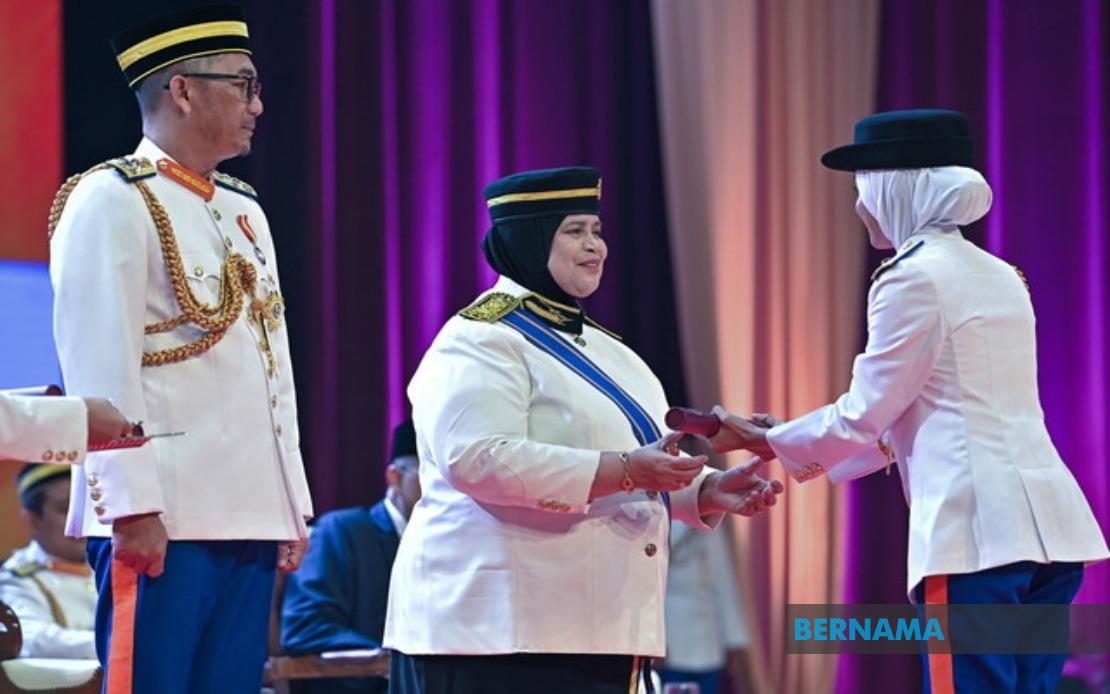
The Malaysian government has formally launched a welfare initiative targeting over 1,100 members of the Civil Defence Student Corps, marking a significant milestone in recognising the contributions of university-based emergency responders. The scheme will commence disbursements this month, benefiting cadets enrolled across 36 higher learning institutions nationwide, with Deputy Minister of Rural and Regional Development Datuk Rubiah Wang confirming the rollout during the 17th National Kor SISPA Commissioning Ceremony held at Universiti Pendidikan Sultan Idris in Tanjong Malim.
The allowance framework represents the culmination of advocacy efforts to formalise compensation for student volunteers who dedicate hours to civil defence training and community safety operations. Rather than implementing a flat payment structure, the government has calibrated remunerations based on educational qualification levels and service hours contributed. Cadets holding bachelor's degrees will receive RM9.80 per hour, whilst diploma-qualified members will earn RM8.00 per hour, creating a differentiated system that acknowledges varying levels of qualification amongst the student cohort.
The initial financial commitment totals approximately RM500,000, allocated exclusively for the first phase of the programme. This measured budgetary approach reflects the administration's intention to pilot the allowance across the eligible student population before expanding scope and resource allocation. Deputy Minister Rubiah emphasised that this represents merely a starting point, with her ministry actively exploring additional fiscal mechanisms to eventually encompass the broader Kor SISPA membership base. The phased implementation strategy suggests deliberate planning to assess programme effectiveness and gather stakeholder feedback before scaling commitments upward.
The Civil Defence Student Corps programme itself has established a substantial institutional presence since its inception in 2010. Spanning universities, polytechnics, and teacher training colleges, the scheme has successfully graduated approximately 11,802 members to date. These figures demonstrate that Kor SISPA operates as a meaningful feeder system into the professional civil defence apparatus, creating a pipeline of trained and motivated personnel familiar with operational protocols and safety culture. The new allowance scheme thus functions as an investment in sustaining recruitment momentum and improving programme attractiveness amongst the student demographic.
Beyond the immediate financial implications, the allowance initiative addresses a longstanding concern regarding volunteer motivation and retention within university-based civil defence units. Cadets traditionally engaged in this voluntary capacity without formal compensation, creating potential sustainability challenges as competing academic and employment opportunities demanded student attention. By introducing tangible monetary recognition, the government signals institutional validation of cadre contributions whilst simultaneously improving the practical circumstances for students balancing coursework with emergency response commitments. The hourly rate structure particularly benefits high-commitment members who dedicate substantial time to training and operational deployment.
The operational scope of Kor SISPA extends considerably beyond traditional disaster response scenarios that dominate public perception of civil defence work. Deputy Minister Rubiah highlighted that personnel provide year-round assistance encompassing university events, campus safety initiatives, and community-based activities occurring both within and external to institutional grounds. This characterisation broadens understanding of civil defence as continuous civic engagement rather than episodic crisis intervention. Student cadets thus represent a distributed network of trained responders available for diverse support functions, justifying government investment in their welfare and professional development.
The allowance announcement carries particular significance for Malaysian higher education policy, as it acknowledges the complex relationship between institutional responsibilities and student welfare. Universities increasingly expect student participation in extracurricular safety and service programmes whilst simultaneously demanding rigorous academic performance. Compensating this participation through the allowance mechanism partially redresses the implicit burden placed upon students, particularly those from lower-income backgrounds for whom unpaid work represents genuine opportunity cost. The initiative thus contains subtle socioeconomic dimensions beyond its surface-level welfare improvements.
Regional competitiveness considerations also inform the strategic importance of this scheme. Throughout Southeast Asia, civil defence and emergency management agencies compete for qualified personnel capable of responding to increasingly complex disaster scenarios exacerbated by climate change impacts. By cultivating robust university-based training pipelines with improved incentive structures, Malaysia positions itself to maintain adequately prepared response capacity. The allowance scheme functions as retention mechanism within this broader strategic framework, encouraging capable cadets to pursue professional advancement within the civil defence sector rather than pursuing alternative career trajectories.
The commissioning ceremony architecture reflects institutional commitment to maintaining ceremonial recognition alongside material support. The scheduling of future ceremonies, including the next commissioning at Universiti Sultan Zainal Abidin in 2024, creates recurring opportunities for public acknowledgment of cadet achievements and reinforces civil defence priorities within university governance structures. This ceremonial dimension complements the allowance scheme, combining tangible financial recognition with symbolic validation of cadet service and sacrifice.
Looking forward, the allowance initiative requires careful programme administration to ensure equitable distribution and accurate hour-tracking across geographically dispersed university units. The phased implementation approach provides opportunity for refinement of disbursement mechanisms before full-scale rollout. Success in managing this initial cohort will substantially influence political appetite for subsequent expansion phases. Furthermore, the framework establishes precedent potentially applicable to other student service organisations, creating cascading policy implications throughout higher education sector.
The government's commitment to exploring expanded fiscal mechanisms signals recognition that the RM500,000 allocation represents merely preliminary funding. Subsequent budget cycles may incorporate larger appropriations as programme stabilises and benefits become demonstrable. This forward-looking stance contrasts with purely reactive welfare policy, instead positioning Kor SISPA allowances within long-term human resource development strategy. Malaysian policymakers have effectively converted bureaucratic discussion into tangible intervention, translating years of advocacy into concrete disbursements benefiting over 1,100 student cadets immediately.

