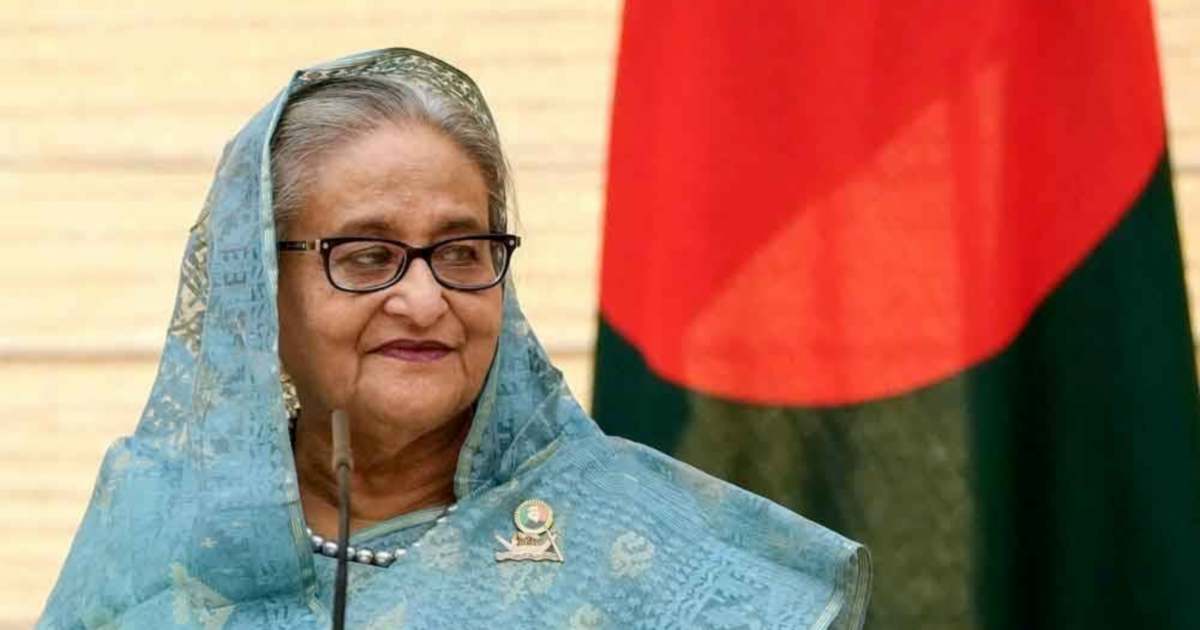
Sheikh Hasina, who fled Bangladesh following mass protests that forced her resignation earlier this year, has defiantly announced plans to return to her homeland within twelve months, despite facing execution-level legal consequences from the interim government now controlling the country. Her statement represents a significant escalation in the political standoff between the ousted leader and the transitional administration, signalling her unwillingness to accept permanent exile or the legitimacy of judicial proceedings conducted against her in absentia.
The death sentence imposed on Hasina underscores the depth of animosity that has emerged between her Bangladesh Awami League party and the current interim government, which took power following her departure. The judicial ruling, which Hasina characterises as lacking constitutional foundation and serving narrow political interests, reflects how Bangladesh's legal system has become entangled in the nation's turbulent political transition. Such legal weaponisation of courts is not uncommon in the region, where competing political factions have historically used the judiciary to eliminate rivals after seizing power.
For regional observers, Hasina's defiant posture raises important questions about Bangladesh's political trajectory. If she were to return, it would likely trigger major confrontation with the interim government and potentially reignite the civil unrest that prompted her departure. The possibility of her arrest upon landing—given the outstanding sentence—could create a constitutional crisis and international diplomatic complications, particularly given Bangladesh's strategic importance to neighbouring India, which maintains significant interests in the country's stability.
The circumstances surrounding Hasina's fall from power earlier in 2024 revealed deep fractures within Bangladeshi society regarding governance, accountability, and democratic representation. Her tenure as Prime Minister, spanning multiple terms since 2009, had become increasingly controversial amid accusations of authoritarianism, suppression of opposition, and extrajudicial killings. The mass demonstrations that ultimately forced her resignation suggested widespread public frustration with her administration's human rights record and governance approach.
Hashina's dismissal of the death sentence as unconstitutional carries strategic weight, as it effectively challenges the entire legal framework being deployed against her by the interim authorities. By questioning the legitimacy of proceedings conducted without her presence and participation, she is attempting to delegitimise the transitional government's actions in the eyes of domestic constituencies and international observers. This rhetorical strategy seeks to position her as a victim of political persecution rather than someone legitimately held accountable for actions taken during her tenure.
The broader regional context matters significantly here. Southeast Asia has experienced multiple instances of political leaders fleeing abroad following military interventions or mass uprisings, with varying outcomes. Some, like former Thai Prime Ministers, have remained in exile for extended periods, while others have attempted comebacks that destabilised their nations further. Bangladesh's situation occurs amid broader regional anxiety about political instability, given the country's significance to regional trade networks, demographic weight, and role in maintaining subregional balance.
For Malaysian observers, Hasina's predicament offers instructive lessons about the fragility of democratic institutions and the dangers of concentrating executive power without robust checks and balances. Malaysia's own experiences with leadership transitions and accountability mechanisms provide comparative context for understanding how countries navigate such crises. The question of how to hold former leaders accountable while simultaneously maintaining institutional legitimacy and public confidence remains pertinent across Southeast Asia.
The practical dimensions of Hasina's stated intention to return remain murky. A genuine homecoming would require either a significant political reversal that removes her current antagonists from power or some form of negotiated settlement that protects her from immediate prosecution. Without such preconditions, her return declaration functions primarily as a political signal to her Awami League supporters that she has not abandoned them and maintains ambitions to reclaim influence over Bangladesh's future.
International reactions to her sentencing and subsequent statements have been notably cautious. Democratic nations and human rights organisations have expressed concern about the death sentence in absentia, viewing it as inconsistent with fundamental legal principles, yet few have taken strong diplomatic positions supporting her return. This reflects the complex diplomatic balancing act countries must perform when dealing with Bangladesh, whose government stability affects energy security, maritime cooperation, and regional migration patterns.
The timeline Hasina has proposed—returning within 2025—will test whether this represents genuine political resolve or rhetorical positioning aimed at rallying her supporters and internationalising her cause. Should genuine reconciliation or political realignment occur within Bangladesh, her prospects for return would improve substantially. Conversely, if the interim government consolidates power and builds new political constituencies supporting the post-Hasina order, her return prospects would diminish significantly despite her public confidence.
Ultimately, Hasina's vow to return highlights the unresolved tensions within Bangladesh regarding how to address the legacy of her governance while establishing new political foundations. The standoff between her declaration and the death sentence reflects deeper uncertainties about the nation's constitutional future, the legitimacy of its transitional institutions, and the mechanisms through which competing visions for Bangladesh's direction will be resolved.

