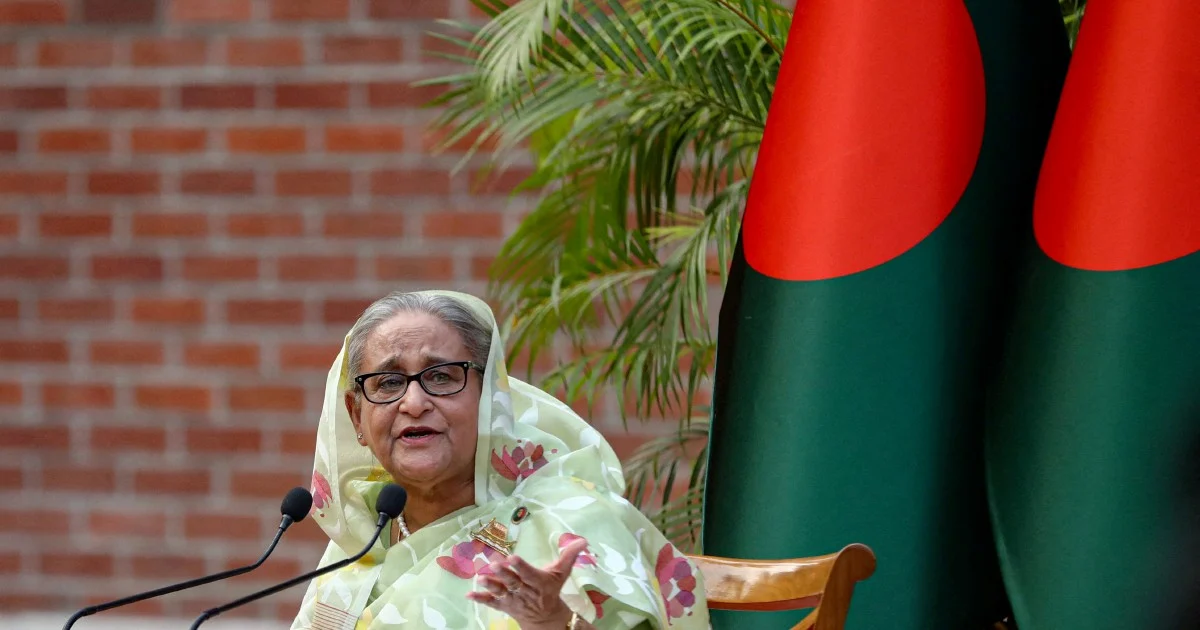
Sheikh Hasina, Bangladesh's ousted Prime Minister, faces the prospect of immediate incarceration should she attempt to return from her current refuge in India, according to a stern warning issued by a senior government minister on Monday. The cautionary statement adds a dramatic new dimension to the political crisis engulfing the South Asian nation and directly contradicts Hasina's own statements to international media just days earlier, when she indicated a willingness to return home and face judicial proceedings.
The timing of these conflicting messages underscores the deepening fracture within Bangladesh's political establishment following Hasina's departure amid widespread civil unrest. Her removal from office triggered a nationwide crisis that prompted her to seek sanctuary across the border in New Delhi, where she remains in what officials describe as self-imposed exile. The government's uncompromising stance on her potential return signals that any reconciliation between the interim authorities and the deposed leader appears increasingly unlikely in the near term.
Hasina's recent comments to Reuters newsagency suggested a remarkable shift in her position, with the former premier indicating she would voluntarily return to Bangladesh as soon as December and present herself to the courts to face whatever legal charges might be brought against her. This apparent acceptance of judicial accountability appeared to signal either a dramatic change of heart or a calculated political manoeuvre to rehabilitate her international standing. However, the government's subsequent public rebuke has rapidly dismantled any notion that such a return would be welcomed or permitted without consequence.
The warning represents a hardening of the interim administration's position toward its predecessor and reflects the volatile nature of Bangladesh's current political environment. Since assuming control following Hasina's departure, the transitional government has faced mounting pressure from various factions demanding accountability for alleged governmental abuses and financial improprieties. This creates a precarious situation where allowing Hasina to return might be perceived as a betrayal of those agitating for justice, whilst simultaneously raising questions about the interim authorities' commitment to the rule of law.
From a Malaysian perspective, this unfolding drama illustrates the fragility of democratic institutions in South Asia and the dangers of political polarization when power transfers occur amid public upheaval rather than through constitutionally prescribed electoral processes. The Bangladesh situation serves as a cautionary tale about how rapidly political circumstances can deteriorate when competing power centers refuse dialogue and resort instead to threats and legal intimidation. Regional observers in Southeast Asia should note how quickly institutional mechanisms can become weaponized in the service of political opponents.
The imprisonment threat also highlights the precarious position of regional leaders in exile, a concern that resonates across Southeast Asia where several former politicians currently reside abroad following their own political downfalls. The Bangladesh experience demonstrates how exile status provides no guarantee of safety or eventual political rehabilitation, and how the controlling power can systematically close off all pathways to peaceful return or reconciliation. For observers of regional politics, this represents a sobering reminder of the permanent consequences that political defeat can entail.
The interim government's position likely reflects internal political calculations regarding the appetite among various constituencies for Hasina's prosecution. Student movements and civil society organizations that mobilized against her administration would almost certainly view any lenient treatment as a betrayal of their efforts. By explicitly threatening imprisonment, the current authorities are signaling their alignment with these reform-minded elements whilst simultaneously demonstrating their control over Bangladesh's judicial processes.
Hasina's predicament extends beyond mere personal political survival; it encompasses questions about whether Bangladesh can develop institutional frameworks capable of managing political transitions without resorting to imprisonment of predecessors. Most established democracies have evolved mechanisms for investigating alleged governmental wrongdoing whilst preserving space for peaceful reconciliation and eventual political reintegration. Bangladesh's current trajectory suggests such mechanisms remain underdeveloped in the country's institutional architecture.
The situation also complicates Bangladesh's relationship with India, which now hosts the exiled former premier. New Delhi must navigate between respecting humanitarian principles regarding asylum and avoiding the appearance of providing safe haven to a fugitive from justice. Should Hasina face formal legal charges, bilateral tensions could potentially emerge around questions of extradition or continued refuge status.
Looking forward, the standoff between Hasina and the interim government appears locked in a mutually reinforcing cycle of threats and recriminations with little indication of productive dialogue. Each public statement hardens positions further, making future reconciliation increasingly difficult to envision. For Bangladesh's long-term stability and democratic development, this pattern suggests the need for some form of transitional justice framework that could accommodate accountability without necessitating indefinite political exile for departed leaders.

