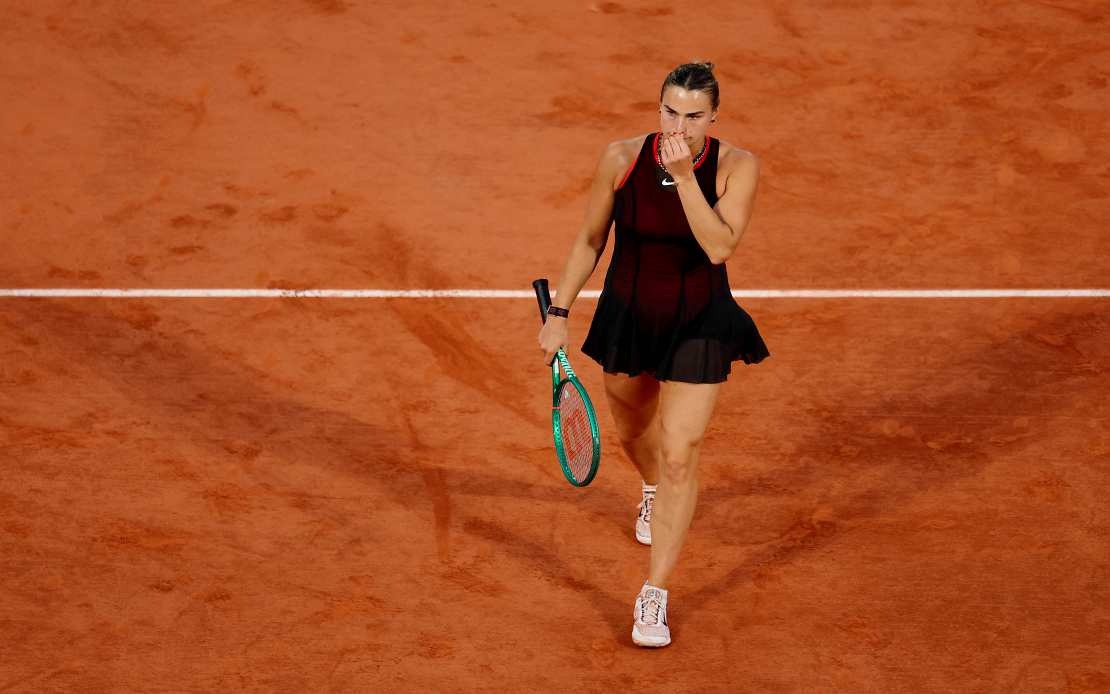
Naomi Osaka staged a dramatic turnaround at the All England Club on Sunday, dismantling top-seeded Aryna Sabalenka of Belarus with a decisive 6-2, 7-6(2) scoreline to advance to the Wimbledon quarterfinals in her opening appearance at this stage of the tournament. The 14th-seeded Japanese star's breakthrough performance marked a watershed moment in her gradual return to elite-level tennis, demonstrating that her technical prowess and mental fortitude remain formidable weapons even against the most formidable opposition.
Osaka's achievement carries particular significance for Japanese tennis, elevating her to an exclusive club as the first Japanese woman to reach the last eight at Wimbledon since Ai Sugiyama accomplished the feat nearly two decades ago in 2004. This gap underscores both the difficulty of performing consistently at the grass-court major and the rarity of sustained success for Japanese players on this surface, where different tactical and technical demands diverge markedly from clay and hard courts. Her progression through this early stage signals a potential resurgence that could inspire a new generation of Japanese competitors.
The psychological dimensions of this victory prove equally significant as the scoreline itself. Sabalenka, ranked first globally and seeded top at the tournament, had dominated their recent head-to-head encounters, winning all three matches they contested this season including a fourth-round dismissal at the French Open. Osaka entered this clash with the weight of consecutive defeats pressing upon her, yet she channeled that frustration into purposeful, aggressive play that neutralised the Belarusian's typically devastating serve-and-rally strategy. Following the match, Osaka reflected on the emotional stakes involved, acknowledging that reversing her losing streak against Sabalenka held profound personal meaning beyond mere ranking points or tournament advancement.
The former world number one's candid post-match commentary revealed her genuine delight at rediscovering her competitive joy. Speaking during her on-court interview, Osaka emphasised that the sheer enjoyment of performing at the highest level had returned after periods of doubt and physical uncertainty. For a player who has navigated considerable mental health challenges and public scrutiny throughout her career, this sentiment carries weight beyond typical professional satisfaction, touching on her broader journey toward rebuilding confidence and reconnecting with the sport that made her name. The tangible relief and contentment evident in her words resonated with observers who have followed her tumultuous trajectory through professional tennis.
Osaka's path now converges with 10th-seeded Karolina Muchova of the Czech Republic in a quarterfinal encounter that presents both opportunity and formidable challenge. Muchova has established herself as a capable all-court competitor with particular strength on faster surfaces where angles and movement become increasingly important tactical elements. This matchup promises compelling tennis, as both players favour aggressive shot-making and possess the physicality to dictate rallies from advantageous court positions. The semifinal berth awaits the victor, offering Osaka the possibility of deepening her Wimbledon narrative even further.
Meanwhile, the men's singles draw witnessed the conclusion of another compelling storyline when Japanese qualifier Shintaro Mochizuki encountered his limits against defending champion Jannik Sinner. Mochizuki, ranked 151st globally and having navigated the qualifying rounds to earn his main draw position, mounted a credible challenge before ultimately succumbing 6-3, 7-6(0), 6-3 to the Italian top seed. Despite the ultimate outcome, Mochizuki's progress to the fourth round represented a commendable performance for a player unseeded and lacking the experience typically associated with deep Grand Slam runs. Sinner's continued dominance throughout the tournament underscores his emergence as a generational talent capable of winning major tournaments across multiple surfaces.
The broader context of Japanese representation at Wimbledon extends beyond individual player performance to encompass structural factors affecting the development of elite grass-court specialists from Japan. Unlike European players who compete regularly on grass throughout the English and European summer seasons, Japanese professionals typically concentrate their efforts on clay and hard courts. This geographical and scheduling reality creates inherent disadvantages when adapting to Wimbledon's unique demands. Osaka's success despite these systemic challenges reflects her exceptional baseline adaptability and competitive resilience, qualities that transcend the specific technical requirements of any particular surface.
For Malaysian and Southeast Asian tennis enthusiasts, Osaka's progression offers instructive lessons about tournament preparation, mental resilience, and the importance of maintaining competitive hunger across extended careers. Her ability to defeat a world-ranked number one in significant tournament conditions demonstrates that hierarchical seeding and contemporary form do not guarantee outcomes in tennis, where individual matches remain determined by execution, tactical acumen, and psychological stamina. This unpredictability remains part of what sustains public interest in Grand Slam competitions, particularly when established stars deliver unexpected victories against seemingly insurmountable odds.
Looking ahead, Osaka faces mounting expectations as she advances deeper into the Wimbledon draw, yet her own comments suggest she approaches these challenges with renewed perspective and enjoyment rather than merely result-obsessed pressure. If she continues channeling the form displayed against Sabalenka, she possesses sufficient capabilities to challenge any opponent remaining in her half of the draw. The quarterfinal against Muchova will prove instructive regarding whether this Wimbledon run represents the genuine foundation of sustained comeback or merely a momentary resurgence before inevitable regression. Either outcome, however, has already vindicated Osaka's decision to persist with professional tennis despite the considerable obstacles she has navigated in recent seasons.

