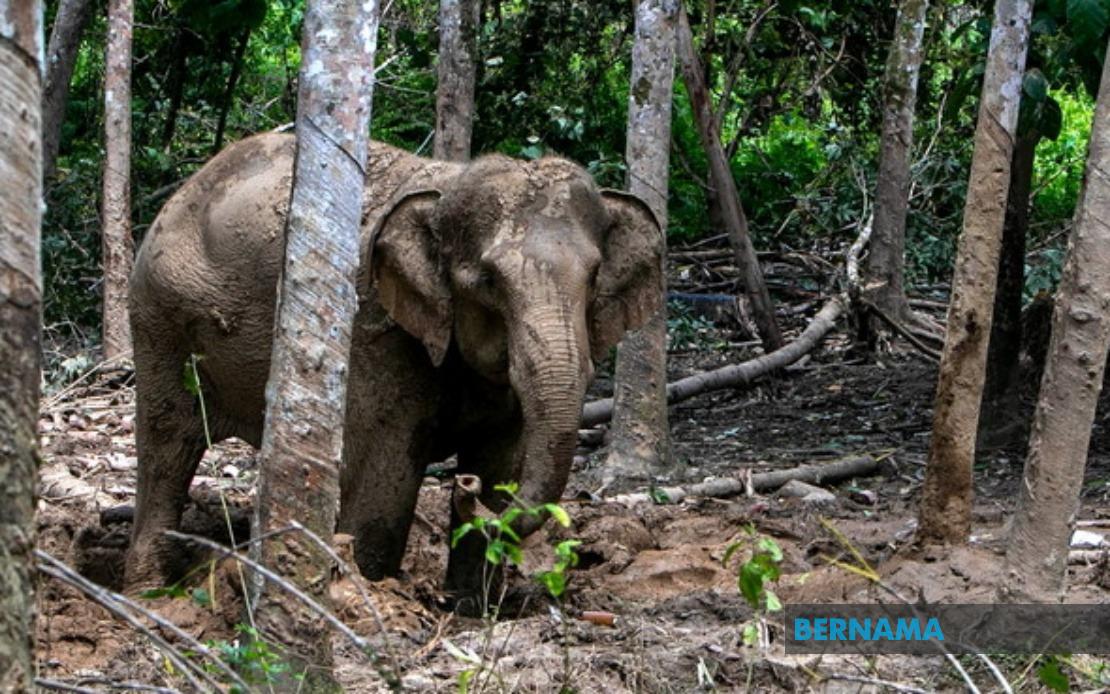
A resident of Kampung Orang Asli Perjek in the Legap Resettlement Scheme at Sungai Siput, Perak, suffered serious injuries on Friday night when he confronted a herd of elephants that had invaded the village to feed on crops. The attack underscores the escalating tensions between wildlife conservation and the livelihoods of indigenous communities living on the fringes of protected forest areas, a challenge that resonates across Malaysia and Southeast Asia as human settlements encroach further into animal habitats.
The Department of Wildlife and National Parks (PERHILITAN) responded to emergency calls around 10 pm and dispatched personnel from its Sungai Siput district office to assess the situation and gather evidence. What they discovered was a familiar but troubling pattern: a small elephant herd had wandered into the residential area immediately behind residents' homes and begun systematically grazing on cassava and banana plants—cultivated staples that represent critical food security and income sources for the settlement's inhabitants. The presence of four elephants suggested a coordinated feeding operation, indicating these animals may be repeat visitors becoming accustomed to the availability of cultivated crops in human-dominated spaces.
The injured resident and several fellow villagers made the decision to actively repel the herd themselves, a common response among communities lacking immediate access to professional wildlife management services. However, the situation deteriorated when the villager approached too closely to the animals, triggering a defensive reaction from one of the elephants. The attack was severe enough to cause significant bleeding and render him unconscious at the scene. His neighbours acted quickly to extract him from danger, potentially preventing more serious injury or fatality.
The victim was transported to Raja Permaisuri Bainun Hospital in Ipoh, where medical staff stabilised his condition. At the time of the wildlife authority's statement, he remained in stable condition and conscious, suggesting that while the injuries were substantial, they were not immediately life-threatening. His recovery will now depend on the extent of internal injuries and the quality of ongoing medical care, factors that weigh heavily on families in rural settlements where access to advanced trauma medicine is already limited.
PERHILITAN's subsequent investigation employed modern surveillance techniques to ensure the elephants had genuinely vacated the area. Drone monitoring confirmed that the herd had moved away from Kampung Orang Asli Perjek, reducing the immediate risk of further attacks. The department also indicated that it had implemented additional management protocols aimed at preventing recurrence, though the specifics of these measures were not detailed in the official statement. Such vague commitments often mask the genuine difficulty of deterring elephants from resource-rich areas once they have learned the locations of human food sources.
Beyond immediate incident response, PERHILITAN confirmed that it would facilitate the victim's family's application for compensation through the Wildlife Attack Victim Assistance initiative, a scheme operated under the Ministry of Natural Resources and Environmental Sustainability. This programme represents an important recognition that those living closest to wildlife often bear disproportionate costs of conservation efforts. However, the adequacy of such financial assistance in covering medical expenses, lost income, and psychological trauma remains a persistent concern in affected communities.
The incident prompted PERHILITAN to issue a cautionary advisory warning the public against attempting to confront elephants independently. The department emphasised that direct confrontation with large wild animals, particularly agitated herds protecting feeding opportunities, poses extreme risks that untrained civilians are ill-equipped to manage. This guidance, though sensible from a safety perspective, highlights a broader systemic challenge: rural communities facing repeated crop raids often have few viable alternatives to self-help responses, as government wildlife response teams cannot be everywhere simultaneously, and preventive measures such as electric fencing or forest corridors require capital and coordination that dispersed settlements struggle to muster.
The Legap Resettlement Scheme itself reflects Malaysia's ongoing effort to address the historical marginalisation of Orang Asli populations through formal land allocation and settlement infrastructure. Yet the recurrence of wildlife conflicts in and around such schemes suggests that environmental planning often fails to adequately consider human-wildlife coexistence. The presence of elephants in agricultural areas indicates either insufficient habitat protection in forests, insufficient barriers between settlements and wildlife corridors, or both—systemic issues requiring coordinated landscape-level planning rather than reactive incident management.
For residents of Kampung Orang Asli Perjek and similar communities throughout Peninsular Malaysia, the incident serves as a reminder of the precarious balance between subsistence farming and proximity to megafauna. Elephant herds, whose populations have been recovering thanks to conservation efforts, are increasingly driven toward human-cultivated areas as their traditional forest food sources face pressure from logging and land conversion. This creates a troubling calculus where conservation success for one species translates into hardship for vulnerable human communities.
PERHILITAN has made available a dedicated hotline at 1-800-88-5151 for reporting wildlife incidents, as well as online reporting through the Public Complaints Management System (SISPAA) accessible via the department's website. These channels represent bureaucratic acknowledgement of the scale of human-wildlife conflict, though their effectiveness depends on timely response capacity and genuine enforcement of preventive measures. The incident in Sungai Siput, while resolved without fatality, illustrates why stronger integration of community voices into wildlife management planning, coupled with sustained investment in coexistence infrastructure, remains essential for protecting both animal populations and the people whose lands they share.

