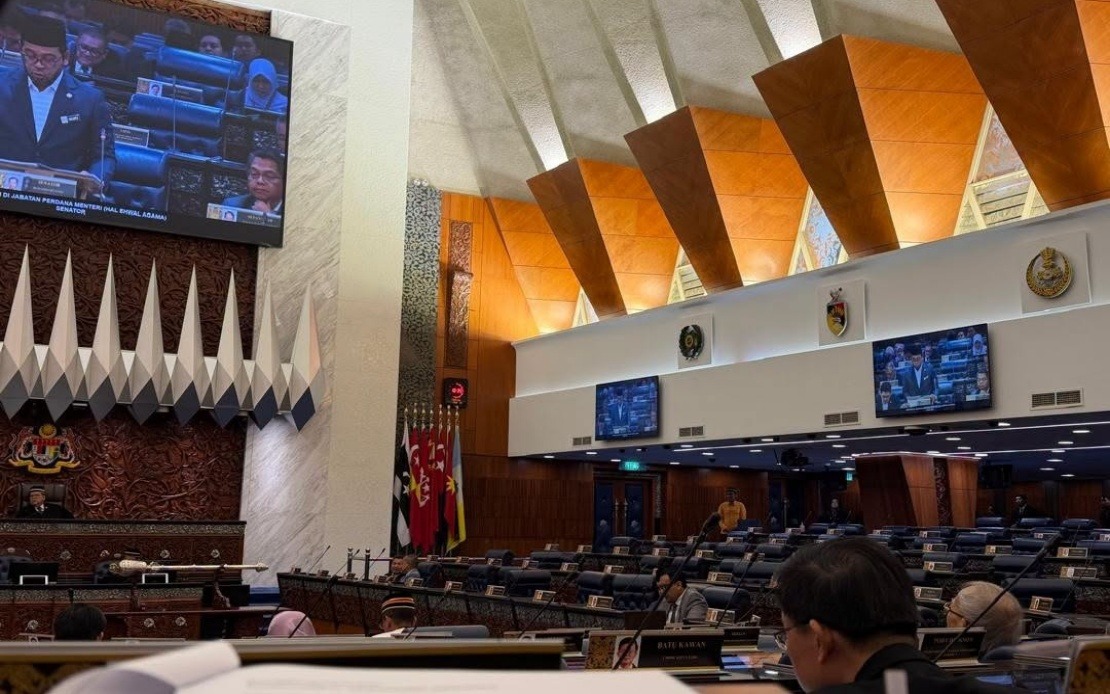
The opposition's boycott of Parliament's special sitting to debate the Royal Commission of Inquiry findings on Lembaga Tabung Haji has drawn sharp criticism from government ranks, with MADANI Government Backbenchers Club chairman Datuk Seri Dr Zaliha Mustafa describing the protest as a missed opportunity that undermines claims of principled governance. The walkout, staged before the scheduled briefing by Minister in the Prime Minister's Department for Religious Affairs Dr Zulkifli Hasan, occurred in response to Speaker Tan Sri Johari Abdul's decision to proceed despite the absence of Prime Minister Datuk Seri Anwar Ibrahim and Deputy Prime Minister Datuk Seri Fadillah Yusof, both receiving medical treatment.
Dr Zaliha, who represents Sekijang, framed the incident as a contradiction of opposition messaging on Islamic governance and transparency. She argued that opposition MPs have positioned themselves as stalwart defenders of Muslim interests and institutional accountability, yet chose to abandon Parliament at precisely the moment when they could have directly challenged government positions on a matter affecting millions of Tabung Haji depositors. The contrast between rhetorical commitment and legislative action, she suggested, raises fundamental questions about opposition sincerity regarding governance issues.
The underlying dispute centres on procedural grounds. Perikatan Nasional chief whip Datuk Seri Takiyuddin Hassan had earlier proposed postponing the special sitting, citing the simultaneous absence of the Prime Minister and Deputy Prime Minister as undermining the session's legitimacy. This technical objection evolved into a full boycott, with opposition members refusing to participate in the ministerial briefing scheduled to outline the RCI's findings and government responses.
For Malaysian readers, the stakes in this controversy extend beyond parliamentary theatre. Tabung Haji administers savings accumulated by millions of Muslims intended for pilgrimage purposes, making governance questions particularly sensitive. The RCI investigation presumably addresses management concerns that have generated public anxiety among account holders. A parliamentary debate offers the formal mechanism through which elected representatives can probe findings, demand clarification, and propose remedies—a process that benefits from robust opposition participation.
Dr Zaliha's critique centres on a fundamental principle of Westminster-style legislatures: opposition parties derive legitimacy partly from their capacity to interrogate executive action through debate, amendment proposals, and scrutiny. By walking out, opposition MPs surrendered the formal platform where their voices carry institutional weight, even as they might issue statements outside Parliament where impact is necessarily diminished. She posed a pointed question to opposition figures: if they genuinely dispute RCI findings or government responses, why absent themselves from the chamber where such disputes could be systematized and recorded?
The timing amplifies the controversy. The special sitting represented a structured opportunity for opposition MPs to raise procedural objections, request document access, demand further investigation, or propose alternative interpretations of findings—all actions that carry formal weight within Parliament. Choosing walkout over engagement, from the government's perspective, suggests the opposition preferred symbolic protest to substantive legislative work. This interpretation particularly resonates for backbenchers like Dr Zaliha who view opposition abstention as abandoning their constitutional responsibilities.
Yet the opposition's position reflects genuine concerns about parliamentary legitimacy when senior government figures are absent. The Prime Minister's presence traditionally signals the government's readiness to defend its position comprehensively. Proceeding without him arguably diminishes the briefing's authority and prevents the most senior figures from responding to opposition queries directly. From this perspective, the opposition's demand for postponement represented responsible legislative conduct rather than obstruction.
For Malaysian observers, this episode illustrates recurring tensions within the current parliament. The government typically commands a narrow working majority, making opposition cooperation valuable for passing significant legislation and conducting meaningful debate. Conversely, opposition parties struggle to find leverage when procedural tools—like postponement requests—are overridden. The Tabung Haji debate thus becomes a proxy for broader frustrations about parliamentary functionality and minority voice amplification.
The broader context involves Muslim community trust in Tabung Haji's stewardship following reported governance controversies. Comprehensive parliamentary examination of the RCI report would ideally involve cross-party input, with opposition members raising concerns that reflect constituencies' anxieties. Dr Zaliha's argument implicitly suggests that opposition walkout damages this process by reducing the debate's comprehensiveness and apparent legitimacy. If Muslim depositors perceive the RCI discussion as one-sided because opposition figures refused to participate, confidence may suffer further.
Regional implications also merit consideration. Malaysian parliamentary practices influence governance standards across Southeast Asia, and incidents like this walkout contribute to perceptions about Westminster democracy's effectiveness in the region. When opposition parties employ boycotts rather than legislative engagement, it potentially signals that parliamentary institutions cannot accommodate fundamental disagreements—a concerning message for democratic consolidation across the region.
Looking forward, this episode suggests unresolved tensions about parliamentary procedure, government transparency, and opposition leverage will continue generating controversy. Dr Zaliha's critique that opposition MPs should challenge RCI findings through argument rather than absence reflects a legitimate governance principle. However, the opposition's concern about procedural legitimacy when senior government figures are absent also carries weight. Resolving such disputes likely requires clearer parliamentary conventions about when proceedings can proceed amid senior absence, and when postponement genuinely serves institutional integrity.

