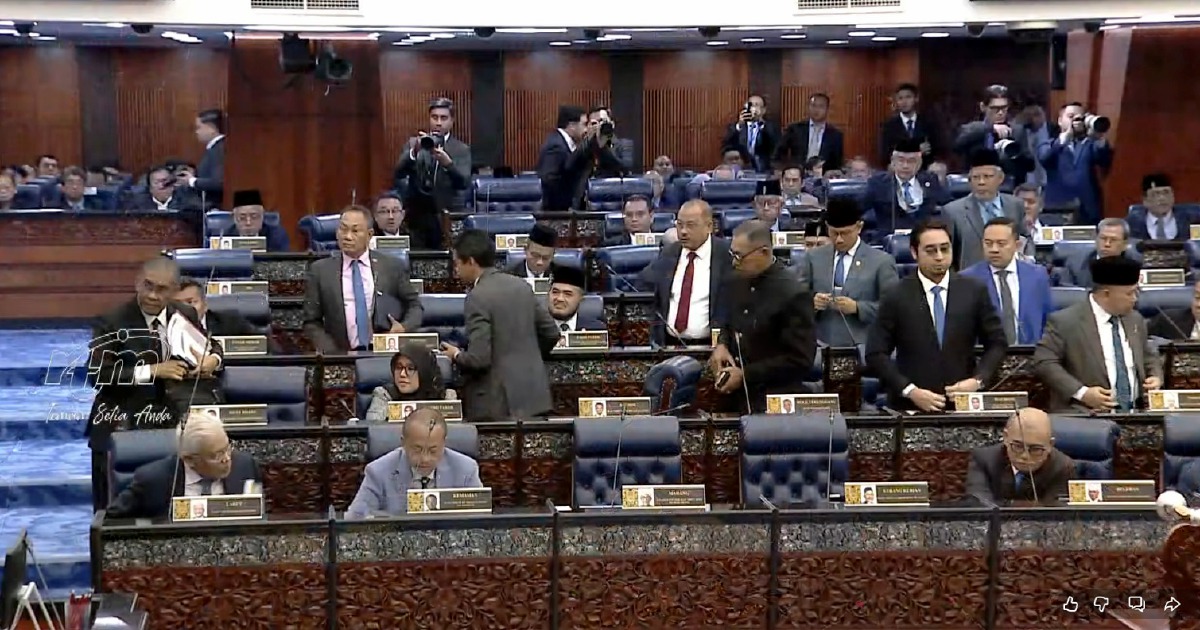
Opposition members of Parliament staged a dramatic walkout from the Dewan Rakyat today in protest against what they characterized as procedural unfairness surrounding the scheduled discussion of a Royal Commission of Inquiry report into Tabung Haji's operations. The exodus occurred after the Speaker declined their formal motion to defer the special sitting until Prime Minister Datuk Seri Anwar Ibrahim returns to Parliament, sparking fresh tensions between the government and opposition benches over parliamentary protocol and timing.
The controversy centres on the handling of a highly sensitive investigation into Malaysia's pilgrimage fund, which has faced mounting scrutiny in recent years over governance and financial management concerns. The opposition's insistence that the Prime Minister be present for the debate underscores the political sensitivity of the matter, suggesting they view the discussion as significant enough to warrant the country's top leader's direct participation and accountability to Parliament. Their boycott reflects broader parliamentary tensions over how such consequential state inquiries should be conducted and what constitutes proper deliberative process.
Tabung Haji, formally known as Lembaga Urusan Tabung Haji, manages the savings of over one million Malaysian pilgrims and holds substantial assets in real estate, equities, and other investments. The fund has come under intense public and political scrutiny following revelations about its financial performance and administrative decisions, with particular concern over how management has handled investments and member contributions during volatile market conditions. The establishment of the RCI itself reflected acknowledgment at the highest levels that the fund's operations warranted independent expert examination.
The Speaker's decision to proceed with the sitting despite opposition objections highlights the procedural complexities surrounding parliamentary business when the Prime Minister is absent from the chamber. While standing orders provide flexibility for conducting parliamentary sessions during a premier's temporary absence, the opposition clearly felt that a matter of this magnitude—affecting millions of ordinary Malaysians' savings—demanded the Prime Minister's presence to answer questions and provide direct government accountability. The refusal to grant this postponement has amplified claims that the government is attempting to manage rather than facilitate full parliamentary scrutiny.
For ordinary Malaysian pilgrims who depend on Tabung Haji for their religious obligations, the debate carries profound personal and financial implications. Many contributors have entrusted their funds to the institution based on its Islamic principles and governance framework, and controversies over its management strike at public confidence in religiously-motivated financial institutions. The RCI report represents the culmination of investigative work intended to restore that confidence and establish whether improvements in oversight and administration are necessary to protect member interests.
The opposition's walkout strategy, while dramatic, serves to amplify their message that parliamentary procedures are being circumvented in ways that diminish accountability. By vacating the chamber, they create a visible record of their dissent and underscore their view that the debate cannot proceed with proper legitimacy without the Prime Minister's presence. Such tactics, while sometimes dismissed as theatrics, do establish parliamentary records that influence public and media perception of government conduct.
The timing issue also raises questions about parliamentary scheduling more broadly in Malaysia's current political environment. With a coalition government balancing multiple coalition partners and increasingly assertive opposition, how Parliament conducts significant business during the brief absences of key figures has become a matter of principle on both sides. The opposition's resistance suggests they view the speed of proceeding as potentially strategic—perhaps allowing the government to navigate a sensitive discussion without the Prime Minister present to defend policies or answer pointed questions.
Tabung Haji itself occupies a distinctive role in Malaysia's institutional landscape, combining commercial financial operations with religious and social dimensions that make it uniquely sensitive to public concern. Unlike ordinary banks or investment funds, it carries the trust of the Muslim community and operates under Islamic principles that carry moral as well as legal significance. Any findings from the RCI about mismanagement or governance failures therefore have implications extending beyond mere financial accounting into broader questions of Islamic institutional integrity.
The RCI process itself reflects how Malaysia's governance structures attempt to address concerns about state institutions through independent investigation. By establishing such commissions, governments signal acknowledgment that problems exist and require impartial expert examination. However, the subsequent parliamentary debate determines whether findings translate into actual reforms, accountability measures, and restored public confidence. The opposition's insistence on Prime Ministerial presence reflects their concern that the government might use parliamentary absence to limit accountability or soften the impact of any critical RCI findings.
Looking forward, this incident illustrates the fragility of parliamentary consensus during Malaysia's current political configuration. With opposition numbers sufficient to make their symbolic protests meaningful, even procedural matters can become contested battlegrounds between government and opposition over who controls the parliamentary narrative. The walkout, whether viewed as legitimate protest or obstruction, demonstrates how deeply polarized parliamentary relations have become even on matters that should transcend partisan divisions—the integrity of national institutions managing citizen savings.

