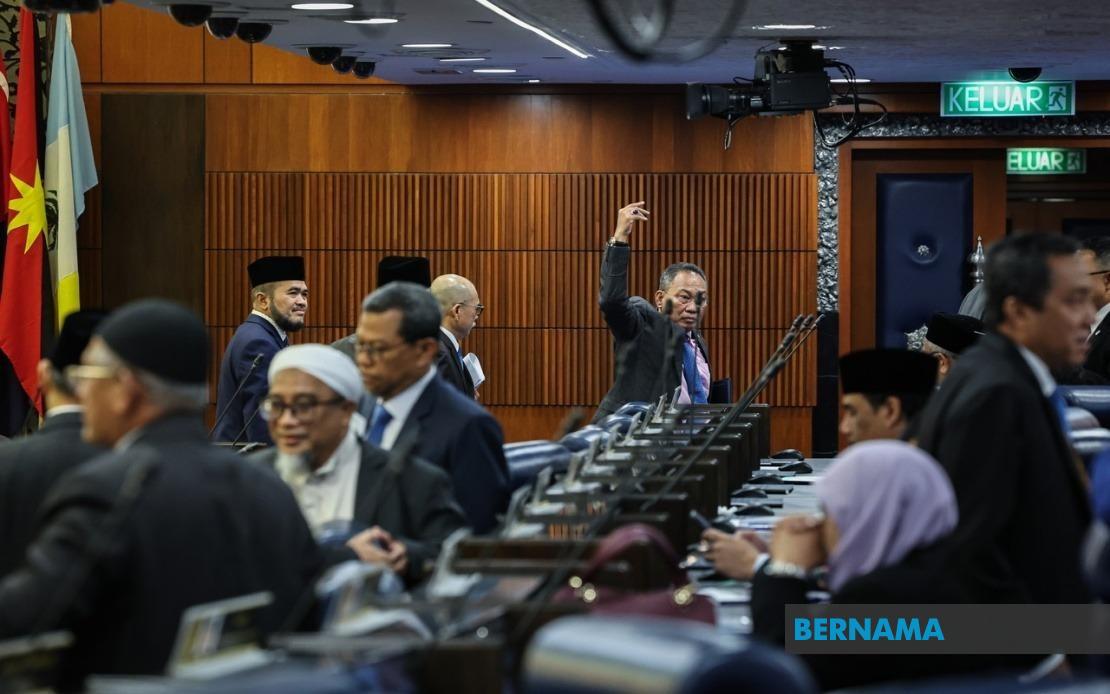
The opposition's decision to absent themselves from yesterday's Dewan Rakyat proceedings examining the Royal Commission of Inquiry findings on Tabung Haji has drawn sharp criticism from political observers, who argue the move represents a abdication of parliamentary duty at a moment when rigorous government scrutiny is most needed. Multiple analysts have characterised the boycott as particularly damaging given the institution's significance to Malaysia's Muslim community and the substantial financial concerns raised in the commission's investigation.
At the heart of the controversy lies a fundamental question about how elected representatives should discharge their obligations to constituents. The special parliamentary sitting was convened specifically to allow the government to present its response to the RCI's findings regarding management and operational failures spanning the 2014 to 2020 period. When Perikatan Nasional lawmakers, including Opposition Leader Datuk Seri Hamzah Zainuddin, opted to leave rather than participate, they effectively surrendered an institutional platform designed to serve public accountability. The absence extended to senior figures including PN Chief Whip Datuk Seri Takiyuddin Hassan and PN chairman Datuk Seri Dr Samsuri Mokhtar.
According to Assoc Prof Dr Mazlan Ali from Universiti Teknologi Mara, the decision to walk out disappoints not only the institution of Parliament but the 10 million Tabung Haji depositors whose savings and interests hang in the balance. These individuals elected representatives specifically to advocate on their behalf and to ensure government agencies operate with integrity and transparency. By declining to attend the ministerial briefing by Religious Affairs Minister Dr Zulkifli Hasan, opposition MPs forfeited the opportunity to extract detailed explanations about how weaknesses identified in the report would be remedied and to place concerns on the official parliamentary record.
The immediate catalyst for the boycott was the absence of Prime Minister Datuk Seri Anwar Ibrahim and Deputy Prime Minister Datuk Seri Fadillah Yusof, both receiving medical treatment. Opposition lawmakers sought postponement of proceedings pending the Prime Minister's attendance. Yet analysts question whether this precondition reflects genuine parliamentary necessity or represents political theatre that ultimately harms the institution's legitimacy. Mazlan observed that Minister Zulkifli Hasan held the requisite expertise within his portfolio to address substantive questions about Tabung Haji's governance and recovery strategy, rendering the Prime Minister's physical presence less essential to meaningful deliberation than might initially appear.
Dr Nazreena Mohammed Yasin, a senior lecturer in social sciences at Universiti Tun Hussein Onn, emphasises that parliamentary debate functions as an irreplaceable mechanism for ensuring government accountability. She underscores how legislators' active engagement during such proceedings strengthens the principle that state institutions answer to elected representatives and, by extension, to voters themselves. The Dewan Rakyat debate on the Tabung Haji RCI report provided precisely the institutional framework through which MPs could examine findings, pose searching questions, and demand government responses backed by the legitimacy of public record and parliamentary procedure.
Furthermore, Nazreena highlights that government accountability to Parliament does not depend on the Prime Minister's personal attendance at every proceeding. The architecture of responsible government contemplates that senior ministers bearing portfolio responsibility can adequately represent government positions and respond to parliamentary concerns. By insisting on the Prime Minister's presence despite his hospitalization, the opposition arguably prioritised political positioning over functional governance. Such tactics risk conveying to the public that opposition interest in depositor welfare is conditional upon partisan advantage rather than rooted in genuine commitment to institutional accountability.
The broader implications extend beyond the immediate Tabung Haji situation. Malaysia's system of parliamentary democracy relies fundamentally on opposition parties serving as vigilant custodians of public interest, prepared to scrutinise government actions across all policy domains. When opposition lawmakers selectively engage in parliament based on political calculation rather than principle, they erode the check-and-balance function that legitimises parliamentary democracy itself. The decision to boycott signals to depositors that their elected representatives may prioritise factional disputes over substantive advocacy for their welfare.
Mazlan cautions that the boycott creates a damaging political perception: that the opposition is less committed than the government to safeguarding Tabung Haji's sustainability and proper management. For an institution serving Malaysia's Muslim community and holding substantial public assets, continuous parliamentary scrutiny and debate should transcend partisan boundaries. The opposition's absence from yesterday's sitting therefore represents not merely a procedural misstep but a strategic miscalculation that potentially damages opposition credibility on governance matters.
Nazreena underscores that effective parliamentary opposition requires MPs to participate substantively in debates, pose difficult questions, demand satisfactory answers, and pursue follow-up action through legitimate parliamentary mechanisms. The RCI report identified significant governance and operational deficiencies spanning multiple years. The appropriate response involves rigorous parliamentary examination of how the government intends to address these systemic weaknesses, what corrective measures will be implemented, and how Parliament will monitor compliance with reform commitments. By absenting themselves, opposition legislators surrendered the opportunity to place such scrutiny on official record and ensure government accountability through transparent, public process.
The incident also reveals tensions within Malaysia's political culture regarding how legitimacy and accountability should function. When opposition parties weaponise parliamentary procedures to extract political concessions—such as the Prime Minister's attendance at specific sessions—they inadvertently undermine Parliament's institutional standing and public trust in its impartiality. Citizens observing such tactics may reasonably conclude that parliamentary debates serve factional interests rather than genuine public deliberation about governance failures and institutional reform.
Moving forward, analysts suggest that restoring confidence in parliamentary oversight will require both government and opposition to recommit to substantive engagement over partisan positioning. For the opposition specifically, this means preparing to participate actively in parliamentary proceedings even when political circumstances appear unfavourable, and to conduct scrutiny focused on public policy outcomes rather than leverage for tactical advantage. The Tabung Haji matter exemplifies why such commitment matters: millions of ordinary Malaysians depend on parliamentary institutions functioning credibly to protect their interests against institutional mismanagement and state negligence.
Ultimately, the boycott reflects a troubling tendency in contemporary Malaysian politics whereby constitutional mechanisms for accountability are treated as negotiable based on short-term political advantage. Parliament's legitimacy derives from its capacity to serve as a forum where government actions are examined transparently and elected representatives answer to constituents. When opposition parties decline to exercise this role, they diminish Parliament itself and render the protection of public interest vulnerable to the whims of executive discretion. For an institution tasked with safeguarding the savings of millions and serving a significant religious community, such parliamentary disengagement represents a failure of democratic duty.

