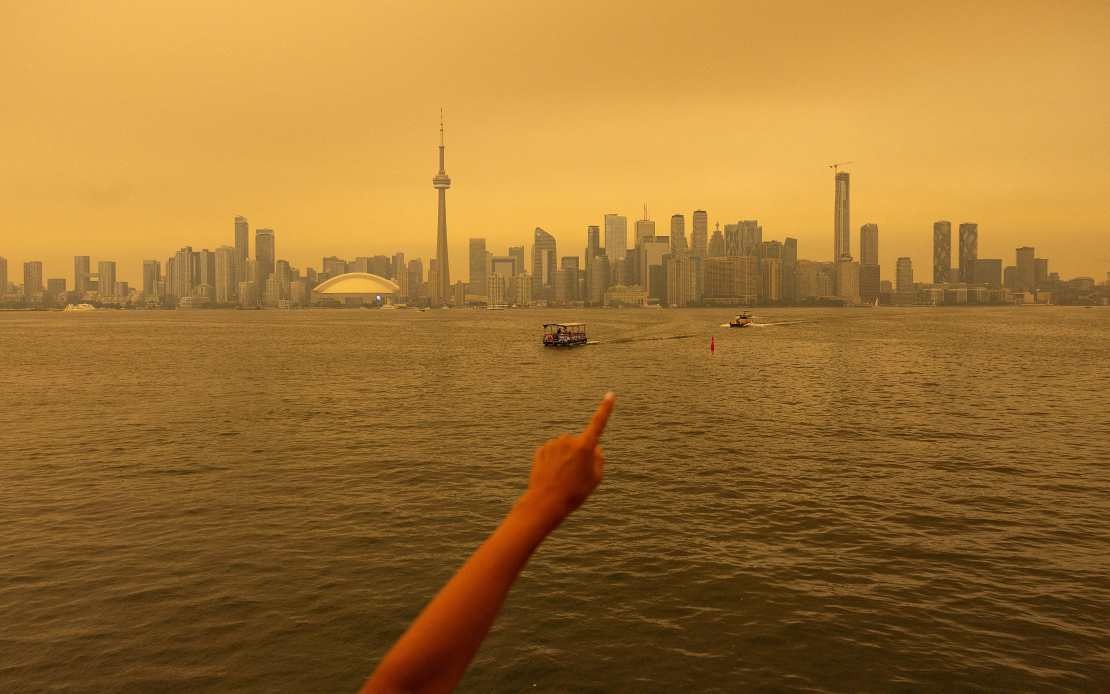
A severe wildfire crisis unfolding in northwestern Ontario is transforming Canada's major urban centres into haze-filled zones, with Toronto and Ottawa experiencing air quality conditions that rank among the worst recorded globally. The scale of the disaster underscores how rapidly environmental crises can transcend regional boundaries and affect densely populated areas hundreds of kilometres away from the fire source. For Malaysian observers, this situation offers sobering lessons about transnational environmental emergencies—a concern that resonates particularly in Southeast Asia, where regional haze events regularly impact multiple countries and millions of residents.
On Wednesday morning, Toronto's air quality index plummeted to record lows, marking the Canadian metropolis as the most polluted major city worldwide at that moment. Environment Canada's Air Quality Health Index classified conditions as "very high risk," a designation reserved for situations posing immediate threats to public health. Meanwhile, Ottawa's air quality alerts multiplied as the combination of wildfire smoke and summer humidity created a perfect storm for air stagnation. The humid conditions proved particularly troubling because moisture in the atmosphere traps particulate matter closer to ground level, preventing natural dispersal and creating the distinctive yellow haze that observers reported across both cities.
The environmental toll extends beyond mere visibility concerns. High concentrations of fine particulate matter and toxic compounds from burning vegetation penetrate deep into respiratory systems, triggering acute health episodes among vulnerable populations including children, elderly residents, and those with pre-existing respiratory conditions. Schools and outdoor activities have been curtailed, workplaces have implemented remote arrangements, and hospitals have prepared for respiratory emergencies. The disruption mirrors air quality crises that periodically grip Southeast Asian nations, where similar wildfire events—often from agricultural burning in Indonesia and Malaysia—create regional health emergencies affecting hundreds of millions.
The wildfire situation itself remains extraordinarily volatile, with more than 100 active fires currently burning across northwestern Ontario. The sheer number of simultaneous fire zones overwhelms firefighting capacity and ensures that smoke generation will persist for an extended period. Emergency authorities have initiated community evacuations from several settlements in affected regions, displacing residents and straining local emergency management resources. Indigenous communities in particular face disproportionate exposure, given their geographic proximity to many fire zones in Ontario's northern territories.
A dramatic illustration of the fires' intensity emerged when a Canadian National freight train found itself surrounded by raging wildfires near Armstrong, Ontario. Video footage captured by a locomotive crew member on late Monday depicted towering flames consuming forests on both sides of the railway corridor, casting an ominous red glow throughout the train's cab. The visual testimony underscores not merely the fires' proximity to critical infrastructure but also the unpredictable danger faced by rail operators during extreme fire events. CN formally authenticated the video on Wednesday and confirmed that the train crew had been evacuated safely, avoiding what could have become a catastrophic loss of life.
The railway disruption carries significant economic implications for Canada's freight network. CN, the country's largest railway operator, announced a temporary suspension of train operations across the affected section—a decision driven by legitimate safety concerns but one that interrupts cargo movement and supply chains dependent on reliable rail transit. Goods destined for ports, manufacturing facilities, and distribution centres face delays, rippling through the broader North American logistics ecosystem. For Malaysian importers and exporters engaged in Canadian trade, such disruptions can cascade through just-in-time supply arrangements and inventory management systems.
Meteorological forecasts suggest the smog crisis will intensify rather than dissipate imminently. Weather authorities point to prevailing atmospheric circulation patterns and wind flow, which are currently transporting smoke southward and trapping it over populated areas. Rather than dispersing naturally, these conditions promise to maintain hazardous air quality for several additional days. Only a significant weather shift—such as a frontal system bringing sustained winds or precipitation—would meaningfully improve conditions. Authorities have urged residents to remain indoors, seal windows, and utilize air filtration systems wherever possible.
The Ontario wildfire emergency provides a instructive case study in how rapidly environmental disasters can escalate and spread impacts beyond their geographic origin. A crisis confined to remote forestry regions has metastasized into a public health emergency affecting millions in urban centres. The incident demonstrates vulnerabilities in Canada's emergency management infrastructure, particularly regarding smoke dispersion prediction and real-time air quality monitoring. Similar vulnerabilities exist throughout Southeast Asia, where transnational haze events have repeatedly caught governments unprepared despite their frequency and predictability.
For Malaysian policymakers and environmental managers, the Ontario situation underscores the necessity of robust regional coordination mechanisms for environmental emergencies. When Indonesia's forests burn, Malaysian cities suffer; when Canadian forests ignite, Canadian cities choke. The interconnectedness of atmospheric systems means that environmental crises cannot be compartmentalized within national borders. Investment in predictive modelling, early warning systems, and coordinated cross-border response protocols represents not luxury but essential governance infrastructure in an era of climatic instability and increasing fire frequency.
The broader context suggests that such crises will become more frequent rather than exceptional. Climate warming extends fire seasons, creates drier forest conditions, and intensifies atmospheric circulation patterns that trap smoke. Ontario's current emergency may resolve within days, but the underlying drivers ensuring future recurrence remain unaddressed. Canadian and Malaysian authorities alike confront the strategic imperative of moving beyond reactive crisis management toward systematic adaptation of urban planning, public health infrastructure, and industrial operations to accommodate regular, severe air quality episodes.

