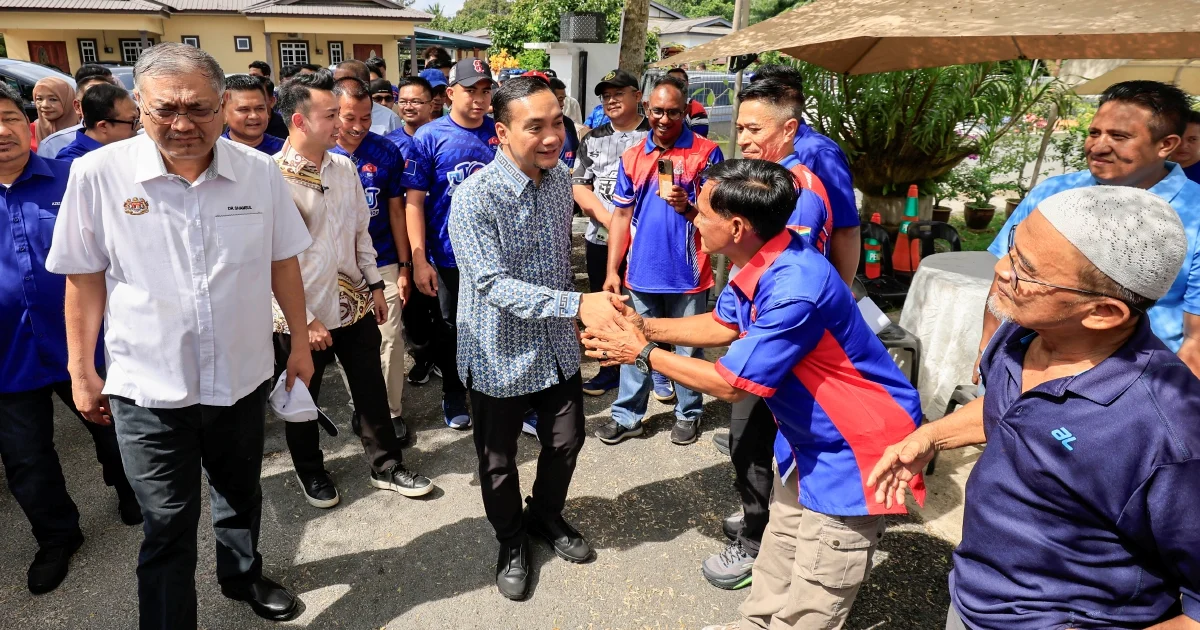
Johor Menteri Besar Onn Hafiz has defended the autonomy of political parties in formulating their own election tactics, speaking in the context of the Islamic party PAS's recent directive urging members to support Barisan Nasional candidates in constituencies where Perikatan Nasional does not contest. His remarks, made at Simpang Renggam, underscore the evolving landscape of Malaysian coalition politics where flexibility and strategic cooperation have become defining features of electoral competition.
The statement reflects a pragmatic acknowledgment of the shifting alliances that have characterised Malaysian politics over recent years. Rather than viewing PAS's decision as a departure from established norms, Onn Hafiz's position normalises such tactical adjustments as legitimate expressions of political strategy. This framing is significant because it signals acceptance of the increasingly fluid nature of Malaysian political coalitions, where parties negotiate support arrangements on a constituency-by-constituency basis rather than maintaining rigid nationwide partnerships.
PAS's decision to direct its members toward backing BN candidates in specific constituencies represents a calculated move to maximise electoral efficiency. By concentrating its contest efforts in constituencies where Perikatan Nasional has a strong organisational presence or electoral prospect, while strategically supporting BN in others, the party seeks to prevent vote-splitting that might benefit rival candidates. This approach reflects lessons learned from previous election cycles where opposition fragmentation allowed stronger-organised coalitions to capitalise on divided votes.
The strategic cooperation between PAS-affiliated Perikatan Nasional and BN in select races demonstrates how Malaysian political dynamics have evolved beyond the traditional two-coalition framework. For years, Malaysian elections operated within a simplified binary of government versus opposition. Today, the picture is considerably more complex, with parties engaging in issue-specific or seat-specific arrangements that serve mutual interests without requiring comprehensive political merger or long-term institutional integration.
From Johor's perspective, where Onn Hafiz governs as Menteri Besar, such flexible political arrangements carry particular significance. The state has experienced dramatic political shifts, transitioning through various coalition configurations. Endorsing the principle that parties may freely pursue their own strategic interests reflects Johor's pragmatic approach to state governance, where stable administration has often required working across traditional party lines and accommodation of diverse political viewpoints.
The broader Malaysian electorate frequently expresses frustration with rigid party hierarchies and predetermined electoral alliances that limit genuine democratic choice at the local level. Onn Hafiz's statement implicitly acknowledges this sentiment by validating the notion that parties should retain flexibility in how they present themselves and their candidates to voters. This perspective aligns with growing voter demand for candidates and platforms evaluated on merit rather than reflexive allegiance to coalition labels.
For BN specifically, receiving PAS support in constituencies where Perikatan Nasional does not compete offers tangible electoral advantage without requiring the political cost of formal coalition expansion. Such arrangements allow BN to benefit from PAS's grassroots organisation and member mobilisation in critical constituencies, particularly in states where Perikatan Nasional has demonstrable strength but where BN also harbours competitive prospects. This calculus proves especially valuable in marginal seats where every percentage point of additional support could determine outcomes.
The implications for Perikatan Nasional remain more ambiguous. While the coalition avoids direct competition with allied BN components in certain constituencies, it simultaneously signals that PAS may not enjoy the unconditional backing of all coalition partners in every electoral contest. This arrangement requires careful calibration to maintain coalition cohesion while simultaneously pursuing seat-level strategic optimisation. The success of such arrangements ultimately depends on whether participating parties genuinely benefit in terms of seat gains and policy influence relative to what they might achieve through alternative strategies.
Regional political observers note that Southeast Asia's mature democracies increasingly feature such tactical electoral arrangements. Indonesia's presidential politics routinely involve pre-election support agreements between parties that contest separately, allowing presidential candidates to assemble winning coalitions post-election. Malaysia's trajectory appears similarly towards greater pragmatism and flexibility in how parties approach electoral competition, even while maintaining distinct organisational identities and ideological positions.
Onn Hafiz's characterisation of PAS's decision as a legitimate strategic choice rather than a problematic aberration carries subtle but important messaging. It suggests that Malaysian politics is maturing beyond zero-sum coalition warfare, where any party maintaining independence or flexibility becomes automatically suspect. Instead, the implication is that sophisticated political engagement involves calculated decisions about when to compete directly, when to cooperate tactically, and how to leverage respective organisational strengths for mutual benefit.
Looking forward, such arrangements will likely become more common as Malaysian voters increasingly demand greater choice and flexibility in local electoral contests. Parties that can articulate coherent rationales for their seat-specific strategies—whether contesting directly or offering support to coalition partners—will find greater acceptance than those that appear to follow directives from centralised leadership without regard to local circumstances or constituent preferences.
The acceptance of PAS's strategic orientation by senior leaders across coalition partners suggests that Malaysian politics continues evolving toward greater sophistication in how coalitions manage both unity and autonomy. Rather than requiring permanent institutional integration, successful political cooperation now increasingly operates through negotiated, renewable arrangements subject to regular reassessment. This development reflects maturation of democratic practice where parties maintain distinct identities while cooperating pragmatically on specific objectives.

