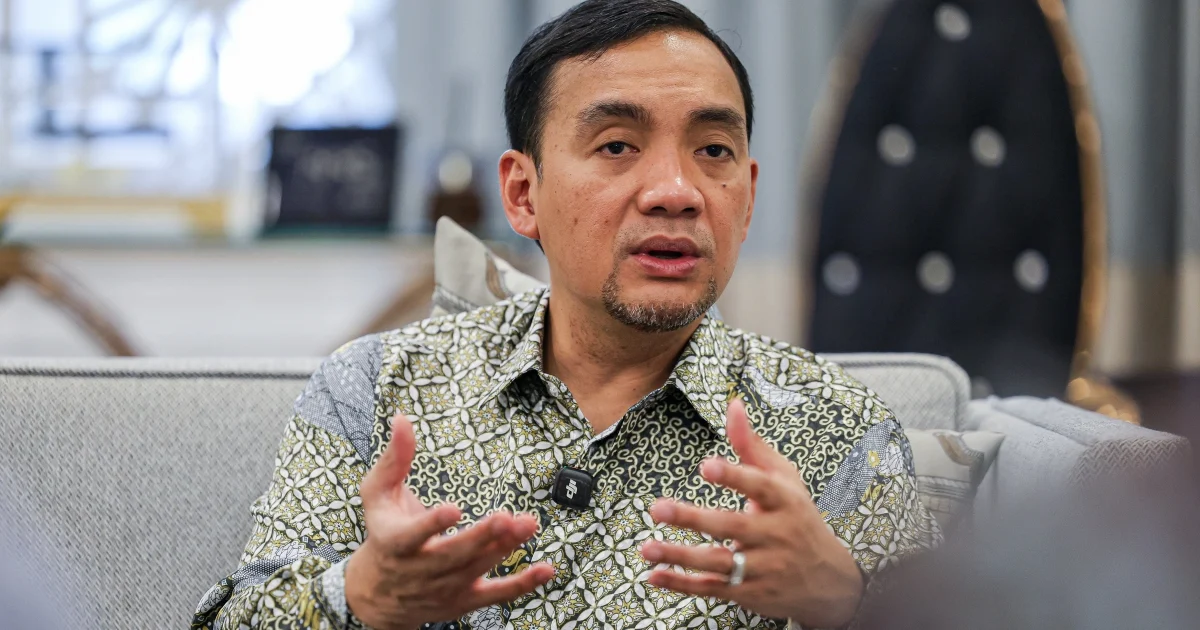
Caretaker Johor Menteri Besar Datuk Onn Hafiz Ghazi has moved swiftly to reject claims circulating in political circles that he had attributed the dissolution of the Johor state assembly to a directive from the palace. The denial comes after Datuk Dr Mohd Puad Zarkashi appeared to suggest that Onn Hafiz had made such a claim, raising fresh questions about the circumstances surrounding the assembly's recent dissolution and the constitutional processes involved in the decision.
The exchange reflects the heightened sensitivities surrounding the Johor assembly dissolution, a politically charged matter that has attracted scrutiny from multiple quarters over whether proper constitutional and governmental protocols were observed. In Malaysian politics, where the roles and influence of the palace in state-level governance remain a subject of considerable discussion, any suggestion that a menteri besar has attributed major decisions to a royal directive carries significant implications for how the public perceives the decision-making process and the balance of power in state administration.
Onn Hafiz's categorical denial underscores the delicate nature of such allegations. By rejecting Puad Zarkashi's characterisation outright, the caretaker leader is asserting that his own assessment and political judgment shaped the dissolution decision. This distinction matters because it speaks to questions of ministerial accountability and the separation between personal political authority and constitutional authority vested in the palace. In the Malaysian system, the menteri besar holds executive responsibility for state administration, and claiming that major decisions stem from one's own political will rather than external directives is a way of defending that responsibility.
The broader context surrounding the Johor assembly dissolution has been marked by considerable political manoeuvring. State assemblies are dissolved for various reasons—some voluntary dissolutions are triggered when a government believes electoral timing favours it, while others emerge from political instability or constitutional necessity. The public and political establishment alike have been keen to understand whether the timing and circumstances of Johor's dissolution reflected genuine political or administrative imperatives, or whether it was primarily a calculated electoral strategy.
Puad Zarkashi, a former religious scholar and political figure, has maintained a presence in public discourse on state and federal affairs. His suggestion that the palace played a directive role in the dissolution would, if substantiated, paint a very different picture of how decisions are made at the state level. However, Onn Hafiz's refutation indicates he is unwilling to have his administration characterised as merely executing instructions from above, preferring instead to position his office as the locus of decision-making authority regarding the dissolution.
This disagreement also touches on broader questions about governance transparency in Malaysian state politics. Political observers have noted that the circumstances and justifications for the Johor assembly dissolution warrant public clarity, particularly given the impact such decisions have on the political calendar, electoral scheduling, and the resources required to conduct fresh elections. When different political figures offer conflicting narratives about how and why such decisions were made, it can fuel public scepticism about the integrity of the process.
The timing of this denial is notable as Johor prepares for state elections following the assembly's dissolution. In pre-election periods, clarifications about the legitimacy and propriety of the dissolution decision can influence voter sentiment and public confidence in the electoral process. Onn Hafiz's rejection of Puad Zarkashi's claims appears designed to establish that the dissolution was a consequence of sound governance judgment rather than an external imposition, thereby buttressing the legitimacy of the forthcoming election.
For observers of Malaysian politics, this exchange highlights the complex dynamics between elected state leaders and the constitutional monarchy at the state level. While the palace retains important ceremonial and constitutional functions in state governance, the exact nature and scope of its influence in routine state decisions remain matters of interpretation and debate. When politicians dispute characterisations of the palace's role in specific decisions, they are essentially engaging in a debate about proper constitutional procedure and the boundaries of executive authority.
The denial also reflects political strategy. By stating clearly that he, not the palace, made or endorsed the dissolution decision, Onn Hafiz attempts to consolidate political credit for the move. If the decision ultimately proves popular with voters, he can claim ownership; if it becomes unpopular, attributing it to a palace directive could become a liability for his leadership credentials. The framing of decision-making authority is therefore not merely a technical matter of constitutional law but a question with electoral and reputational consequences.
Looking ahead, both the state and federal political establishments will be watching how the Johor electorate responds to the election and the various narratives offered about how the dissolution came about. Onn Hafiz's firm rejection of Puad Zarkashi's claim is one data point in an ongoing political conversation about governance, legitimacy, and the proper exercise of power in Malaysia's federal system. Whether this clarification satisfies public concerns or merely adds another layer to the debate remains to be seen as campaigning intensifies and the election draws nearer.

