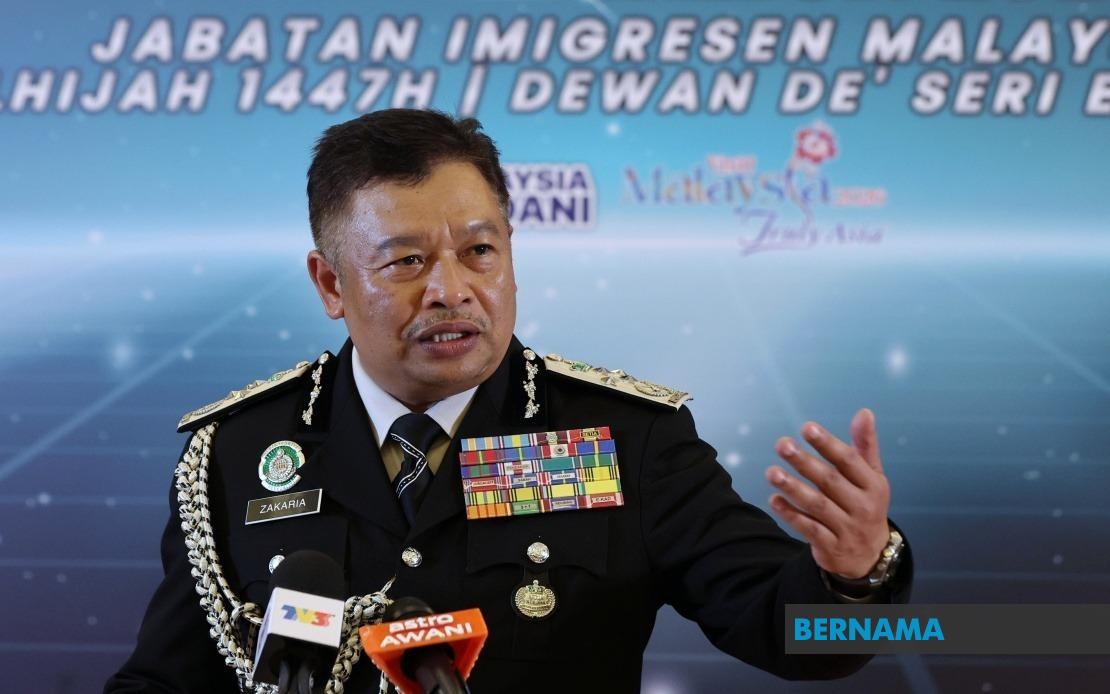
The Malaysian Immigration Department has moved to clarify the recent suspension of extended passport validity, confirming that the problem affecting travel documentation remains isolated to a handful of carriers rather than representing a broader international rejection of Malaysian travel papers. Datuk Zakaria Shaaban, the department's director-general, disclosed during a Putrajaya press conference that only two airlines have reported experiencing difficulties when handling Malaysian International Passports with validity periods surpassing the standard 10-year term, effectively narrowing the scope of what initially appeared to be a systemic concern.
The clarification carries significant implications for the travelling Malaysian public, who had faced uncertainty following the abrupt suspension announcement. Zakaria emphasised that the issue stems entirely from technological limitations within specific airline systems rather than reflecting any international resistance to Malaysian travel documents. This distinction matters considerably, as it frames the problem as a manageable technical compatibility issue rather than a diplomatic or credibility concern affecting Malaysia's standing in global aviation.
The Immigration Department's position that other carriers operate without encountering comparable difficulties when processing these extended-validity passports reinforces this interpretation. The agency has noted that the systems in question are utilised globally by numerous international airlines, yet most function without impediment when processing Malaysian passports. This variation suggests that the two affected carriers either operate legacy technology infrastructures or utilise specialized systems configured in ways incompatible with Malaysia's current passport specifications.
When Malaysia introduced the option to extend passport validity beyond the standard decade, the policy included a provision that allowed returning applicants to retain unused validity from their previous documents. This meant that citizens renewing their passports with substantial remaining validity would receive an additional six-month extension to compensate for the validity they were sacrificing. The extension mechanism represented a practical response to ensure Malaysian citizens were not financially disadvantaged when updating their travel documents.
The suspension announced by the Immigration Department has specifically targeted this additional validity period—the portion exceeding ten years—while maintaining the standard ten-year validity as an unwavering baseline. This measured approach preserves the core passport validity without completely reverting to an earlier system, thereby minimising disruption while technical remedies are developed. The department's decision to continue issuing standard ten-year passports without interruption demonstrates an effort to balance addressing airline compatibility concerns against the practical needs of Malaysia's mobile population.
Recognising the inconvenience already experienced by citizens who received passports with the extended validity period before the suspension, the Immigration Department announced a complementary measure. Malaysian passport holders already issued documents with validity periods of ten years and six months can now access replacement passports at no charge. This gesture addresses equity concerns, ensuring that citizens who acted in good faith in obtaining extended-validity documents are not penalised by a subsequent policy change driven by third-party technical constraints.
The involvement of the International Civil Aviation Organization indicates that resolving the issue requires coordination beyond Malaysian borders and bilateral airline discussions. ICAO's potential role suggests that the compatibility problem may intersect with international aviation standards, meaning solutions will likely necessitate collaborative troubleshooting involving regulatory bodies, technology providers, and the affected carriers themselves. This international dimension underscores why the problem cannot be resolved through unilateral Malaysian action alone.
Zakaria's acknowledgement that additional airlines might be experiencing difficulties without yet reporting the matter adds a layer of operational uncertainty. While only two carriers have formally notified the Immigration Department, the possibility of silent failures or unreported incidents suggests the full scale of the problem remains potentially underestimated. Malaysian citizens planning travel through multiple carriers should therefore remain cautious, as their passport validity status could prove problematic with carriers not yet included in the department's current assessment.
The suspension's timing and scope reflect a pragmatic government response to an unexpected technical constraint. Rather than maintaining a policy that renders travel documents problematic for affected passengers, the Immigration Department has opted for transparency and temporary restriction. This approach protects Malaysian travellers from potential airport incidents while demonstrating official accountability for ensuring travel documents function reliably across the aviation industry.
For Malaysian business travellers, frequent flyers, and expatriates who depend on passport validity extending beyond a decade, the situation introduces planning complications. Those whose passports are nearing expiration now face a decision between accepting the standard ten-year term or waiting for technical resolutions that could extend their validity. The free replacement offer provides some relief, though administrative effort remains required for affected citizens to access this benefit.
The broader context suggests Malaysia's passport system will ultimately require technical harmonisation with global airline infrastructure as digital systems become increasingly sophisticated. The current issue, while limited in immediate scope, highlights the vulnerability of any national travel document system to incompatibilities with external technological ecosystems. As Malaysia continues developing its immigration technology infrastructure, ensuring forward compatibility with international aviation systems will likely become increasingly important for preventing similar disruptions.

