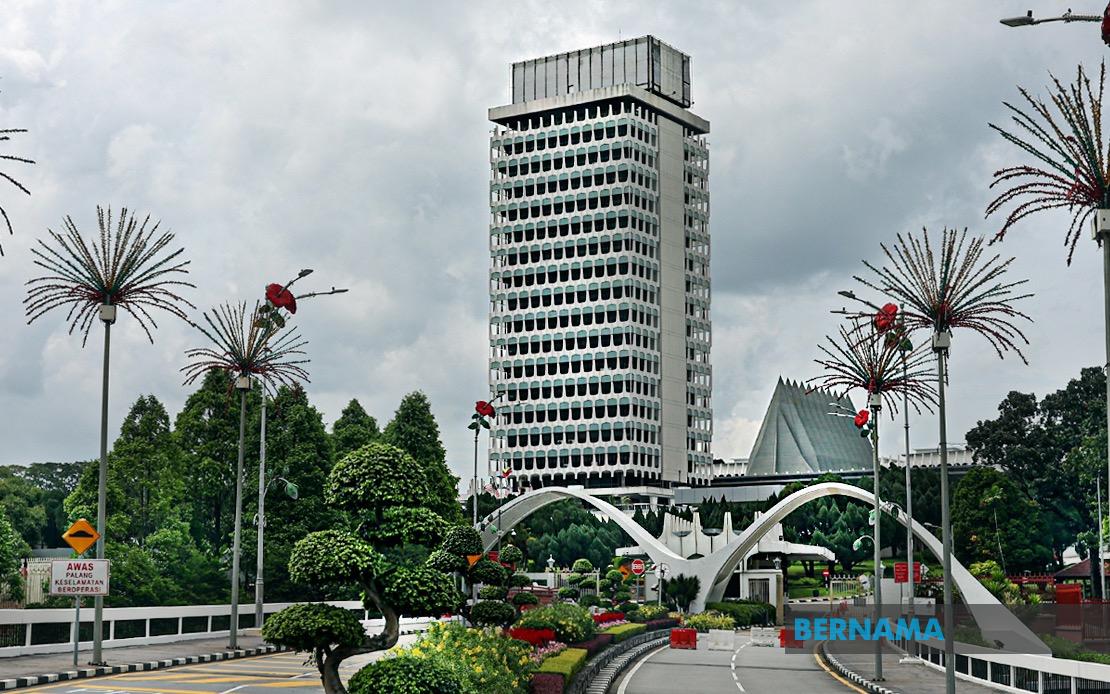
The Road Transport (Amendment) Bill 2026 emerged as the sole legislation to gain parliamentary approval during the opening week of the 15th Parliament's second meeting, reflecting a measured legislative pace as lawmakers settle into the 16-day sitting that runs through mid-July. The singular passage underscores the complexity of current parliamentary business, with multiple pieces of legislation either in early stages or undergoing committee review before proceeding to fuller debate.
Transport Minister Anthony Loke characterised the approved amendment as a meaningful response to longstanding enforcement challenges in combating illegal street racing. The new Section 42A fundamentally reshapes how authorities can intervene against dangerous driving behaviour, permitting law enforcement to take action before an accident occurs rather than requiring them to wait for documented injuries or fatalities. This represents a deliberate closing of what Loke described as an existing legal gap, where proving the dangerous nature of conduct proved unnecessarily burdensome for prosecutors lacking evidence of actual harm.
The practical implications of this change are significant for Malaysia's police and traffic enforcement agencies, which have struggled for years to curb the persistent problem of illegal racing on public roads. Previously, officers needed to establish elements of danger or consequence—a high evidentiary bar—before initiating enforcement action. The amendment lowers this threshold considerably, enabling preventive intervention that could substantially reduce racing-related accidents before they happen. For Malaysian drivers and families affected by such incidents, this legislative shift addresses a genuine public safety concern that has generated sustained community frustration.
Looking ahead, Loke indicated that his ministry will introduce another amendment to the Road Transport Act later this year targeting a separate but related issue: establishing a compensation framework for victims of accidents caused by impaired drivers. This proposed change would sit alongside existing criminal penalties of fines and imprisonment, creating a more comprehensive approach to holding intoxicated drivers accountable. The expansion of victim compensation schemes represents a broader global trend in traffic law reform, recognising that injured parties deserve financial recovery beyond what criminal sanctions alone can provide.
The Prison (Amendment) Bill 2026 followed a markedly different trajectory, being pulled back from full parliamentary consideration and referred to the Parliamentary Select Committee for deeper examination. This legislation originally sought to authorise electronic monitoring systems for prisoners and enable volunteer-led rehabilitation initiatives. The decision to defer it suggests substantive questions remain about implementation details, budgetary implications, or constitutional matters—matters best resolved through detailed committee work rather than rushed floor debate. Such strategic postponements reflect parliamentary maturity, avoiding hasty passage of complex criminal justice reforms.
Four additional bills entered their initial reading stage, including the Sexual Offences Against Children (Amendment) Act 2026, Competition (Amendment) Bill 2026, Competition Commission (Amendment) Bill 2026, and the Cybercrime Act 2026. The cybercrime legislation notably seeks to replace the ageing Computer Crimes Act 1997, a long-overdue modernisation given the digital landscape's dramatic transformation over the past quarter-century. These first readings represent the beginning of formal parliamentary scrutiny, with extensive debate and potential amendments anticipated in subsequent readings.
Beyond the legislative calendar, parliament witnessed significant leadership and procedural developments. Larut Member of Parliament Datuk Seri Hamzah Zainudin's reinstatement as opposition leader, effective from mid-June, carries implications for parliamentary dynamics and the official opposition's capacity to scrutinise government actions. Additionally, two recent parliamentary vacancies—Pandan and Setiawangsa—following ministerial resignations require electoral commission notification and eventual by-election scheduling, processes that will unfold over coming months.
Minister's Question Time typically provides a platform for prime ministerial accountability, yet Prime Minister Datuk Seri Anwar Ibrahim's absence during the week meant relevant portfolio ministers fielded enquiries instead. While such delegation occurs periodically due to scheduling pressures, it nonetheless modifies the dynamic of parliamentary oversight during a sitting dedicated partly to examining executive performance. The continued emphasis on parliamentary select committee presentations reflects institutional efforts to strengthen these bodies' roles in legislative scrutiny and policy development.
Employment concerns dominated much parliamentary discourse, with Human Resources Minister Datuk Seri R. Ramanan reporting that 42,807 workers faced retrenchment between January and mid-June. Company closures and restructuring emerged as principal causes, painting a picture of labour market disruption affecting families across the country. Yet Economy Minister Akmal Nasrullah Mohd Nasir offered countervailing data suggesting underlying resilience, noting that June retrenchments dropped 20 percent from May levels and the labour force participation rate held steady at 70.9 percent. This mixed messaging—acknowledging significant job losses whilst emphasising overall stability—reflects the current economic tension between sectoral weakness and broad-based employment durability.
Border security considerations received heightened attention, with Home Minister Datuk Seri Saifuddin Nasution Ismail announcing RM22 million in approved funding for the Malaysia Border Control and Protection Agency. This capital injection addresses operational requirements for firearms and equipment, reflecting persistent challenges in securing Malaysia's maritime and land boundaries against smuggling, human trafficking, and irregular migration. For a nation with extensive coastal and terrestrial borders, adequate frontier agency resourcing remains perpetually critical.
The Ministry of Plantation and Commodities signalled cautious exploration of B50 biodiesel deployment, acknowledging that upgrading existing blending facilities would entail substantial investment. This measured approach to renewable fuel expansion reflects realistic assessment of infrastructure constraints and capital requirements, particularly relevant for Malaysia as it navigates global supply disruptions affecting fuel and agricultural commodities.
Online safety emerged as another significant parliamentary focus, with Communications Minister Datuk Fahmi Fadzil highlighting the June 1 implementation of the Child Protection Code and Risk Mitigation Code. These requirements mandate age-verification systems on social media platforms, aiming to shield young users from harmful content. Non-compliance carries penalties reaching RM10 million under the Online Safety Act 2025, establishing genuine enforcement teeth. For Southeast Asia's digital-native population and concerned parents, these provisions represent substantive progress in platform accountability, though implementation effectiveness remains subject to ongoing assessment.

