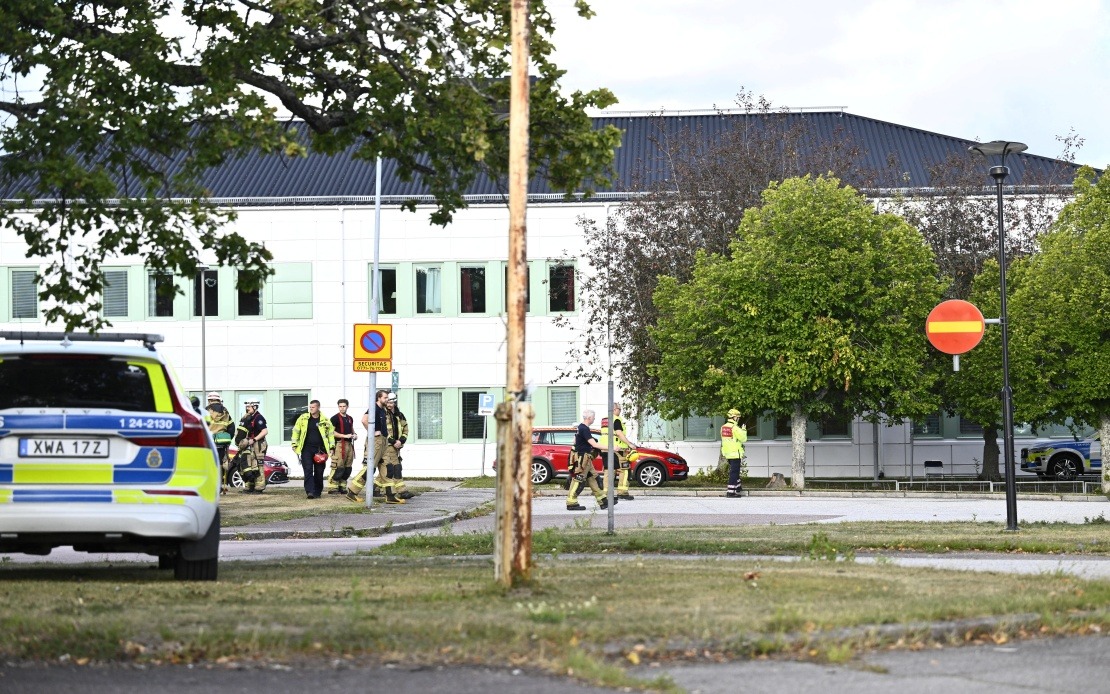
A tragic incident unfolded at Brinell School in the Swedish town of Fagersta when an armed assailant stormed the premises with a sword, resulting in one fatality and multiple casualties. Emergency responders arrived at the school at 2.06 pm local time after receiving urgent distress calls. The violence sparked an immediate security response across the municipality, with several educational and recreational facilities locked down as authorities worked to contain the situation and ensure public safety.
The assault claimed one life, while two boys under the age of 18 sustained serious injuries in the attack. Both teenagers remain hospitalised in serious but stable condition, their injuries significant enough to warrant intensive medical supervision. A third person also received medical attention for minor injuries sustained during the incident. The exact nature and circumstances surrounding how the injuries were inflicted are still being investigated by Swedish authorities.
Police swiftly apprehended the suspect at the scene. The perpetrator is an 18-year-old male with documented connections to Fagersta, being linked to two separate addresses within the town. Crucially, he had previously attended Brinell School, establishing a prior connection to the institution where the violence erupted. This detail has raised questions about potential grievances or motivations that may have driven the assault, though investigators have not yet disclosed specific details about the suspect's background or any apparent motives.
The security response following the incident was substantial and precautionary. Seven facilities across Fagersta were placed under lockdown, including Olympen, Fagerstahallen, Risbroskolan, Skogsglantan, Bjorksta, Prastkragen, and Norrbybacken. This widespread defensive measure reflected the seriousness with which local authorities treated the threat and underscored concerns about potential secondary incidents. The lockdown procedures kept hundreds of students and staff confined to their locations until authorities confirmed the situation had been fully contained.
Justice Minister Gunnar Strommer acknowledged the gravity of the incident and emphasised government engagement with the unfolding crisis. In an official statement, Strommer indicated that the government was maintaining close coordination with police forces investigating the attack. He noted that law enforcement personnel were present at the school and working with considerable intensity to gather evidence, interview witnesses, and piece together the sequence of events leading to and following the violent assault. The minister's public acknowledgement signalled that this was being treated as a matter of national concern rather than a purely local incident.
For Malaysia and other Southeast Asian nations, this event reflects ongoing concerns about school security and youth violence in developed democracies. While weapon-based attacks in educational settings occur more frequently in some Western countries, they remain relatively rare in most parts of Southeast Asia, though school safety protocols have become increasingly important globally. The incident highlights how even well-developed nations with sophisticated law enforcement systems face challenges in preventing determined individuals from carrying out violent acts.
The response of Swedish authorities demonstrates the importance of rapid emergency mobilisation and coordinated communication between police, healthcare providers, and educational institutions. The fact that emergency services arrived within minutes of the alarm being raised and that the suspect was quickly apprehended likely prevented the situation from escalating further. This level of responsiveness represents a model that security and emergency management professionals often study.
Questions about how an 18-year-old managed to enter a school with a sword, and whether there were warning signs that might have alerted authorities beforehand, will likely dominate the investigation and subsequent public discourse in Sweden. Schools typically implement access control measures, and the mechanics of how this attack transpired despite such safeguards may prompt a review of security protocols not only in Fagersta but across Swedish educational institutions.
The psychological impact on the school community will be substantial and long-lasting. Traumatised students and staff will require counselling and mental health support in the days and weeks ahead. The incident will inevitably reignite debates in Sweden about youth mental health, early intervention programmes, and how communities can identify and assist troubled young people before they resort to violence. These conversations will influence policy discussions beyond Sweden, affecting how other nations approach school safety and youth welfare initiatives.

