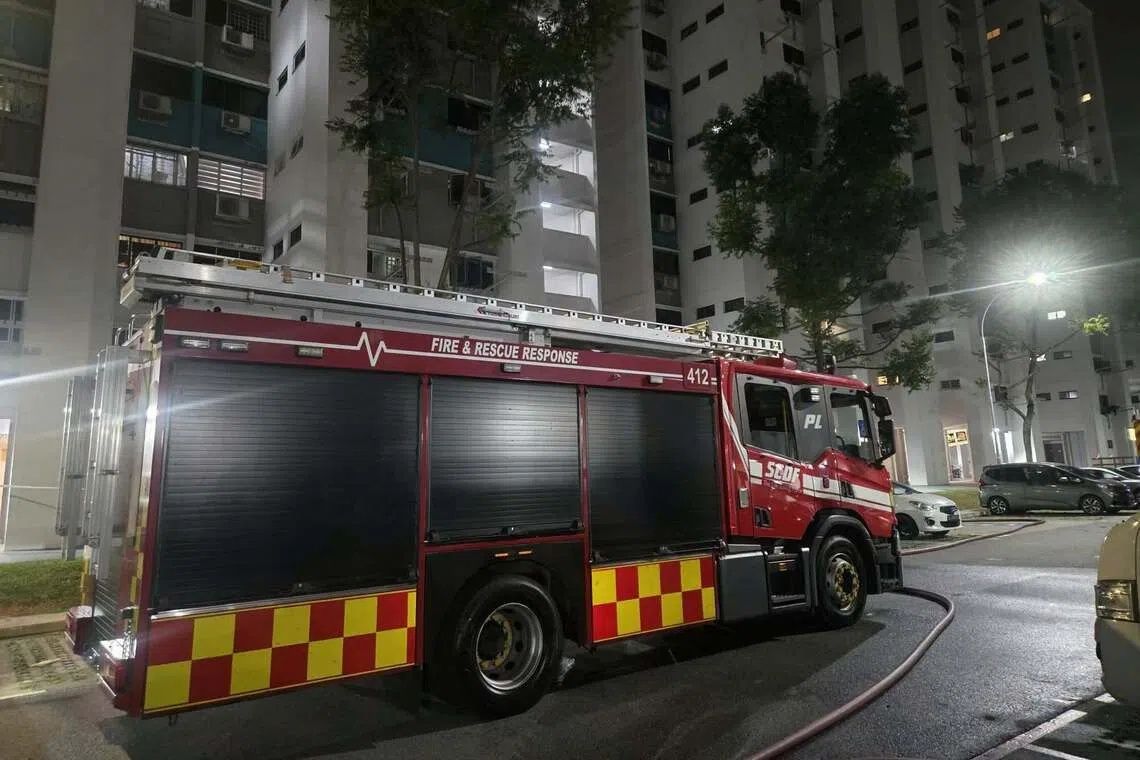
A residential fire in Singapore's Jurong East district claimed at least one life and forced dozens of residents to flee their homes during the pre-dawn hours of August 16. The Singapore Civil Defence Force responded to the emergency at Block 339 Jurong East Avenue 1 at 3.55am, discovering thick black smoke billowing from a third-floor unit. Firefighters who forced their way into the burning flat located an unresponsive occupant in the living room, where the flames had originated before consuming items throughout the space. A paramedic at the scene confirmed the resident had died. In total, 50 residents from the block were evacuated as a precaution, though the precise extent of injuries or damage to other units has not been detailed.
The incident represents a disturbing escalation in residential fire fatalities across Singapore's public housing sector, now marking at least the fourth deadly fire in HDB flats within a span of just over two weeks. The confluence of these tragedies raises urgent questions about fire safety practices, maintenance standards, and occupant awareness in densely populated housing estates where thousands of families live in close proximity. For Malaysian observers, the frequency of such incidents in Singapore's generally well-regulated environment serves as a sobering reminder that even developed urban centres with advanced building codes and emergency services remain vulnerable to domestic fire hazards. The pattern suggests systemic vulnerabilities that transcend economic development, pointing instead to human behaviour, ageing infrastructure, or gaps in safety compliance across the broader Southeast Asian region.
The circumstances of the first fatal incident began unfolding on July 28, when a fire erupted at Block 39 Circuit Road during morning hours, resulting in the death of a 70-year-old male resident. Just three days later, on July 31, a significantly more severe blaze broke out on the eighth floor of Block 309 Clementi Avenue 4, killing a 65-year-old man and injuring two firefighters who were battling the flames. The injuries sustained by professional rescue personnel highlight the ferocity and unpredictability of fires in high-rise residential settings, where smoke inhalation, structural hazards, and limited escape routes compound the dangers faced by both occupants and responders. Less than a week after that incident, on August 3, another fire engulfed a fifth-floor unit at Block 684 Race Course Road, hospitalising five residents aged between 55 and 88 years old. The most elderly victim, an 88-year-old man from this third fire, subsequently succumbed to his injuries on August 5, bringing the confirmed death toll from these fires to four within the space of nine days.
The clustering of fatal residential fires within such a compressed timeframe has prompted concerns about whether common factors link these incidents or whether they represent isolated accidents driven by individual circumstances. The Singapore Civil Defence Force has indicated that the cause of the Jurong East fire remains under investigation, as it does for the other incidents. Without access to preliminary findings or official analysis, observers can only speculate about contributing elements such as electrical faults, cooking accidents, smoking in bed, improper storage of flammable materials, or inadequate smoke detection systems. Understanding these causal patterns would be invaluable not only for Singapore's housing authorities but also for housing estates across Malaysia, where similar multi-unit residential complexes house millions of residents in comparable architectural configurations and living arrangements.
The disproportionate vulnerability of elderly residents emerges as a particularly tragic pattern across these fires. Three of the four confirmed fatalities involved residents aged 65 or older, suggesting that seniors may face heightened risks in emergency situations due to mobility limitations, delayed reaction times, cognitive factors, or pre-existing health conditions that compromise their ability to escape rapidly or withstand smoke exposure. Additionally, many elderly residents live alone or with limited household support, meaning they may have no one to alert them to danger or assist in evacuation. This demographic vulnerability warrants targeted public health interventions, including enhanced smoke alarm installation programmes focused on homes with elderly occupants, community fire safety education delivered through channels that reach seniors effectively, and potentially modified building codes that account for the specific needs of ageing populations in public housing.
For Malaysia's context, these Singapore incidents resonate particularly given the prevalence of similar multi-storey public housing developments across the country, from Kuala Lumpur to Penang to Johor Bahru. Malaysian housing authorities, building safety regulators, and fire services would benefit from close examination of whether Singapore's experience reveals systemic gaps that might similarly affect local residential complexes. Factors such as the age and maintenance condition of electrical systems, compliance with fire safety codes in older buildings, the adequacy of smoke detection and sprinkler systems, and the design of emergency evacuation routes merit scrutiny. The concentration of incidents within a two-week period raises the possibility that external factors such as environmental conditions, seasonal patterns in electrical failures, or a particular maintenance schedule may have contributed, rather than purely random chance.
The evacuation of 50 residents from the Jurong East block, while ultimately necessary and appropriate, also illustrates the significant community disruption that fire incidents generate beyond the immediate tragedy of fatalities. Displaced families must find temporary accommodation, retrieve possessions, navigate insurance claims, and cope with the psychological trauma of experiencing a disaster in their home. For a region like Southeast Asia where many residents live in modest economic circumstances and maintain limited financial reserves, the secondary impacts of displacement can be devastating even when lives are spared. Housing authorities across the region must balance rigorous evacuation protocols with investment in fire prevention to minimise the frequency of such incidents and their cascading consequences for residents.
The role of the Singapore Civil Defence Force in this incident exemplifies the critical importance of well-resourced, professionally trained emergency services in mitigating fire fatalities. The rapid response time, forced entry capability, and paramedic assessment demonstrated in this case likely saved additional lives. However, the injury of two firefighters in the Clementi Avenue 4 fire underscores the profound personal risks that emergency responders shoulder when confronting residential fires in high-rise settings. Southeast Asian nations must ensure that their fire services receive adequate funding, regular training, modern equipment, and personnel development to maintain operational excellence under the most demanding circumstances. Furthermore, public recognition of firefighter sacrifice should translate into broader support for prevention programmes that reduce the frequency of incidents and thus the exposure of rescue personnel to danger.
Going forward, the string of fatal fires in Singapore should catalyse regional dialogue about residential fire safety standards, building code enforcement, and public awareness campaigns. The fact that such tragedies can occur in one of the world's wealthiest and most developed urban centres demonstrates that technological advancement and economic prosperity do not automatically protect populations from the hazards inherent in residential living. Instead, sustained vigilance, community engagement, regular maintenance, continuous training, and evidence-based policy modifications represent the most effective tools for preventing tragedies. Malaysian policymakers, housing developers, and residents would do well to monitor Singapore's response to this crisis and consider how lessons learned might inform improvements to fire safety protocols in their own communities, potentially preventing similar loss of life in the region's densely populated housing estates.

