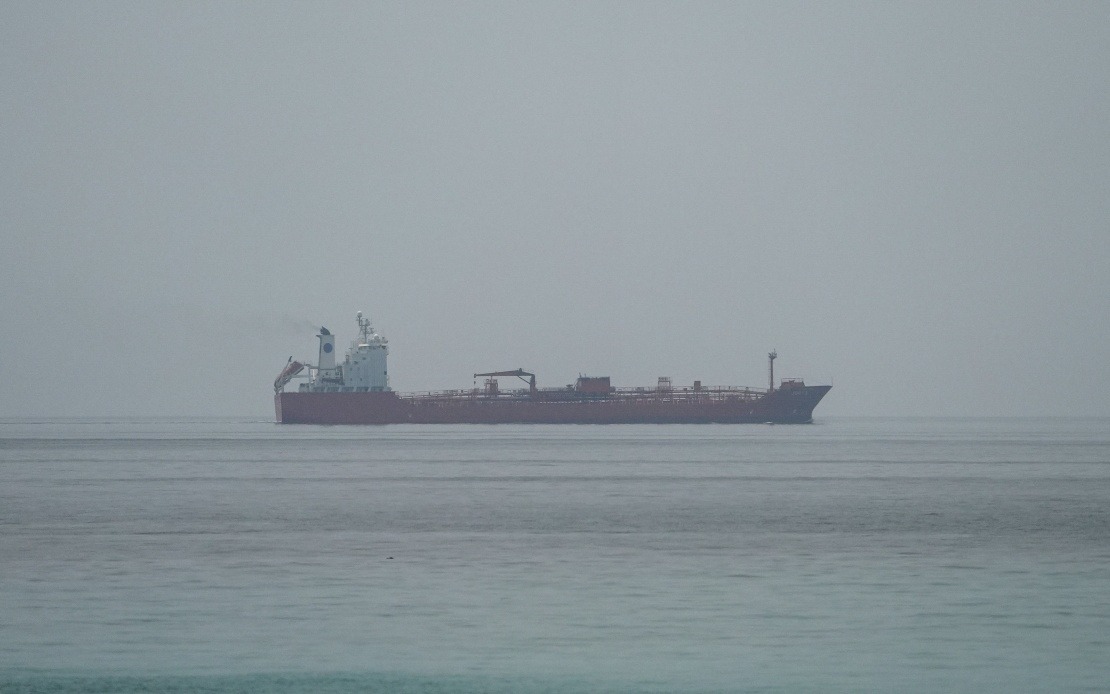
Oman has thrown its weight behind the memorandum of understanding signed between the United States and Iran, with Foreign Minister Badr Albusaidi emphasising the accord's critical importance for restoring peace and guaranteeing unobstructed navigation through the Strait of Hormuz. Speaking at a joint ministerial gathering between the Gulf Cooperation Council and Washington in Bahrain on Thursday, Albusaidi underscored his nation's distinctive position as a coastal power directly overlooking this vital waterway and the responsibility that entails for championing global maritime security efforts.
The Omani foreign minister made an explicit commitment that future protocols governing transit through the strait would not impose charges on vessels, a significant reassurance given regional anxieties over potential disruptions to one of the world's most economically vital shipping lanes. This declaration reaffirms Muscat's broader strategic posture as a moderating influence in Gulf affairs, a role the sultanate has cultivated through decades of diplomatic engagement across sectarian and geopolitical divides. Oman's willingness to anchor its position within the framework of international maritime law and the UN Convention on the Law of the Sea lends institutional weight to its assurances.
The timing of these remarks carries considerable weight. The Iran-US understanding, a 14-point arrangement brokered by Pakistan, took effect on June 18 after receiving electronic signatures from Iranian President Masoud Pezeshkian and US President Donald Trump. The agreement represents a significant diplomatic breakthrough, addressing multiple flashpoints that have destabilised the region, including hostilities spanning Lebanon, the contested waters of the Hormuz Strait itself, and the removal of the US naval blockade that has constrained Iranian economic activity.
This settlement arrived in the wake of an escalatory cycle that threatened to spiral into broader conflict. In late February, the US and Israel conducted military strikes against Iranian targets, prompting Tehran to launch retaliatory attacks against Israeli and regional positions hosting American military personnel and installations. The international community watched with apprehension as the cycle of tit-for-tat strikes raised the spectre of a more expansive conflagration that could have crippled global energy supplies and disrupted international commerce on an unprecedented scale.
For Southeast Asian economies, including Malaysia, the restoration of stability in the Strait of Hormuz carries immediate and tangible consequences. Through this chokepoint passes approximately one-third of global maritime petroleum traffic, making it indispensable to energy-dependent industrialised economies across the region. Any prolonged closure or even sporadic disruption would reverberate through supply chains, elevate fuel costs, and compress economic growth prospects. Malaysian petrochemical industries, manufacturing sectors reliant on imported energy, and consumers dependent on affordable petroleum products all have a vested interest in maintaining unobstructed passage.
The GCC-US dialogue framework through which Albusaidi articulated Oman's position reflects a broader pattern of consultation on regional security architecture, political coordination mechanisms, and economic cooperation architectures that have evolved over recent decades. These regular ministerial engagements provide structured channels for addressing shared concerns and coordinating responses to transnational challenges. The persistence of these consultations despite periodic tensions underscores their importance to all participating states.
Oman's particular diplomatic importance in regional affairs cannot be overstated. The sultanate has historically maintained relationships with both Iran and the Western powers, positioning itself as a neutral broker capable of facilitating dialogue when tensions escalate. This balancing act requires substantial political skill and a demonstrated commitment to principle-based diplomacy rather than sectarian or great power alignments. Albusaidi's statements reflect this carefully calibrated approach, emphasising universal principles of maritime freedom and international law rather than taking sides in regional power competitions.
The provisions within the US-Iran accord addressing Hormuz access and blockade lifting represent concrete steps toward normalising shipping patterns and restoring confidence among maritime insurers and vessel operators. Insurance premiums, port utilisation costs, and voyage planning have all been influenced by regional security assessments. As these arrangements stabilise, commercial incentives will align with diplomatic progress, potentially reinforcing the sustainability of the settlement.
For Malaysian observers, Oman's advocacy for fee-free transit carries particular resonance given Malaysia's own dependence on predictable maritime access for its petroleum exports and petrochemical imports. The sultanate's reaffirmation that future arrangements will not exploit the strait's geographic criticality through artificially imposed levies suggests a commitment to preserving the global commons character of international waters, a principle that benefits all trading nations regardless of their geopolitical alignment.
The broader implications extend to how regional powers manage their interdependencies during periods of intense great power competition. Oman's positioning within the GCC framework while maintaining independent diplomatic channels to Iran demonstrates that states can pursue strategic autonomy without abandoning institutional frameworks that provide collective security benefits. This model offers instructive lessons for smaller Southeast Asian nations navigating comparable pressures to align with competing power blocs.
Looking forward, the durability of the US-Iran accord will depend partly on whether assurances from regional stakeholders like Oman can anchor confidence among nervous maritime actors and reduce the risk calculus that might tempt future escalation. Albusaidi's explicit commitment to fee-free transit functions as both a reassurance to international commerce and a statement of Oman's confidence in the accord's sustainability.

