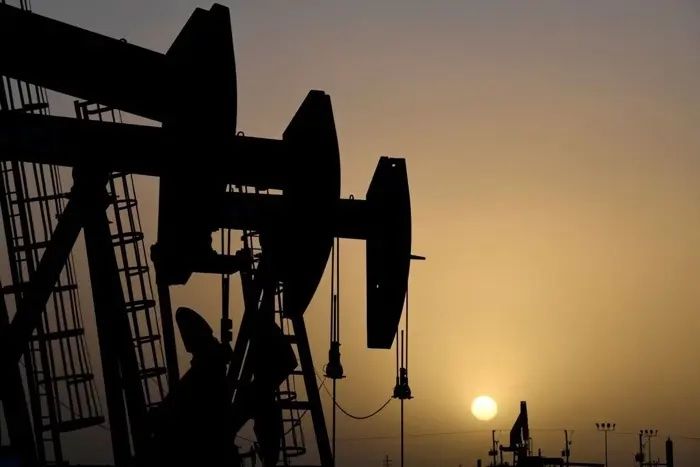
Crude oil markets extended their strong weekly performance on Friday as deteriorating security conditions in the Middle East compounded concerns over potential disruptions to major supply routes. Brent crude futures advanced 70 cents to settle at $84.93 per barrel, marking a 0.83% gain, while West Texas Intermediate climbed 81 cents to $79.76, a 1.03% increase. Both benchmarks have now accumulated nearly 12% in gains throughout the week, with Brent eyeing its third consecutive weekly advance and WTI positioned for a second straight week of appreciation after erasing losses from the prior trading session.
The catalyst for Friday's rally centred on an escalating cycle of military actions between Washington and Tehran that has effectively shattered the fragile ceasefire agreed just weeks earlier. The US launched two significant waves of air strikes on Wednesday targeting Iranian military positions concentrated along the country's southern coastline, before sustaining bombardment operations through Thursday. This marked the first major military escalation by American forces since the memorandum of understanding that had temporarily halted direct hostilities between the two adversaries.
Iranian retaliation came swiftly and comprehensively. Tehran responded with volleys of missiles and unmanned drones aimed at US military installations in neighbouring countries, including a barrage directed at a recently upgraded air base in Jordan that expanded American operational reach in the region. Meanwhile, Qatar's defence ministry reported that its armed forces successfully intercepted an Iranian missile assault in the early hours of Friday, though the interception operations resulted in shrapnel injuries to a child, underscoring the civilian cost of these escalations.
The renewed hostilities have reintroduced what analysts term a "dual-risk scenario" into global energy markets. Tim Waterer, chief market analyst at KCM Trade, emphasised that the potential for the Red Sea to emerge as another critical supply disruption point was significantly complicating the outlook for worldwide crude supplies. The geopolitical premium embedded in both major oil benchmarks reflects investor anxiety about the possibility of further route closures affecting the physical movement of petroleum exports.
Perhaps the most concerning development for energy markets emerged from intelligence suggesting that Iran has instructed its Houthi allies to prepare for a potential closure of the Red Sea oil route. According to three sources who spoke with Reuters, Tehran communicated this directive contingent upon American strikes against Iranian power generation infrastructure. Such a blockade would create a supply bottleneck of unprecedented scale, forcing oil shipments to undertake lengthy detours around the Cape of Good Hope—a routing that dramatically increases transit times and shipping costs while straining global energy balances.
The implications for Southeast Asian energy importers, including Malaysia, are particularly acute given the region's heavy reliance on Gulf crude supplies and the elevated insurance costs associated with transit through contested waters. Any sustained closure of either the Red Sea or the Strait of Hormuz would compel buyers across Asia to compete aggressively for alternative supplies, potentially driving regional crude prices considerably higher than global benchmarks and creating inflationary pressures throughout the region's energy-dependent economies.
International Energy Agency Executive Director Fatih Birol publicly voiced growing alarm at the deteriorating situation, stating during remarks at a Council on Foreign Relations event in Washington on Thursday that "oil security is still a critical issue." Birol emphasised that the global energy community should be "worried" if the current trajectory does not stabilise within the coming weeks, suggesting that IEA officials are preparing contingency assessments for more severe supply disruptions.
The US Central Command confirmed that American forces commenced a fresh round of strikes against Iranian military targets on Friday, marking the sixth consecutive night of operations designed to further degrade Tehran's military capabilities. These operations commenced at 1800 GMT (2 p.m. Eastern Daylight Time, or 9:30 p.m. local time in Tehran), indicating a sustained operational tempo rather than isolated incidents.
Technical analysts tracking price movements suggest that West Texas Intermediate could test the mid-$80s price range if current support levels around the mid-$70s prove resilient. Such price appreciation would have significant ramifications for global inflation, international supply chain costs, and government budgets throughout Asia-Pacific nations dependent on energy imports. The psychological threshold of $85 per barrel carries particular weight, as price levels in this range begin triggering demand destruction and accelerated shifts toward alternative energy sources among industrial consumers and power generators.

