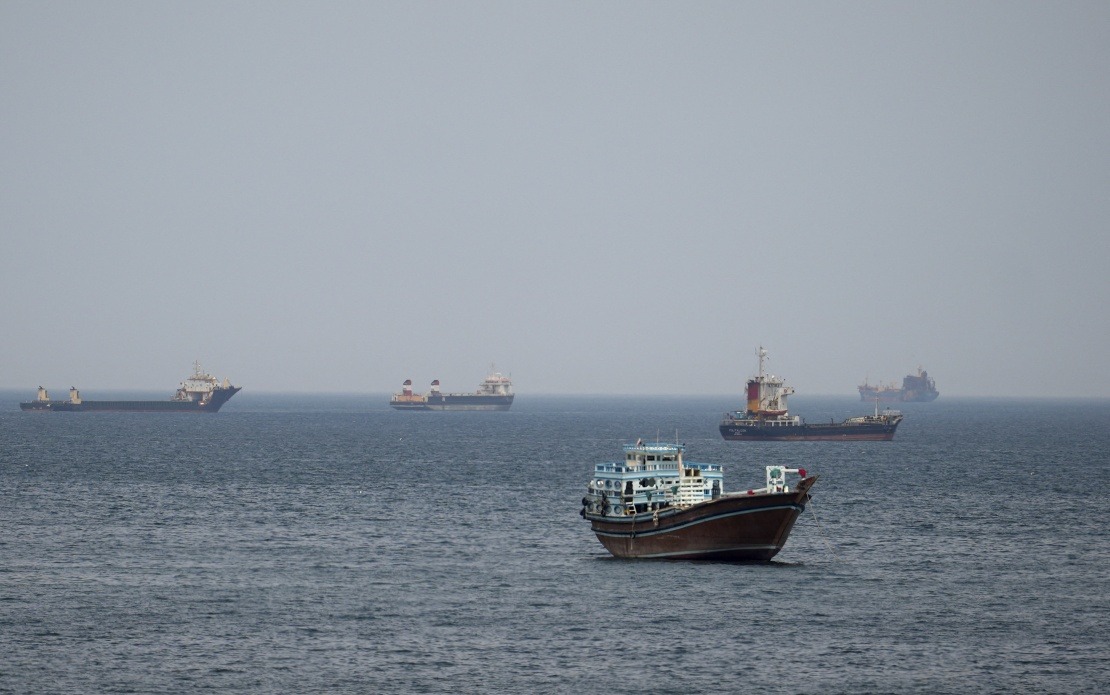
An interim agreement between the United States and Iran formally commenced on Thursday, triggering an immediate shift in regional dynamics as oil tankers resumed passage through the Strait of Hormuz following months of disruption. The accord, which brings an end to hostilities that began on February 28, has already produced measurable economic effects, with crude prices declining to their lowest point since the outbreak of war. The strategic waterway, through which approximately one-fifth of the world's petroleum supply transits annually, could see trade normalise substantially within the coming months as both sides adhere to ceasefire terms, offering potential relief to global energy markets and Southeast Asian economies heavily dependent on stable fuel supplies.
Yet the agreement represents a complex outcome that satisfies neither side entirely. President Donald Trump, who initiated military operations with expansive objectives including the complete dismantling of Iran's nuclear weapons capacity, the neutralisation of its regional military reach, and the elimination of Tehran's support for various allied militant groups, has ultimately accepted a settlement without achieving these stated goals. What began as a demand for Iran's "unconditional surrender" has evolved into a negotiated framework that critics argue leaves the Islamic Republic in a strengthened position. Having withstood a sustained military campaign from a superpower, Iran has retained effective control mechanisms over the Strait of Hormuz and secured valuable exemptions from international financial sanctions, fundamentally altering the power calculus in its favour.
The centrepiece of the interim arrangement establishes a sixty-day window for negotiators to forge a comprehensive agreement specifically addressing Iran's nuclear programme, the original justification Trump cited for launching military operations. Washington has allocated three hundred billion dollars for an Iranian reconstruction fund alongside additional financial incentives designed to encourage compliance. Vice President JD Vance, designated to spearhead the American delegation, has signalled that the United States will simultaneously pursue restrictions on Iran's long-range missile arsenal, attempting to convert military advantage into durable diplomatic constraints. However, Iran's Supreme Leader Ayatollah Moitaba Khamenei swiftly signalled his country's negotiating stance, asserting that Trump had signed the agreement "out of desperation" while warning that upcoming discussions over nuclear matters would prove contentious. His written message made explicit that Tehran would reject overly demanding American positions, establishing parameters that suggest the coming talks will involve significant friction.
During the interim period, Iran has indicated its intention to maintain administrative authority over the Strait of Hormuz, implementing a permit system to monitor and direct vessel traffic. Notably, no fees will be levied during the sixty-day interim phase, a potential recognition that demonstrating cooperative behaviour could facilitate broader negotiations. This arrangement raises important questions for Malaysia and other Southeast Asian nations whose economies rely heavily on unimpeded maritime commerce through the region's crucial chokepoints. Any resumption of Iranian control mechanisms or future disputes over passage rights could directly impact shipping costs and energy security for the entire region, making the successful conclusion of negotiations a matter of considerable regional importance.
However, the ceasefire agreement's durability faces serious challenges from concurrent fighting in Lebanon, where Israel continues military operations despite Trump's stated commitment to ending all fronts of conflict. More than one million Lebanese civilians have been displaced by the ongoing offensive, yet Israeli forces conducted fresh airstrikes on Thursday as the agreement took effect, directly contradicting its provisions calling for permanent termination of hostilities and guarantees of Lebanese territorial integrity and sovereignty. The disconnect between Trump's peace commitments and his allies' continued military operations exposes a fundamental weakness in the agreement's enforcement mechanisms and raises doubts about whether the American president possesses sufficient leverage over Israel to implement the accord's full terms.
Israel has made clear it does not consider itself bound by negotiations in which it had no direct participation, declaring unambiguous intentions not to withdraw from Lebanese territory. More provocatively, Israel has released new maps depicting an expanded occupation zone, effectively signalling its rejection of the territorial restoration provisions embedded in the agreement. This Israeli intransigence has created the deepest rift between Washington and Jerusalem in decades, prompting Trump to offer pointed public criticism of Israeli operations. The president remarked that he would question attacking "the only powerful ally that I have anywhere left in the entire world" if he served in Israel's cabinet, articulating frustration that his military intervention has not translated into sufficient political leverage to constrain allied behaviour.
The dynamics at play reflect deeper structural tensions within the agreement itself. While Trump achieved his primary objective of ending a costly conflict unpopular with American voters, he has simultaneously disappointed hardline supporters in Congress who believe he surrendered too much bargaining power in exchange for peace. The Republican allies who backed his initial military escalation now question whether critical objectives warranted abandonment, particularly regarding nuclear disarmament and regional containment. This domestic political friction could complicate the upcoming negotiations over Iran's nuclear programme, potentially driving Washington toward more aggressive positions that Tehran has already signalled it will reject outright.
For Malaysia and the broader Southeast Asian region, the implications extend beyond immediate energy market stability. The agreement's fragility regarding Lebanon and Israel demonstrates that Middle Eastern conflicts remain unpredictable and prone to renewed escalation, necessitating ongoing vigilance over maritime trade routes and energy supplies. The Strait of Hormuz's continued operation depends on sustained adherence from both Iran and international parties, a condition far from guaranteed given the unresolved tensions and competing incentives identified in the accord. Southeast Asian nations must closely monitor both the success of nuclear negotiations and the status of Israeli-Lebanese hostilities, as either could trigger renewed disruptions to global energy markets and impose significant costs on export-dependent economies across the region.

%22%2F%3E%3C%2Fpattern%3E%3C%2Fdefs%3E%3Crect%20width%3D%22100%25%22%20height%3D%22100%25%22%20fill%3D%22url(%23ph1xcqog)%22%2F%3E%3Crect%20width%3D%22100%25%22%20height%3D%22100%25%22%20fill%3D%22url(%23ph1xcqop)%22%2F%3E%3Ctext%20x%3D%2250%25%22%20y%3D%2250%25%22%20text-anchor%3D%22middle%22%20dominant-baseline%3D%22central%22%20fill%3D%22rgba(255%2C255%2C255%2C0.95)%22%20font-family%3D%22Georgia%2C%20'Times%20New%20Roman'%2C%20serif%22%20font-weight%3D%22700%22%20font-size%3D%22272%22%20letter-spacing%3D%22-0.02em%22%3EAnwar%3C%2Ftext%3E%3C%2Fsvg%3E)