National Projects Enhancement Bhd (NPE) has become a pioneer in Islamic financing by issuing RM54 million in sustainability-linked sukuk (SLS)—a first for any highway project worldwide. The groundbreaking instrument was released under NPE's unrated Islamic Medium Term Notes Programme, which carries a maximum nominal value of RM1.42 billion, and represents a significant shift in how major infrastructure projects secure funding while maintaining environmental and social accountability.
The sukuk structure is fundamentally different from conventional project financing in that it anchors repayment terms to measurable performance across two critical domains: occupational health and safety standards, and green infrastructure certification. This performance-based approach means that the issuer's compliance with these environmental and worker-protection benchmarks directly influences the terms and conditions of the debt instrument, creating genuine financial incentives for sustainable delivery rather than merely aspirational corporate commitments.
The capital raised will support construction of NPE2, a 6.4-kilometre elevated expressway featuring directional ramps that will integrate into Kuala Lumpur's transport infrastructure network. This highway features prominently in the broader Kuala Lumpur Traffic Master Plan 2040, underscoring its strategic role in the city's long-term mobility architecture. The project will physically bridge the existing Pantai Dalam Toll Plaza with the Jalan Istana Interchange, running along the Jalan Syed Putra corridor—a critical artery for congestion management in Malaysia's capital.
Once operational, NPE2 will fundamentally reshape traffic patterns across central Kuala Lumpur by creating seamless highway-to-highway connectivity linking the existing North-South Expressway (NPE), the Sungai Besi Expressway, and the forthcoming Laluan Istana-Kiara Expressway. Industry analysts expect the project to significantly improve traffic dispersion across the congested Pantai Dalam-Bangsar-Mahameru corridor while enabling more efficient movement into the heart of the city. The expressway addresses a genuine bottleneck in Kuala Lumpur's transport system where traffic converges from multiple directions with limited direct routing options.
IJM Construction Sdn Bhd secured the design-and-build contract in November 2025, following a competitive procurement process. The company has committed to completing the elevated highway by the end of 2029, providing a four-year delivery window that industry observers view as ambitious yet achievable for a project of this scale. The timeline assumes no major disruptions or regulatory delays, which remain variables in Malaysia's complex infrastructure approval landscape.
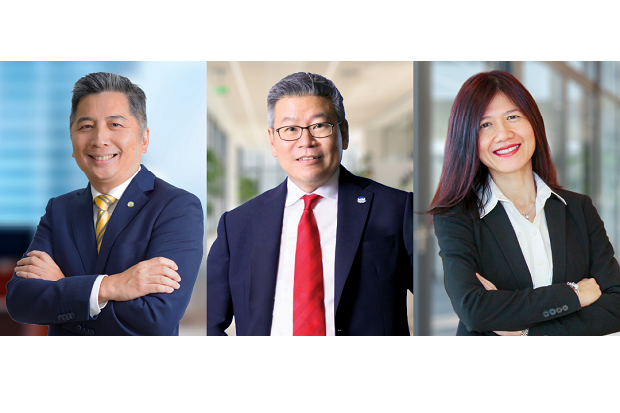
Datuk Lee Chun Fai, chief executive officer and managing director of IJM group, emphasized that the sustainability-linked sukuk structure reflects the contractor's operational philosophy. He stated that embedding measurable accountability into project financing marks a departure from traditional arrangements where sustainability pledges remain largely detached from financial consequences. By tying the sukuk's performance metrics to worker safety and environmental certification, IJM has created a direct financial mechanism that ensures these priorities compete for management attention alongside cost and schedule considerations.
The issuance also reflects broader shifts within the Malaysian and Southeast Asian finance sector toward instruments that align Islamic principles with contemporary environmental, social, and governance (ESG) concerns. Malaysia's position as an Islamic finance hub has increasingly emphasized how Shariah-compliant instruments can simultaneously address the ethical dimensions of project delivery—particularly worker welfare and environmental stewardship—while maintaining robust financial returns for investors.
Maybank Investment Bank Bhd and CIMB Investment Bank Bhd jointly structured and arranged the transaction, serving in multiple capacities including principal advisers and sustainability structuring advisers. This dual-bank arrangement signals confidence in the market for this new asset class and reflects healthy competition among Malaysia's largest investment banks to lead innovation in Islamic finance. Both institutions invested significant expertise in designing performance metrics that would prove both measurable and genuinely material to project outcomes.
Michael Oh-Lau, chief executive officer of Maybank IB, characterized the NPE2 sukuk as demonstrating the continuing evolution of Islamic financing structures. He positioned the transaction within the broader context of investor demand for innovative solutions that enable capital deployment toward sustainable outcomes, suggesting that this pioneering highway sukuk may establish a template for future infrastructure projects seeking to align financial incentives with environmental and social performance.
Nor Masliza Sulaiman, chief executive officer of CIMB IB, articulated the broader value proposition of the transaction. Beyond the immediate benefits of improved urban connectivity and reduced environmental impact, the sukuk structure creates a framework that harmonizes Shariah principles—which emphasize ethical stewardship and accountability—with contemporary sustainability objectives. This alignment addresses growing investor appetite for financing solutions that generate genuine long-term value rather than merely cosmetic ESG alignment.
For Malaysian readers, the NPE2 project carries immediate relevance: the completed expressway should reduce commute times across central Kuala Lumpur and relieve pressure on the congested Bangsar-Pantai Dalam corridor. The sustainability-linked sukuk structure, meanwhile, establishes a governance framework that should enhance worker safety standards and environmental practices throughout the four-year construction period. More broadly, the transaction signals Malaysia's continued leadership in Islamic finance innovation and demonstrates how Gulf Cooperation Council-style financing structures can be adapted to serve major infrastructure needs within Southeast Asia.

