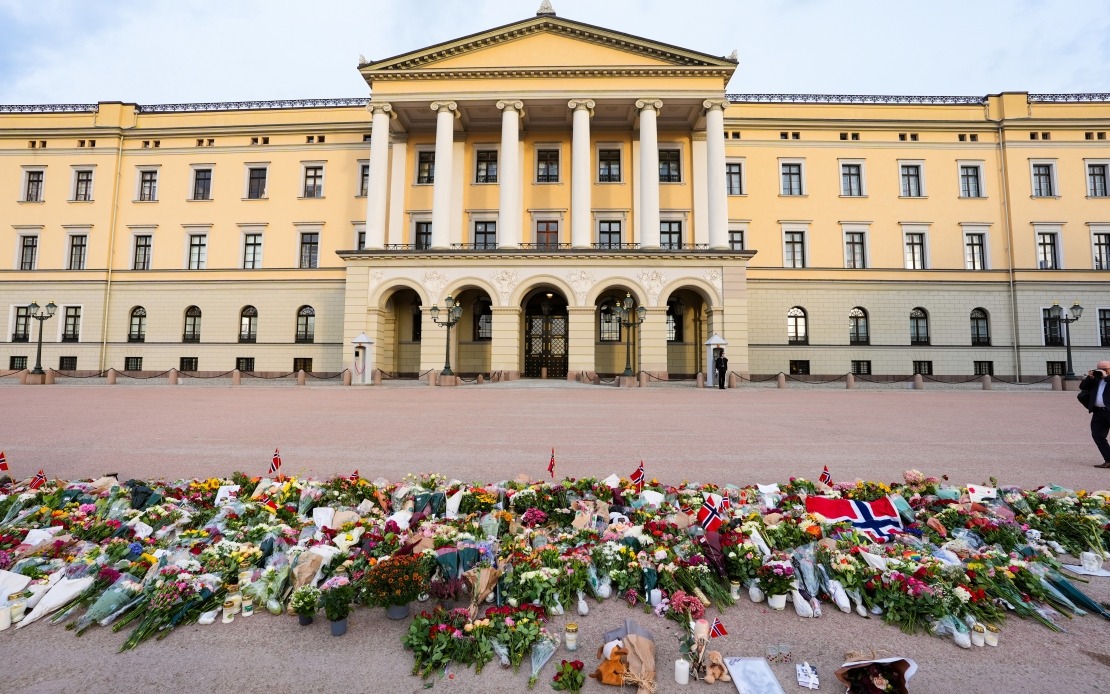
King Harald V of Norway died peacefully on Friday at the age of 89, bringing an end to one of Europe's longest modern reigns. The Norwegian Royal Palace confirmed his passing at Oslo's National Hospital at 6.35 am local time, after a period of declining health that had seen him hospitalised since mid-August. His death marks a significant moment for the Nordic nation and the broader European monarchy, as Harald had held the distinction of being the continent's oldest reigning sovereign at the time of his passing.
The late king's health challenges emerged gradually over his final weeks, culminating in his admission to the National Hospital on August 17 following a medical assessment. Palace officials subsequently revealed that Harald had been undergoing treatment with cortisone for hemolytic anemia, a blood condition characterised by the destruction of red blood cells, which had led to fluid retention throughout his body. What began as a manageable chronic condition took a critical turn when Harald contracted a bacterial infection in his bloodstream, causing his medical situation to deteriorate rapidly according to reports from Norwegian public broadcaster NRK.
Following the announcement of his death, the royal flag at the palace was lowered to half-mast in observance of the kingdom's mourning protocols. The transition of power occurred immediately according to Norway's constitutional framework, with Crown Prince Haakon automatically assuming the throne as his father's successor. Unlike many European monarchies that maintain elaborate coronation traditions, Norway's system provides for seamless succession without ceremonial coronation proceedings, reflecting the nation's more understated approach to royal pageantry.
The Norwegian government is scheduled to convene in an extraordinary Council of State gathering at the Royal Palace, where officials will formally acknowledge the new monarch's accession. During this significant meeting, the government will announce Haakon's regnal name—the formal title by which he will be known throughout his reign. This procedural step, while largely ceremonial, underscores the constitutional solemnity with which Norway regards the transfer of sovereign authority from one generation to the next.
A further constitutional requirement awaits the new king in the coming weeks, as Norwegian law mandates that the reigning monarch take a formal oath of allegiance before the Storting, the nation's unicameral parliament. This oath-taking ceremony, which will occur before the assembled legislators, represents a fundamental principle of Norwegian constitutional monarchy—the explicit commitment of the sovereign to uphold the nation's laws and democratic institutions. The proceedings underscore how Norway's modern monarchy operates within clearly defined constitutional limits rather than wielding absolute or unconstrained authority.
Harald's tenure as king spanned more than thirty-five years following his accession to the throne on January 17, 1991, immediately after the death of his father, King Olav V. During this extensive period, he witnessed substantial transformations in Norwegian society, including the country's continued prosperity from oil and gas revenues, its evolving role within European affairs despite remaining outside the European Union, and the modernisation of Norwegian democracy and social institutions. His reign represented a bridge between post-war Norway and the contemporary Nordic nation that emerged during the late twentieth and early twenty-first centuries.
The succession of Haakon to the Norwegian throne carries particular resonance for regional observers and constitutional scholars. As the new monarch assumes his duties, he becomes responsible for representing the constitutional continuity that has characterised the Norwegian monarchy since the establishment of the independent kingdom in 1905. His reign will likely emphasise the contemporary relevance of constitutional monarchy in a modern Scandinavian democracy, where the sovereign serves as a unifying national symbol while elected officials exercise executive and legislative power.
For Southeast Asian nations with their own monarchical institutions, the succession in Norway presents instructive lessons about constitutional succession procedures and the careful balance between tradition and democratic governance. Malaysia, Brunei, and Thailand all maintain royal institutions that occupy distinctive constitutional positions within their respective political systems. The Norwegian transition, proceeding smoothly according to established legal frameworks without disruption or constitutional uncertainty, exemplifies how hereditary succession can function effectively within modern democratic contexts.
The passing of King Harald also marks the conclusion of an era in European monarchy. His generation of European monarchs—those who reigned through the Cold War, decolonisation, European integration, and the digital revolution—has gradually been replaced by younger successors navigating very different geopolitical landscapes. Haakon's assumption of the throne signals the beginning of a new chapter for Norwegian monarchy, one that will address contemporary challenges including climate change, technological disruption, and evolving social expectations regarding the role and relevance of hereditary institutions in twenty-first century democracies.

