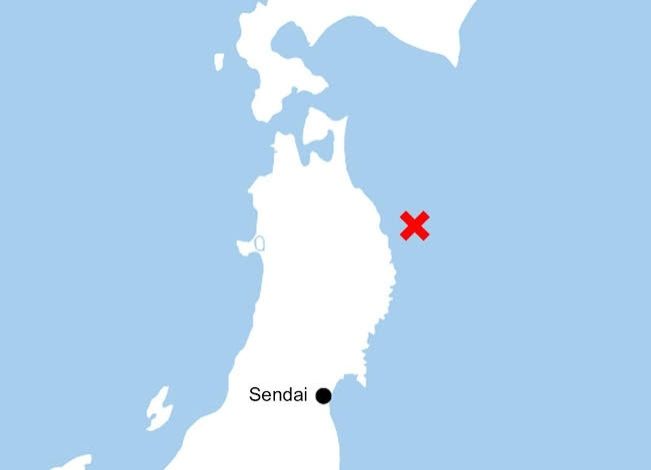
A powerful 7.2-magnitude earthquake rattled northern Japan on Thursday morning, emerging as the latest significant seismic event to affect the geologically volatile island nation. The tremor, which struck at 7:30 am local time off the coast of Iwate prefecture on the main island of Honshu, was initially measured at magnitude 6.9 by the Japan Meteorological Agency before being revised upward. Originating at a depth of 44 kilometres beneath the seafloor, the quake prompted widespread physical responses across a region spanning several hundred kilometres, with noticeable tremors even reaching Tokyo, yet fortunately neither casualties nor substantial structural damage materialised in the immediate aftermath.
The initial shaking brought everyday life to a momentary standstill in affected communities. Kitchen cupboards swung open across numerous households, disgorging their contents onto countertops and floors, while display shelves in retail establishments toppled, scattering merchandise. Security cameras mounted on building exteriors rocked visibly during the tremor's passage. Residents in Hashikami, a town in neighbouring Aomori prefecture, experienced the phenomenon firsthand—one local food processing company employee described how a smartphone emergency alert activated almost instantaneously as the ground began moving, a sequence that captured the eerie quality of major seismic events in Japan's earthquake-adapted society.
The intensity of the tremor registered at the upper sixth level on Japan's seven-point Shindo scale in Aomori prefecture, a classification that typically renders standing without support difficult for unbraced individuals and often causes unsecured furniture to overturn and windows to fracture. Remarkably, despite this considerable force, damage remained confined to minor incidents—one resident's picture frame fell from a wall, whilst some ceiling panels dislodged within a company office. The contrast between the seismic energy released and the structural resilience demonstrated reflects decades of strict building codes and earthquake preparedness measures that Japan has implemented following catastrophic historical events.
Transport infrastructure sustained limited disruption. Several shinkansen bullet train services were suspended as a precautionary measure, a standard protocol following significant seismic events to allow engineers to inspect track and rail systems for any damage that might compromise passenger safety. A primary school in Hashikami closed temporarily as a precaution, though no injuries were reported among students or staff. Emergency response teams recorded at least four distress calls to Hashikami and Hachinohe fire departments, including reports of individuals temporarily trapped in a lift and problems with automated door systems that malfunctioned during the shaking. A tanker truck overturned on roads in the affected area, though details regarding its cargo and any environmental concerns were not immediately disclosed.
Government authorities responded swiftly to assess the situation. Prime Minister Sanae Takaichi issued orders instructing all relevant ministries and government agencies to coordinate with prefectural and municipal authorities in undertaking comprehensive damage surveys and maintaining emergency preparedness. Through messaging on social media platform X, Takaichi cautioned residents in heavily shaken areas to remain vigilant regarding the possibility of follow-up earthquakes of comparable magnitude, a standard warning following seismic events in Japan where aftershock sequences commonly occur. Government spokesman Minoru Kihara confirmed that while no human fatalities had been identified at that point, monitoring would continue as local authorities accumulated information from affected regions.
Critical infrastructure monitoring proceeded without incident. Japan's Nuclear Regulation Authority confirmed through statements carried by Kyodo News that no abnormalities were detected at nuclear power facilities operating within the impacted region, a particularly significant reassurance given Japan's complex history with nuclear safety during seismic events. Footage from Hachinohe city showed traffic continuing to flow normally, with traffic signal systems continuing to function appropriately, suggesting that the earthquake's impacts remained localised and manageable rather than systemic.
This tremor represents another chapter in Japan's ongoing relationship with seismic activity, a reality shaped by the nation's precarious geological position. Japan sits atop the junction of four major tectonic plates along the western margin of the Pacific Ring of Fire, making it statistically one of Earth's most earthquake-prone regions. The archipelago, inhabited by approximately 125 million people, routinely experiences several hundred seismic tremors annually and generates roughly 18 percent of the world's total earthquake activity. Most of these events pass virtually unnoticed by the general population, with only the most substantial tremors causing noticeable surface effects.
The historical shadow of Japan's most devastating earthquake continues to influence current responses. The 2011 magnitude 9.0 undersea earthquake triggered a massive tsunami that killed or left missing approximately 18,500 people and catastrophically damaged the Fukushima Daiichi nuclear power facility, an event that reshaped Japan's approach to disaster preparedness and nuclear safety protocols. More recently, an earthquake measuring 7.7 magnitude struck the country's north on April 20 this year, injuring at least 10 people and producing shaking intense enough to disrupt major buildings in Tokyo. That event prompted authorities to issue an extraordinary advisory warning of elevated earthquake risks, suggesting that tremors reaching magnitude 8.0 or higher could potentially occur within specified timeframes—an alert that was subsequently lifted after seven days as statistical probabilities normalised.
For Malaysian and regional observers, this earthquake demonstrates the enduring challenges faced by densely populated nations positioned along active seismic zones. Japan's response infrastructure—from building codes to emergency alert systems to coordinated government action—represents decades of institutional learning following massive disasters. The comparative absence of damage despite the substantial magnitude of Thursday's earthquake showcases how technical preparation and cultural disaster awareness can substantially mitigate the destructive potential of powerful seismic events. As Southeast Asian nations including Indonesia and the Philippines themselves sit along or near major fault systems, Japan's experience provides important lessons regarding the long-term investments required to protect dense urban populations from geological hazards that cannot be prevented, only managed.

