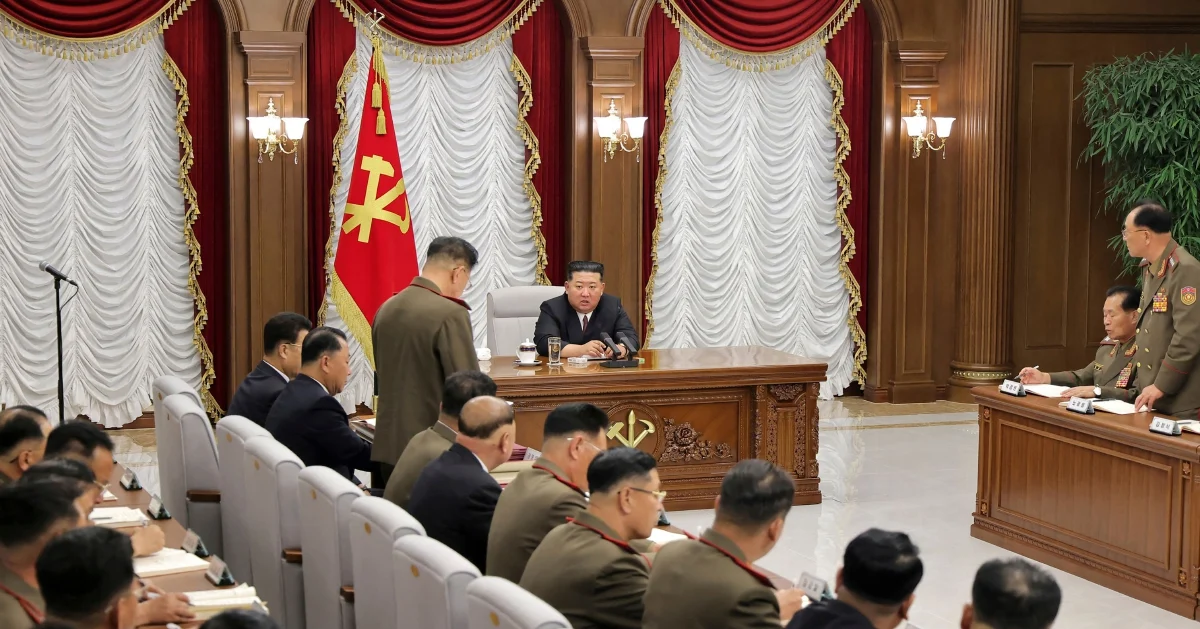
North Korean leader Kim Jong Un has moved against a senior military official, removing him from the ruling party after determining he engaged in graft and accepted bribes, according to state media accounts circulated Saturday. The incident marks another example of Kim's willingness to discipline figures within the military hierarchy, a crucial power base that must remain loyal to his grip on governance. By publicly labelling the conduct as a "political crime" rather than merely administrative misconduct, Kim has signalled his determination to maintain strict standards within the regime's command structure.
The characterisation of corruption as a political transgression rather than a straightforward criminal matter reflects broader patterns in how North Korea treats violations by officials. In the regime's governance framework, acts that undermine party unity or challenge leadership authority carry heightened significance beyond their material consequences. This framing allows Kim to position himself as a guardian of revolutionary principles and party discipline, essential narratives for sustaining legitimacy within North Korea's hierarchical system.
Corruption within North Korea's military and government apparatus has long presented challenges to the regime's authority. Unlike systems where institutional checks and transparency mechanisms address such problems, North Korea relies heavily on personal loyalty networks and periodic purges to police official behaviour. The public exposure of this official's misconduct serves multiple purposes: it demonstrates accountability, deters other officials from similar transgressions, and reinforces Kim's personal authority over all state institutions.
The timing and method of the announcement through state media underscores how such disciplinary actions function as political communication in North Korea. Rather than quiet administrative removals, public denunciations ensure that officials across all ranks receive the message about expectations and consequences. This approach has characterised Kim's leadership since he assumed power following his father's death in 2011, with numerous high-profile purges setting the tone for conformity throughout the system.
Such incidents provide outsiders limited insight into internal North Korean dynamics, as state media releases carefully curated information reflecting the regime's desired narrative. The decision to publicise this particular case suggests the regime viewed it as significant enough to warrant public acknowledgement, possibly indicating the official held considerable position or that the corruption involved substantial resources. The gravity of the charges and the formal party expulsion indicate this was not a minor disciplinary matter.
Military cohesion remains fundamental to Kim's security and survival, making any challenge to his control over armed forces a priority concern. North Korea's military consumes enormous state resources and wields considerable institutional power, necessitating constant attention to loyalty and discipline. Officials who exploit their positions for personal gain undermine the system's efficiency and, more critically from Kim's perspective, potentially create autonomous power bases that could challenge central authority.
For regional observers, these developments offer limited but still meaningful indicators of internal regime stability and Kim's approach to governance. The pattern of purges and disciplinary actions continues a well-established tradition in North Korean politics, where leadership changes and institutional restructuring reflect power consolidation rather than democratic processes. Understanding these dynamics helps analysts assess whether Kim's grip on power remains secure or whether cracks might be emerging in his control structures.
The broader context of international tensions and economic pressure on North Korea makes internal stability particularly crucial for the regime. Economic sanctions and isolation create scarcity that can increase corruption temptations, as officials seek alternative sources of wealth and status. By visibly punishing corruption, Kim attempts to project an image of strong governance even as underlying resource constraints create systemic pressures toward illicit behaviour.
The specific identity and portfolio of the purged official remain unclear from available reports, limiting detailed analysis of the incident's broader implications. However, the regime's decision to broadcast the action through official channels ensures that similar warnings reach throughout the military and bureaucratic hierarchies. Such public denunciations function as institutional communication mechanisms in systems where informal networks and personal relationships dominate decision-making structures.
For Southeast Asian nations navigating relationships with North Korea, these internal developments carry indirect relevance to understanding regime stability and leadership calculations regarding external affairs. A leadership confident in domestic control may differ in its international posture from one facing internal challenges, though North Korea's isolation and centralized decision-making limit such pressures. Nonetheless, maintaining awareness of internal dynamics helps regional players anticipate regime behaviour and adjust diplomatic strategies accordingly.

