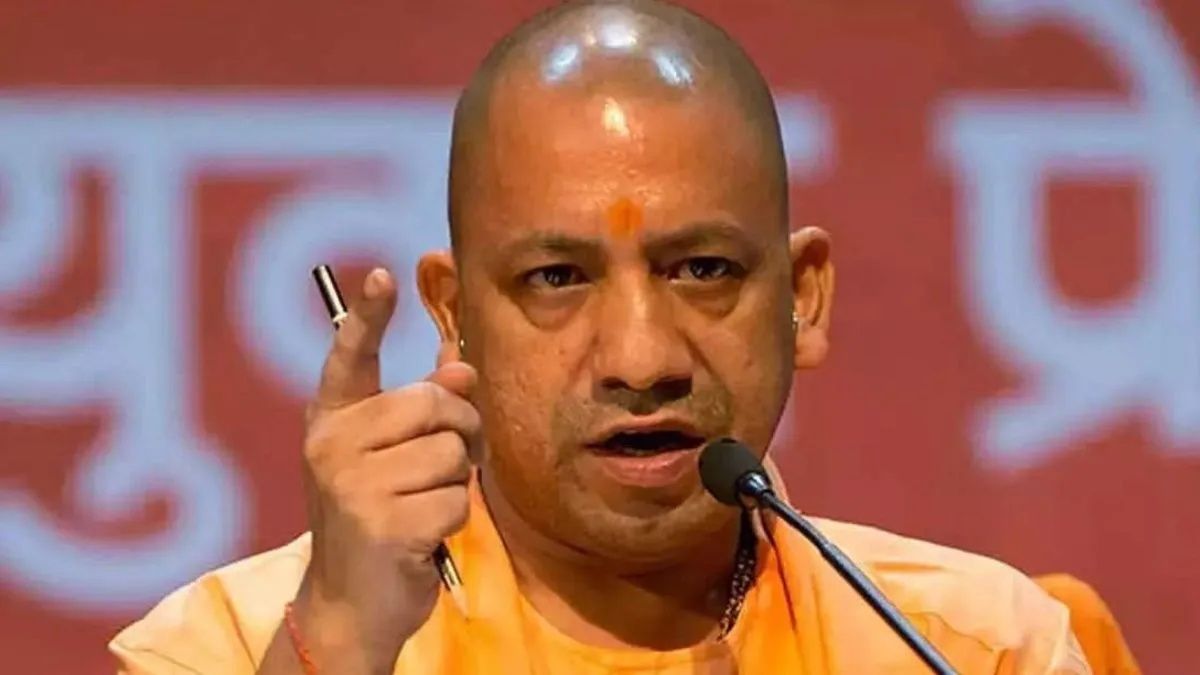
Uttar Pradesh Chief Minister Yogi Adityanath has issued a stern warning against anyone attempting to undermine people's religious sentiments, speaking in the context of an ongoing investigation into a donation theft case at the Shri Ram Janmabhoomi Teerth Kshetra in Ayodhya. The Chief Minister's remarks came after the state's police registered the first formal case following receipt of a Special Investigation Team report into the matter, signalling that the government intends to move swiftly against those implicated in the scandal.
In comments made during a public event in Deoria district on Friday, where he laid foundation stones and inaugurated development initiatives, Adityanath emphasised the government's resolve to distinguish between fact and falsehood in the investigation. He pledged that individuals responsible for breaching the sanctity of people's religious trust would face appropriate legal consequences, rejecting any suggestion that such actors might escape accountability. The Chief Minister's language reflected a determination to position the state government as a guardian of religious sentiments, particularly those linked to the newly constructed Ram Temple in Ayodhya.
Adityanath referenced his own visit to Ayodhya on June 19, where he had previously flagged concerns about allegations emerging regarding temple finances. He described Ayodhya as emblematic of India's broader Hindu heritage and Sanatan Dharma, framing the investigation as protecting not merely an institution but a sacred symbol for hundreds of millions of believers across India. This framing transforms what might otherwise be viewed as an administrative or financial matter into a question of cultural and religious significance, which has clear implications for how state institutions approach accountability within temples and religious organisations throughout the region.
The Chief Minister's statement included pointed criticism of opposition parties, particularly the Indian National Congress and the Samajwadi Party. He accused the Congress of historically denying the existence of Ram and opposing the Ram Temple construction movement, referencing their legal battles against the temple project and the deployment of legal resources to challenge the Ayodhya case through courts. Adityanath characterised the Samajwadi Party as responsible for what he described as violent crackdowns on Ram devotees, attempting to establish a sharp moral distinction between his government's approach and that of previous administrations.
Specifying his critique further, the Chief Minister pointed to alleged instances of communal violence and restrictions on religious observances during earlier administrations. He referenced the Lar riot, alongside claims that authorities had ordered force against people engaged in religious chanting, banned Krishna Janmashtami celebrations, prohibited the Kanwar pilgrimage, and instigated riots during Durga Puja festivals. Through these examples, he sought to construct a narrative in which opposition parties had demonstrated historical hostility toward Hindu religious practice and Hindu devotees, thereby delegitimising their current criticism of the government's handling of the donation case.
In an effort to rebut opposition accusations of mismanagement or impropriety, Adityanath suggested that the actual motivation behind current criticism was political rather than principled. He claimed the Congress had looted national resources and compiled a record of dishonesty and corruption at the state level, while the Samajwadi Party remained discontented after the current government halted what he characterised as systematic plunder. According to his interpretation, unable to recover their former dominance, these parties had resorted to attacking the government's record on temple management and funding as a means to regain political traction.
The Chief Minister's remarks carried an implicit warning to opposition figures and civil society groups scrutinising the donation case. He appealed directly to Ram devotees not to test the patience of believers and called on critics to refrain from making allegations without substantive evidence. Simultaneously, he demanded that those possessing concrete proof of wrongdoing present it to the Special Investigation Team and cooperate fully with the inquiry, effectively challenging opponents to put forward factual claims rather than engage in political rhetoric.
From a governance perspective, Adityanath's statement reveals the complex intersection between religious sentiment and institutional accountability in India's federal system. The donation theft case at Ayodhya's Ram Temple touches upon questions of financial transparency within religious institutions, the proper management of public donations, and the role of state government oversight. Yet by framing the issue primarily through the lens of religious faith under attack, the Chief Minister has sought to subordinate administrative and financial accountability to a broader narrative about protecting Hindu religious identity and preventing opposition parties from exploiting religious issues.
For observers across Southeast Asia, where several countries have significant Hindu populations and where temple management and religious institution governance remain sensitive matters, the Ayodhya case demonstrates how financial and administrative lapses within sacred spaces can become entangled with broader political narratives about religious protection and communal identity. The willingness of elected officials to challenge opposition parties on their historical record regarding religious matters, rather than addressing specific allegations about the donation case directly, reflects a particular approach to accountability in which political narrative and institutional oversight become intertwined.
The Chief Minister's insistence that the Special Investigation Team should lead the inquiry without political interference carries important implications for how temple governance will be addressed going forward. By appealing for political silence from opposition parties while investigations proceed, Adityanath positioned the SIT as the arbiter of truth in the matter. However, his simultaneous criticism of opposition parties and their historical records suggests that the investigative process itself may be influenced by the broader political environment in which it operates.
The donation case at Shri Ram Janmabhoomi Teerth Kshetra has touched a particularly sensitive nerve in Indian politics given the contentious history of the Ram Temple construction project itself, which spanned decades of legal battles and communal tension before the temple's completion in 2024. The theft allegations emerged just months after the temple's opening, creating a perception crisis at a moment when the government had positioned the temple as a symbol of national pride and religious unity. Adityanath's forceful response indicates the government's determination to contain potential reputational damage and prevent opposition parties from weaponising the case against the ruling Bharatiya Janata Party.
Moving forward, the Special Investigation Team's findings will likely shape not only the immediate accountability outcomes in this case but also broader precedents for how state governments in India balance religious sentiment protection with financial transparency and institutional accountability. The tension between these objectives, evident in the Chief Minister's remarks, will continue to characterise how religious institutions and their governance are discussed in public discourse across India and the wider region.

