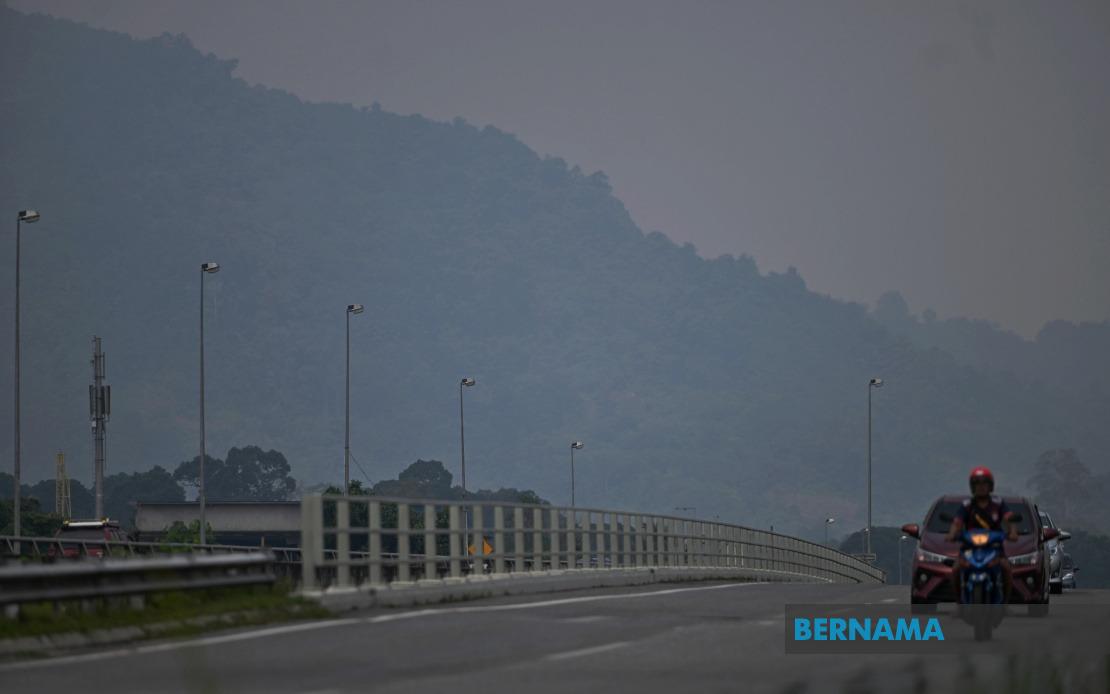
Sarawak's air quality crisis deepened on August 21 as multiple towns across the state grappled with unhealthy pollution levels, with the Serian monitoring station recording a concerning 'very unhealthy' Air Pollution Index reading of 227. The Department of Environment revealed that nine additional locations in the state had also crossed into unhealthy territory, painting a stark picture of how transboundary haze is affecting the region's most densely populated state.
According to Department of Environment deputy director-general (development) Azuri Azizah Saedon, Sri Aman emerged as the second-most affected town with an API of 187, while Kuching, the state capital and commercial hub, recorded 176. Samarahan followed with 175, Sarikei at 174, and Sibu registering 157. Three additional towns—Bintulu, Samalaju, and the pair of Kapit and Mukah—all reached the unhealthy threshold at 154 and 130 respectively, suggesting a widespread atmospheric problem rather than isolated pollution events.
The deterioration in Sarawak's air quality reflects a broader environmental challenge engulfing Southeast Asia. The ASEAN Specialised Meteorological Centre's report from August 20 identified 288 hotspots across Kalimantan, representing an alarming concentration of fires in Indonesia's largest state. An additional 53 hotspots were detected in Sumatra, with only two located within Malaysia—one in Sarawak itself and another in Terengganu. This distribution underscores how regional fire activity, predominantly outside Malaysian territory, carries direct consequences for air quality across the border.
Meteorological conditions are actively facilitating the transboundary movement of pollutants. The Regional Haze Map issued by ASMC indicated that while much of southern ASEAN remained dry—creating ideal conditions for fire spread and persistence—northeastern Borneo and northern Sumatra experienced some rainfall relief. The concerning element for Sarawak specifically involved moderate to dense smoke plumes originating from West Kalimantan that were actively moving northwards into western Sarawak, suggesting the situation could further deteriorate without intervention or weather changes.
The timing of this pollution event carries particular significance for Malaysian policymakers and regional analysts. Sarawak's economic activities, ranging from tourism to outdoor commerce and manufacturing, are all adversely affected when API readings climb into unhealthy ranges. The clustering of unhealthy readings across so many towns simultaneously indicates this is not a localized phenomenon but rather a systematic challenge requiring coordinated responses. Residents in these areas, particularly children, the elderly, and those with respiratory conditions, face direct health risks that demand urgent public health communication and protective measures.
Government responses have been mobilized through established institutional frameworks. The National Open Burning Action Plan and the National Haze Action Plan have both been activated, creating coordination mechanisms among various government agencies tasked with addressing both domestic sources of burning and managing the national haze situation more broadly. The Department of Environment has simultaneously intensified enforcement efforts and daily patrols across areas where open burning poses a risk, indicating recognition that even within Malaysia, preventive measures remain crucial.
Public engagement represents a critical component of the overall strategy. The authorities have issued directives against open burning and established clear reporting channels for citizens witnessing violations. The Fire and Rescue Department of Malaysia's emergency line at 999 and the DOE's dedicated hotline at 1-800-88-2727 provide mechanisms for rapid response to breaches. This dual-channel approach reflects understanding that haze management requires both top-down enforcement and bottom-up citizen vigilance.
The situation in Sarawak illustrates a recurring vulnerability in Southeast Asia's air quality management. While Malaysia has made genuine progress in monitoring and responding to haze, the transnational nature of the problem means that local measures alone cannot resolve the crisis entirely. The concentration of 288 hotspots in Kalimantan demonstrates that Indonesian land management practices—whether related to agriculture, development, or peatland drainage—directly determine air quality outcomes in neighboring Malaysian states thousands of kilometers away.
Longer-term considerations for Malaysia and Sarawak specifically involve regional cooperation frameworks and bilateral pressure on Indonesia to strengthen fire prevention and land management. While the ASEAN Specialised Meteorological Centre provides valuable data and coordination, the absence of binding enforcement mechanisms at the regional level means such challenges persist. Sarawak's economy depends on maintaining livable conditions for workers and attracting investment, yet haze events create seasonal uncertainty that complicates economic planning.
The API readings recorded on August 21 represent merely a snapshot of what has become an increasingly familiar seasonal pattern for the region. Without substantive changes to agricultural and land-use practices in Indonesia, particularly across Kalimantan and Sumatra, Sarawak and other Malaysian states will continue experiencing these recurring episodes. The coordination activated through the National Haze Action Plan demonstrates preparedness, but prevention remains infinitely preferable to management after the fact.

