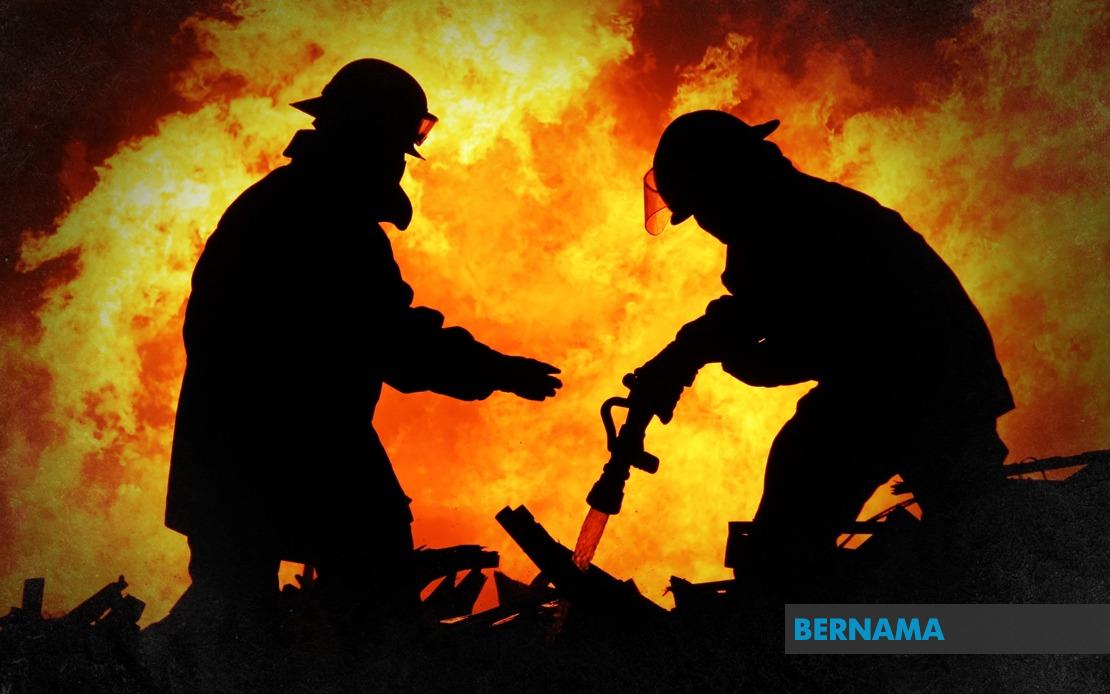
A catastrophic blast tore through a firecracker manufacturing facility in Ahmedabad's Vastral area on Saturday, leaving nine workers dead and six others injured. The incident at Talent Fireworks has reignited concerns about workplace safety standards and regulatory enforcement in India's informal manufacturing sector, an issue that resonates across South Asia where similar industrial disasters continue to claim lives with troubling regularity.
The explosion occurred at a factory operating without proper government authorization. Local authorities moved quickly to apprehend the facility's owner in connection with the blast. The decision to run the operation without a licence reflects a broader pattern across Indian manufacturing hubs where cost-cutting and regulatory circumvention create dangerous working conditions for vulnerable employees, many of whom lack formal employment contracts or safety training.
Prime Minister Narendra Modi responded to the tragedy by pledging financial assistance to the bereaved families through the Prime Minister's National Relief Fund. Each family of the deceased will receive 200,000 rupees, equivalent to approximately RM8,490. This represents the central government's immediate humanitarian intervention, though critics argue that compensation after tragedy, while necessary, cannot substitute for preventive regulatory mechanisms that might have averted the disaster entirely.
At the state level, Gujarat Chief Minister Bhupendra Patel announced additional relief measures to support affected households. The state government will distribute 400,000 rupees, roughly RM16,980, to each family that lost a member in the blast. The combined central and state assistance totals 600,000 rupees per family, yet such sums offer limited solace to workers' dependents who lose primary breadwinners without alternative income sources or formal social security coverage.
The Talent Fireworks incident exemplifies a persistent challenge throughout India's manufacturing landscape. Firecracker production, particularly concentrated in clusters across Tamil Nadu, West Bengal, and Gujarat, has become synonymous with industrial catastrophes. These facilities frequently operate in violation of safety regulations, lacking proper fire suppression systems, ventilation infrastructure, and emergency protocols. Workers, often drawn from economically disadvantaged communities, endure hazardous conditions in exchange for minimal wages and zero occupational protection.
For Malaysian readers and broader Southeast Asian observers, the Gujarat explosion underscores vulnerabilities that extend beyond India's borders. The subcontinent's manufacturing deficiencies create spillover effects throughout the region. Inadequately regulated production facilities increase safety risks for imported goods, while also establishing competitive pressure on legitimate manufacturers who maintain higher safety standards, creating market distortions that incentivize cost-cutting across supply chains.
The absence of a manufacturing licence at Talent Fireworks suggests either administrative oversight or deliberate regulatory evasion. India's regulatory framework, while comprehensive on paper, struggles with enforcement capacity at the district and local levels. Understaffed labour departments, insufficient inspection frequency, and modest penalties for violations create minimal deterrence. Operators weigh the probability of detection against potential profits, and the calculations often favor non-compliance.
Worker vulnerability compounds these regulatory failures. Many firecracker factory employees lack awareness of their rights, possess limited bargaining power, and face economic desperation that forces acceptance of hazardous conditions. This dynamic persists despite India's elaborate labour laws, which exist alongside massive informal sectors where regulatory provisions are systematically circumvented. The blast's victims likely included migrant workers far from their home villages, isolated from family support networks and community oversight.
The firecracker manufacturing sector generates substantial economic value and employment, particularly in seasonal contexts around major festivals. This commercial importance creates political pressure to maintain lenient enforcement, even as disasters mount. State governments sometimes view strict regulation as detrimental to local industry, leading to tacit tolerance of non-compliant operations. The tension between economic development objectives and worker safety reveals structural contradictions in India's industrial governance.
Recent years have witnessed several catastrophic firecracker factory incidents across India, yet these tragedies have failed to catalyze comprehensive safety overhauls. Investigation mechanisms often conclude with arrests and temporary facility closures, but systemic reforms remain elusive. The Talent Fireworks blast will likely follow this familiar trajectory: immediate compensation announcements, police action against the owner, official condolences, and eventual regulatory lapse as public attention wanes.
Southeast Asian nations, including Malaysia, maintain varying regulatory frameworks for hazardous manufacturing. Malaysia's Occupational Safety and Health Act establishes stricter requirements than many Indian counterparts, yet cross-border supply chain integration means Malaysian consumers and businesses remain vulnerable to risks emanating from inadequately regulated suppliers. The Gujarat incident serves as a reminder that manufacturing safety remains a regional concern transcending national boundaries.
Moving forward, meaningful progress requires coordinated efforts addressing multiple dimensions simultaneously. Enhanced factory inspections with adequate staffing and resources, meaningful penalty structures that exceed potential profits from non-compliance, worker education initiatives, and improved accident investigation protocols all merit prioritization. Additionally, international pressure from trading partners and multinational companies sourcing from India could incentivize stricter compliance among major manufacturers.
The nine lives lost at Talent Fireworks represent preventable casualties of inadequate regulation and worker exploitation. While compensation provides partial relief to families, the incident underscores broader governance challenges across South Asia's informal manufacturing sectors, challenges that demand sustained attention from policymakers, civil society, and international stakeholders invested in establishing dignified, safe working conditions throughout the region.

