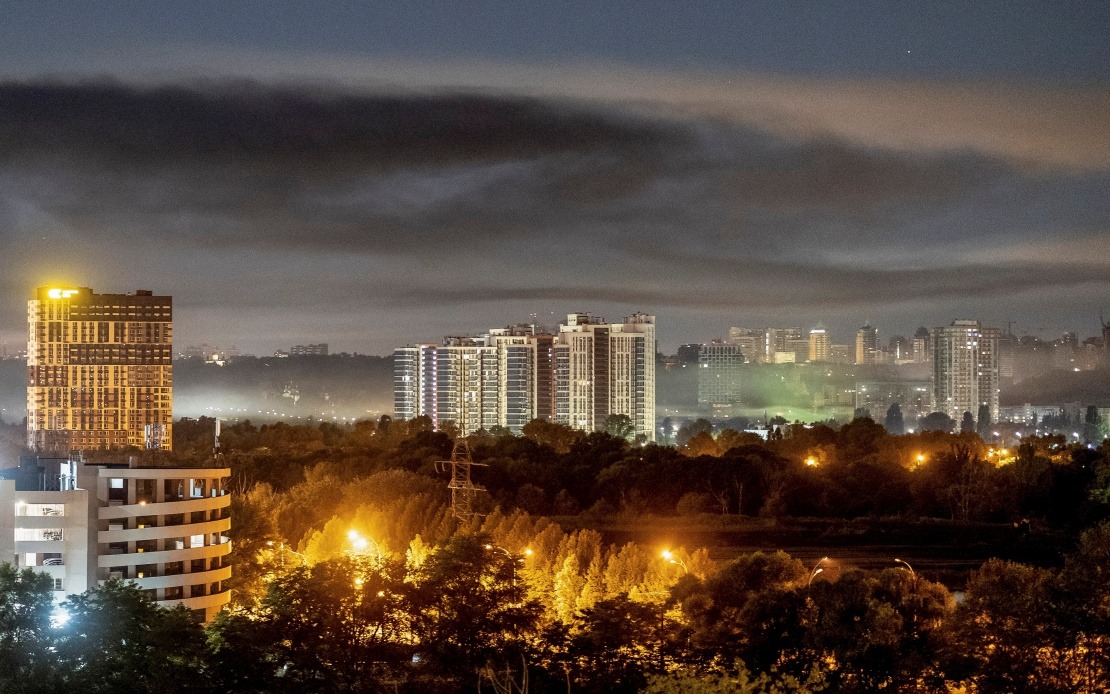
Ukrainian authorities reported a devastating toll following coordinated Russian ballistic missile strikes against Kyiv on Saturday, August 1, with the State Emergency Service confirming nine fatalities and 23 people injured in the assault. The strikes, which deployed ballistic weaponry against multiple civilian areas, represent a continuation of Russia's sustained air campaign targeting Ukraine's capital and largest city throughout the ongoing conflict.
The attacks impacted five separate districts within Kyiv's metropolitan area, suggesting a deliberate strategy to distribute strikes across the city rather than concentrate them in a single location. Such dispersal tactics typically aim to overwhelm air defence systems and maximise the area of effect, forcing emergency responders to scatter their resources across wider geographical zones. The breadth of impact underscores the scale of the Russian missile capability being directed at the city, which sits roughly 500 kilometres from Russian territory and relies on increasingly stretched air defence networks.
For Malaysian and Southeast Asian observers, the Kyiv attacks illustrate the persistent vulnerability of major urban centres to sustained aerial bombardment, even as defenders implement sophisticated countermeasures. The pattern of Russian strikes—rotating between different targets and districts—reflects doctrinal approaches that prioritise psychological impact and infrastructure degradation alongside casualties. Ukraine's capital has endured numerous such barrages since Russia's February 2022 invasion, with each wave prompting renewed international concern about civilian safety.
The State Emergency Service, Ukraine's primary civil protection authority, bears responsibility for coordinating rescue operations, medical response, and casualty assessment following such incidents. Their rapid casualty confirmation suggests established protocols for damage assessment and reporting, though Ukrainian figures are routinely subject to independent verification given the fog of war surrounding active conflict zones. The figure of nine deaths represents the confirmed toll at the time of reporting, with numbers potentially shifting as rescue operations conclude and additional victims are identified.
Russian rationale for targeting Kyiv typically centres on degrading Ukrainian military capacity, disrupting government functions, and applying pressure through civilian infrastructure damage. The Ukrainian capital hosts significant military command structures, defence industry facilities, and critical infrastructure, making it a persistently attractive target from Moscow's perspective. However, the strikes also generate considerable international attention and reinforce Ukrainian resolve, creating a complex calculus regarding military effectiveness versus strategic messaging.
The injuries to 23 people expand the human cost beyond immediate fatalities. Hospital systems in Kyiv operate under considerable strain given the cumulative impact of repeated strikes over eighteen months of conflict. Treatment capacity for trauma cases, burns, and blast injuries remains adequate but increasingly pressured, with medical supply chains depending substantially on international humanitarian assistance and logistics networks through neighbouring Poland and other NATO members.
For regional security analysts across Southeast Asia, the Kyiv strikes underscore broader patterns of how modern air power continues reshaping warfare. Ballistic missiles—which follow predetermined flight paths rather than allowing course correction like cruise missiles—represent Russia's preferred tool for strikes on defended targets, potentially reflecting limitations in cruise missile production or concerns about air defence effectiveness. The choice of weapons system carries implications for Ukrainian air defence planning and international military aid priorities.
International responses to the Kyiv attacks typically follow established patterns, with Western nations condemning the strikes as violations of international humanitarian law while increasing military support commitments. Ukraine's Western allies view such attacks partly as indicators of Russian frustration with military progress on the ground, where territorial gains have stalled considerably. The psychological dimension of urban strikes remains strategically significant despite limited tactical military value, maintaining pressure on Ukrainian civilian morale and government stability.
The broader context involves Russia's apparent shift toward distributed targeting strategies after earlier concentration on specific military objectives. This evolution suggests adaptation to Ukrainian air defence improvements and Western military aid, including advanced radar systems and surface-to-air missiles. The August 1 strikes fit within a pattern of sustained pressure that characterises the current phase of conflict, where neither side has achieved decisive battlefield advantage but both continue applying military force across multiple domains.
For Malaysian policymakers observing the Ukraine situation, the Kyiv attacks illustrate why regional stability and conflict avoidance remain paramount policy priorities. The human cost of sustained warfare—measured in casualties, displacement, and infrastructure destruction—accumulates relentlessly regardless of ultimate political outcomes. The international dimensions of the conflict, including weapons provision, sanctions, and diplomatic engagement, demonstrate how regional conflicts increasingly internationalise and demand active participation from distant powers.
Ukraine's capacity to sustain defence against such attacks depends on continued international support, particularly air defence systems and ammunition supplies. Malaysia's geopolitical position—maintaining relations across multiple international blocs—positions the country to observe how prolonged conflicts reshape global alignments and resource allocation. The Kyiv situation remains dynamic, with casualty figures and damage assessments subject to change as rescue and assessment operations continue in the immediate aftermath of the strikes.

