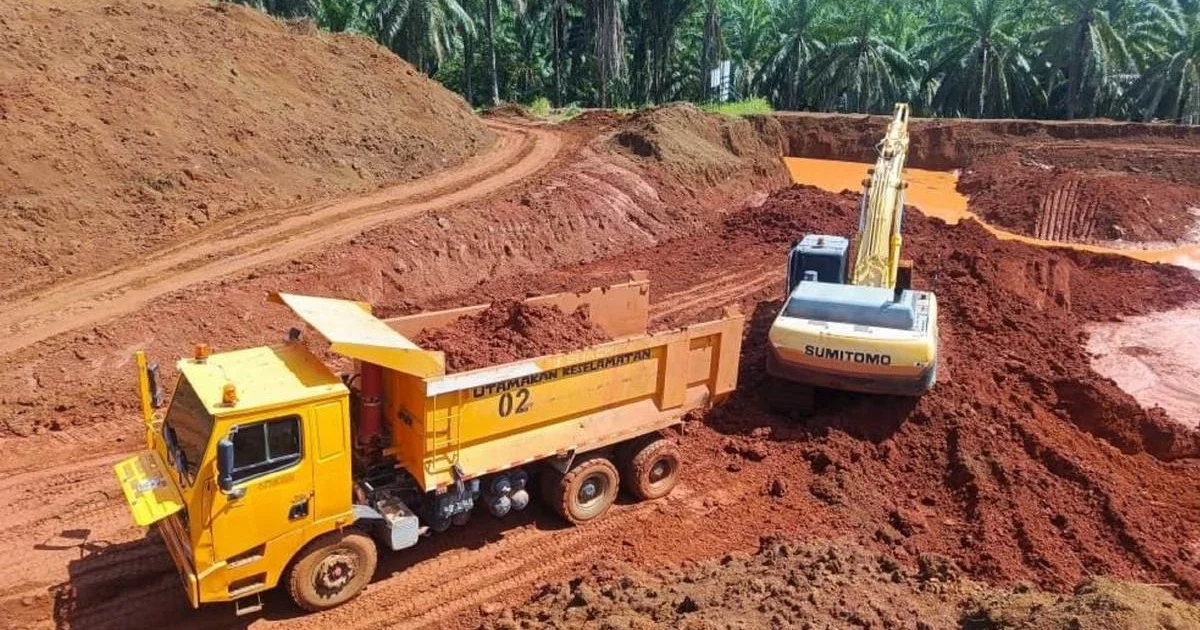
Law enforcement agencies have dismantled a significant illegal bauxite mining operation in Kuantan, bringing nine individuals into custody following a coordinated raid on the unauthorised extraction site. The enforcement action yielded a substantial haul of contraband materials and equipment, with confiscated goods totalling RM3.75 million in estimated value. The operation was centred on a Felda plantation located in the Bukit Goh area, a region that has been subject to increasing scrutiny from environmental and mining regulators in recent years.
Officers recovered approximately 10,000 tonnes of bauxite-bearing soil that had been stockpiled at the illegal mining site, representing the accumulated product of what appears to have been an extended unauthorised extraction operation. Beyond the raw mineral material, authorities also secured heavy machinery and transport lorries that had been deployed in the mining and haulage activities. The scale of equipment and material seized indicates that the operation had reached a relatively sophisticated level of organisation and capability, operating beyond what would typically be expected of a small-scale informal mining venture.
The raid represents part of a broader enforcement effort across Pahang state to curb unauthorised mineral extraction activities. Illegal bauxite mining has emerged as a persistent challenge in Malaysia's eastern peninsular regions, particularly where plantation land and mining concessions overlap or where regulatory oversight remains inconsistent. The Kuantan district, given its proximity to Port Klang and other shipping infrastructure, has historically attracted illicit mining enterprises seeking to extract and export mineral resources outside official channels.
Authorities have intensified operations targeting such activities following growing concern about environmental degradation, soil contamination, and water quality impacts associated with illegal bauxite extraction. These operations typically involve the removal of topsoil and vegetation, leaving behind degraded landscapes and increasing erosion risk. When conducted without proper rehabilitation measures or environmental safeguards, such mining can render agricultural land unsuitable for future use and contaminate water sources that surrounding communities depend upon.
The involvement of a Felda plantation in this incident underscores how illegal mining operations sometimes exploit the boundaries and operational gaps within Malaysia's state-owned agricultural estates. Felda properties, while nominally under government oversight, span vast areas that can be difficult to monitor continuously. Criminal syndicates involved in mineral trafficking have been known to establish temporary operations in peripheral areas of such estates, relying on inadequate surveillance or the transient presence of security personnel to conduct their activities with minimal interference.
The bauxite seized in this operation would likely have been destined for export, either as processed ore or unrefined bearing soil sent to regional refineries. Malaysia has no bauxite refining capacity to speak of, making virtually all legally extracted bauxite dependent on exports to neighbouring countries like Indonesia or Thailand, where aluminium production facilities operate. Illegal mining circumvents both taxation and environmental compliance requirements, making it economically attractive to criminal networks operating with minimal overhead costs or regulatory accountability.
The apprehension of nine individuals suggests that the operation involved both direct miners and supervisory or coordination personnel. These networks typically include site managers, equipment operators, transport coordinators, and disposal or sales representatives. Determining the full scope of culpability and tracing supply chains through to end-buyers remains a complex investigative undertaking, particularly where cash-based transactions and informal networks are employed to obscure financial trails.
Prosecutors will need to establish whether the detained individuals acted independently or as part of a larger syndicated operation. Penalties for illegal mining in Malaysia include substantial fines and potential imprisonment depending on the jurisdiction and applicable regulations. Some states have implemented enhanced penalties in recent years as illegal mining has become more widespread and damaging, though enforcement remains inconsistent across different enforcement agencies and local authorities.
The seizure of equipment and materials effectively disrupts the operational capability of this particular mining enterprise, though it does not necessarily prevent the individuals involved from establishing new operations elsewhere if they are released without substantial constraints. Systemic solutions require improved coordination between Felda management, state environmental agencies, mining authorities, and police to establish continuous monitoring and rapid response protocols. Technology such as satellite monitoring and drone surveillance has shown promise in other regions for identifying new or relocated operations before they achieve significant scale.
Regional cooperation through ASEAN frameworks also remains vital, given that illegal bauxite frequently crosses borders within Southeast Asia. Transnational criminal networks exploit regulatory differences between jurisdictions, and intelligence sharing mechanisms have become increasingly important for disrupting supply chains rather than merely addressing individual mining sites. The confiscation of this haul, while significant, addresses only symptoms rather than underlying drivers that incentivise illicit mineral extraction despite enforcement risks.
The environmental rehabilitation of mining-affected sites represents a longer-term challenge that will outlast individual enforcement actions. Bauxite extraction leaves behind laterite residues and altered soil profiles that require active restoration to restore productive capacity. Authorities are increasingly requiring operators to post environmental bonds and rehabilitation guarantees, though verifying compliance with unauthorised operators presents evident difficulties. Future enforcement strategies will likely emphasise prevention through enhanced monitoring and deterrence through consistently applied penalties rather than relying primarily on post-extraction interventions.

