Jonathan Vaughters, the former professional cyclist and head of the Cannondale-EF team, has stepped into a contentious debate surrounding unannounced doping tests conducted in the pre-dawn hours at the Tour de France, making the provocative argument that such rigorous nighttime testing protocols might have curtailed the sport's infamous blood-doping scandals had they existed in earlier eras. His intervention carries considerable authority given his prominent role in modern cycling governance and his candid acknowledgement of his own past involvement with performance-enhancing substances.
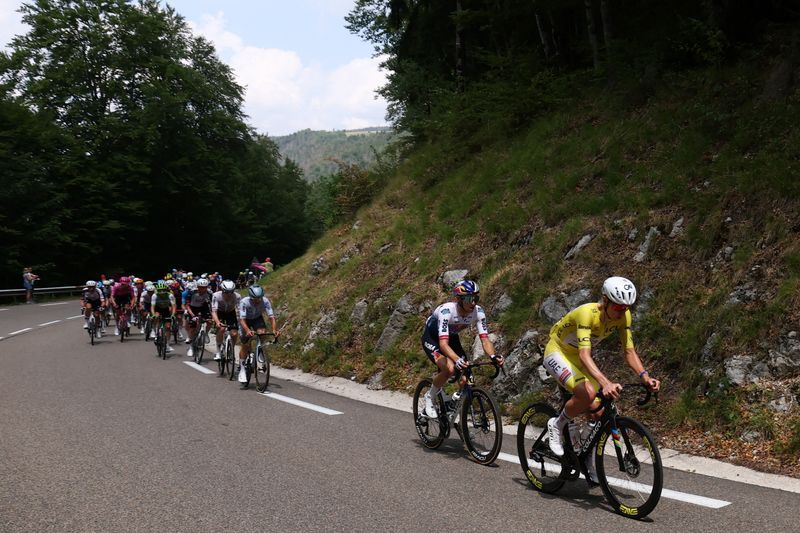
The controversy erupted after UCI-sanctioned antidoping officials conducted surprise testing at 2 a.m. and 5 a.m. on Sunday ahead of the 15th stage of the race, targeting competitors including race leader Tadej Pogacar and fellow contender Jonas Vingegaard. The early-morning raids triggered immediate resistance from riders who complained that being jolted from sleep for unannounced checks created dangerous fatigue and posed potential safety risks during subsequent competitive stages.
Vaugthers responded to the outcry by posting on social media that early-morning testing represented one of the most effective deterrents against the sophisticated cheating methods that characterized cycling's darkest period. He specifically highlighted that EPO micro-dosing, human growth hormone supplementation, and testosterone micro-dosing regimens all depend on substances that metabolize rapidly and leave the body within hours, making detection particularly challenging during standard daytime testing windows. His provocative hypothetical observation that pre-dawn tests in 2001 would have exposed the entire generation of riders who benefited from systematic doping represents a stark acknowledgement of how widespread the problem had become.
The credibility of Vaughters' position derives partly from his intimate familiarity with the doping apparatus he describes. He competed professionally throughout the late 1990s and early 2000s as a teammate of Lance Armstrong on the U.S. Postal Service team, one of the most systematically corrupt outfits in sports history. Rather than remaining silent about that era, Vaughters eventually acknowledged his own use of EPO and other prohibited substances during his racing career, subsequently providing crucial testimony to the U.S. Anti-Doping Agency during its landmark investigation into Armstrong.
That investigation ultimately resulted in Armstrong's unprecedented stripping of seven Tour de France titles in 2012, following USADA's determination that he had orchestrated what officials characterized as the most elaborate and sophisticated doping scheme the cycling world had ever encountered. Armstrong's fall from grace fundamentally damaged cycling's reputation globally and triggered years of institutional reform within the sport's governing bodies. Vaughters' subsequent establishment of the Cannondale-EF team specifically positioned around principles of clean racing represented an attempt to rebuild the sport's damaged credibility.
The riders competing at this year's Tour de France responded sharply to the nighttime testing protocols. Vingegaard, who was summoned for testing at 2 a.m., reported that the disruption cost him approximately 40 minutes of sleep before a challenging mountain stage, during which he subsequently crashed and fractured his collarbone—injuries that could prove catastrophic to his race campaign. Pogacar, tested at 5 a.m., indicated that he managed to secure only four hours of sleep before competition resumed. Remco Evenepoel, who won the contested stage, dismissed the entire practice as "inhuman," articulating the riders' collective frustration with what they perceive as an excessive and counterproductive enforcement mechanism.
The International Testing Agency, which administers doping controls on behalf of the UCI, acknowledged the inherent tension between effective antidoping enforcement and athlete welfare. In a statement defending the nocturnal testing approach, the agency conceded awareness that "night-time testing may be disruptive to riders' rest and recovery" but maintained that circumstances existed where effective testing protocols "in limited and justified circumstances" must necessarily occur outside conventional daytime hours. This represents a deliberate choice to prioritize competitive integrity and the deterrence of sophisticated cheating methods over rider comfort and sleep optimization.
The scientific foundation for nighttime testing rests on the pharmacology of banned substances that concern antidoping authorities most acutely. Micro-dosing protocols for EPO and human growth hormone have emerged as the primary challenge for testing regimes because these substances metabolize and clear from the body remarkably quickly—within hours rather than days. Predictable daytime-only testing windows inadvertently create windows of vulnerability that sophisticated dopers have historically exploited by timing their administrations to coincide with predictable testing schedules and natural metabolic clearance patterns.
Vaughters' argument essentially posits that the cycling establishment faces an inescapable choice between tolerating the minor inconveniences imposed by nocturnal testing and risking a return to the systematic cheating that contaminated the sport for decades. His reference to "25 years of drama" encapsulates not merely the competitive achievements that were fraudulently obtained but the broader institutional damage, lost sponsorships, damaged public trust, and criminal investigations that accompanied the revelation of systemic doping across the professional peloton.
For Malaysian and Southeast Asian cycling enthusiasts, this debate carries implications beyond European road racing. The question of how aggressively authorities should police elite sport performance touches fundamental questions about competitive fairness, athlete welfare, and institutional credibility that resonate across all sporting disciplines. As cycling develops growing followings across Asia, including through emerging professional pathways and grassroots participation, the resolution of this enforcement-versus-welfare tension will help establish what standards of sporting integrity the global cycling community collectively demands.
The broader significance of Vaughters' intervention lies in his unique positioning as someone who has inhabited both sides of cycling's moral divide. His testimony effectively argues that nostalgic appeals to "tradition" or "athlete comfort" must be weighed against the concrete historical record of how traditional, comfortable, and predictable testing regimes enabled decades of systematic deception. Whether the cycling world ultimately accepts this argument remains to be seen, but the debate itself reflects an institution attempting to navigate the perpetual tension between enforcement rigor and competitive conditions.

