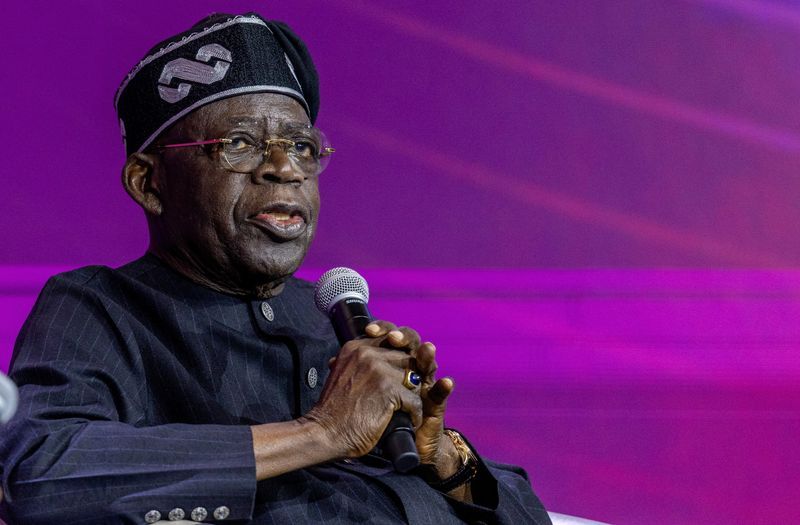
President Bola Tinubu has instructed Nigeria's Federal Competition and Consumer Protection Commission to investigate leading technology companies over suspected breaches of competition law and the unlawful appropriation of news content, the regulator announced late Monday. The directive comes amid mounting pressure from Nigeria's media sector, which has united to challenge how global digital platforms operate within the country's borders.
The Nigerian Press Organisation, an umbrella body encompassing newspaper publishers, journalist unions, broadcast stations and digital news outlets, lodged the formal complaint that triggered the investigation. The case targets Meta, Alphabet, X and various generative artificial intelligence platforms active in Nigeria, reflecting growing friction between traditional and digital media over content ownership and financial compensation.
Nigeria's move mirrors regulatory action gathering pace across multiple continents. The investigation will scrutinise whether these technology giants have abused their market position, engaged in anti-competitive behaviour, and improperly extracted or commercialised copyrighted journalistic and broadcast material. Investigators will also examine allegations that news publishers' content has been harvested to train large language models and other AI systems without appropriate permission or payment.
The FCCPC emphasised that the inquiry operates as a preliminary examination rather than a presumption of guilt. All parties facing allegations, including the technology companies themselves, will receive opportunities to submit evidence and counterarguments before any regulatory determinations are made. This procedural stance suggests the regulator intends a thorough, evidence-based approach rather than a predetermined outcome.
For Malaysian stakeholders, Nigeria's investigation carries significant implications. The region's media organisations and digital companies operate across similar regulatory environments, where questions about content rights, platform dominance and fair compensation remain largely unresolved. A successful Nigerian case could establish precedent encouraging other African and Southeast Asian regulators to pursue comparable actions, potentially reshaping how global technology firms interact with regional publishers.
The dispute reflects a fundamental tension in the digital economy: whether news publishers whose reporting attracts audiences and generates platform advertising revenue deserve compensation, or whether tech firms' aggregation and distribution services constitute sufficient value exchange. Technology companies have typically resisted mandatory payment schemes, arguing their platforms provide publishers with distribution and visibility. Publishers counter that they bear the costs of journalism while platforms monetise content they do not create.
International precedent suggests Nigeria's investigation could lead to meaningful outcomes. South Africa's competition regulator last year secured a 688 million rand, approximately US$42 million, media support package from Google and YouTube following a comprehensive market inquiry into digital platforms and news publishers. France imposed a €500 million fine on Google in 2021 for failing to negotiate fairly with news organisations and breaching obligations related to AI systems' use of publisher content. Australia and Canada have established formal bargaining frameworks that require technology companies to negotiate compensation with media outlets, resulting in substantial payment agreements in both jurisdictions.
These international examples demonstrate that regulators can successfully compel technology platforms to recognise publishers' rights, though enforcement mechanisms and negotiating leverage vary significantly by country. The European Union's Digital Markets Act and Copyright Directive have created additional pressure on major tech firms to adjust their business models around content usage and compensation. Nigeria's approach, drawing on these global developments, positions the country as a significant test case for African regulatory capacity.
For Nigeria specifically, the investigation tests whether the FCCPC possesses sufficient independence, expertise and enforcement power to hold multinational corporations accountable. Technology companies rarely submit willingly to local regulatory authority, particularly regarding global business practices. The regulator's success will depend on its ability to gather evidence, withstand political pressure from the technology sector, and implement remedies that prove practically enforceable against companies with resources to appeal or resist.
The timing reflects Nigeria's broader digital maturity. As Africa's largest economy and most populous nation, Nigeria hosts substantial populations of internet users and has become increasingly important to global technology platforms' expansion strategies. This market importance gives Nigerian regulators genuine leverage: technology companies cannot easily ignore the country's regulatory determinations without sacrificing access to millions of users and significant advertising revenue.
The inquiry also reflects the Nigerian media sector's desperation as advertising revenue increasingly flows to digital platforms rather than traditional publishers. Local journalism depends on sustainable funding, and publishers argue that technology platforms' ability to monetise content without compensating creators undermines the economics of news production. This dynamic plays out similarly across Southeast Asia, where local publishers face intense pressure from Meta, Google and TikTok's dominance of digital advertising markets.
Beyond immediate compensation questions, the investigation addresses fundamental governance challenges: whether individual nations can effectively regulate global platforms that operate across borders, and whether coordinated international action or bilateral pressure proves more effective. Nigeria's actions may influence how other African nations approach similar issues, potentially creating a unified regional negotiating position rather than allowing technology companies to deal with countries individually.
The outcome remains uncertain. Nigeria's investigation signals serious intent to protect local publishers and test global tech companies' compliance with domestic law. Whether this translates into enforceable remedies comparable to South Africa's or France's outcomes depends on evidence quality, regulatory persistence, and ultimately, the government's willingness to pursue penalties that technology firms might challenge through international arbitration or legal mechanisms.

