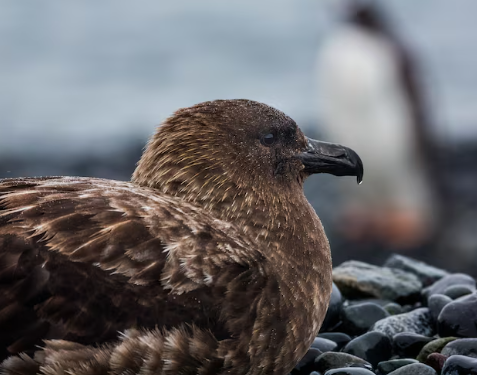
New Zealand on Wednesday joined every other inhabited continent in reporting the H5N1 bird flu virus, after a brown skua seabird discovered on a beach near Wellington tested positive for the deadly strain. The detection marks a watershed moment for the Pacific island nation, which has long maintained strict biosecurity measures to protect its unique and fragile ecosystem. Biosecurity Minister Andrew Hoggard announced the finding, noting that the infected migratory seabird represents the first confirmed case on New Zealand soil, though officials emphasised there was currently no evidence of widespread wildlife mortality or transmission between wild bird populations. No cases have been detected in New Zealand's domestic poultry sector, a crucial distinction given the vulnerability of the country's farming operations to such outbreaks.
The arrival of H5N1 in New Zealand comes barely a month after Australian authorities confirmed the first detections of the virus in the Southern Hemisphere, marking a dramatic progression of a global pandemic that has ravaged bird populations and livestock operations since 2021. Australia has since recorded 14 confirmed or presumed positive cases, establishing a troubling pattern that New Zealand officials believe may foreshadow the trajectory of the outbreak across the Tasman. The H5 strain has proven extraordinarily virulent, spreading through wild bird and mammal populations with devastating efficiency while simultaneously breaching the defences of commercial poultry and dairy operations. Several farmworkers in various countries have also contracted the virus, raising alarm bells among public health authorities worldwide about potential pandemic risks should the pathogen acquire greater human transmissibility.
New Zealand's particular vulnerability to H5N1 stems from the evolutionary isolation of its native bird populations. Over millions of years, New Zealand's avifauna evolved without exposure to native land predators, resulting in an unusual concentration of flightless or poorly flying species, ground-nesting behaviours, and limited defensive capabilities. This insularity, which produced the world's most distinctive and remarkable bird fauna, has become a profound liability in the face of modern disease threats. The country's endemic birds have already endured severe population pressures from habitat destruction and introduced pests including stoats, rats, and feral cats, creating ecological stress that may compromise immune responses to novel pathogens. Many of New Zealand's native species are classified as critically endangered or vulnerable, meaning that rapid viral spread could potentially push several species toward extinction within a remarkably short timeframe.
The government has responded to this existential threat with an innovative but resource-intensive vaccination campaign targeting 300 core breeding individuals from five of the nation's most imperilled bird species. The programme focuses on the takahe and kakapo, both iconic flightless birds that exist in extremely limited numbers in carefully managed reserves. These vaccination efforts represent a dramatic escalation of New Zealand's pre-existing H5N1 preparedness strategy, which has involved extensive collaboration with the poultry industry to develop comprehensive biosecurity protocols and operational resilience frameworks. The decision to vaccinate wild birds reflects the calculating judgement that conventional containment measures alone cannot adequately protect species with such precarious population sizes and limited genetic diversity.
Brett Gartrell, a leading wildlife health expert at Massey University, has articulated the deep anxiety permeating New Zealand's conservation community regarding the pandemic's potential consequences. Gartrell emphasised that New Zealand's birds face an unprecedented pathogenic challenge for which their evolutionary history has left them entirely unprepared, lacking any accumulated resistance or adaptive immune memory to avian influenza. The prospect of rapid viral dissemination through wild bird networks presents what conservation scientists describe as an extinction-level threat to multiple species simultaneously. The vaccination programme, while strategically sound, cannot guarantee complete protection for the targeted population if H5N1 spreads more rapidly than anticipated through wild bird movements and ecological networks, potentially overwhelming the immune capacity of even vaccinated individuals.
New Zealand's situation encapsulates a broader conservation paradox that has become increasingly apparent across Pacific island ecosystems. The remarkable biological distinctiveness that makes such regions invaluable to global biodiversity is inextricably linked to ecological vulnerability, as species that evolved in isolation lack the genetic and immunological tools to cope with modern disease threats. The arrival of H5N1 threatens to transform New Zealand's ecological landscape, potentially eliminating species that took millions of years to evolve and that cannot be recreated through any technological intervention. The vaccination programme represents an admission that conventional wildlife management—habitat protection, predator control, captive breeding—cannot alone address the scale of the contemporary biosecurity challenge facing the nation's natural heritage.
For Malaysia and other Southeast Asian nations, New Zealand's experience carries significant implications regarding preparedness for emerging zoonotic diseases. The region's own remarkable avian biodiversity, combined with intensive poultry production and wildlife trade networks, creates conditions potentially favourable for H5N1 establishment and spread. The absence of significant H5N1 detections in Southeast Asian wild bird populations thus far should not inspire complacency, as the virus's progression across the Southern Hemisphere suggests that geographic barriers increasingly offer limited protection against pandemic pathogens. New Zealand's emergence as the final continent to report H5N1 underscores the reality that global disease surveillance networks, while improving, remain fundamentally reactive rather than genuinely predictive.
The discovery also highlights the mounting tensions between agricultural interests and wildlife conservation that are likely to intensify as H5N1 becomes established in wild bird populations across more jurisdictions. New Zealand has invested substantially in poultry biosecurity and industry resilience frameworks that prioritise protection of commercial operations, yet such measures cannot entirely shield wild birds that may serve as disease reservoirs or transmission vectors. The vaccination programme targeting endangered species represents an acknowledgement that ecosystem health and agricultural productivity, while sometimes presented as competing objectives, increasingly require integrated management strategies that address both domains simultaneously.
Moving forward, New Zealand's response to H5N1 will likely influence how other Pacific and temperate nations approach similar challenges. The country's decision to invest in vaccinating wild populations of endangered species, rather than pursuing the culling strategies employed in some Asian and European contexts, reflects a particular valuation of biodiversity preservation that may or may not be replicated elsewhere. However, the practical efficacy of this approach remains uncertain, and the coming months will provide critical data regarding whether vaccination can meaningfully reduce mortality among New Zealand's most vulnerable bird species or whether the virus will spread beyond current containment assumptions.

