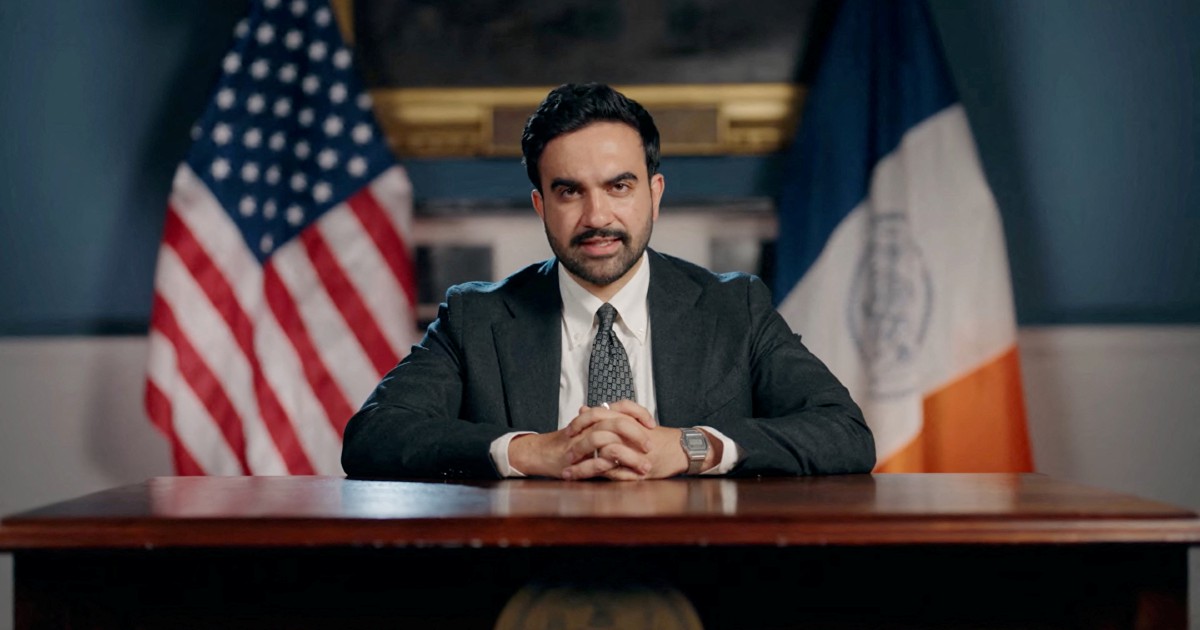
New York Mayor Zohran Mamdani has drawn a clear line around municipal authority in response to the International Criminal Court's arrest warrant for Israeli Prime Minister Benjamin Netanyahu, stating bluntly that his city lacks the legal power to detain the Israeli leader. Mamdani's declaration on Tuesday represents an attempt to reframe what might otherwise appear to be a refusal to cooperate with an international judicial body, instead positioning the matter as one requiring federal oversight and intervention.
The remarks arrive amid mounting diplomatic complexity surrounding Netanyahu's potential travel to the United States and the legal obligations Washington faces regarding the ICC's determinations. The International Criminal Court, established by treaty and based in The Hague, issued its warrant against Netanyahu on charges linked to alleged conduct during Israel's military operations, a development that has sharpened the tension between America's bilateral relationship with Israel and its nominal commitment to international accountability mechanisms.
Mamdani's position reflects a fundamental constitutional reality: American municipalities operate under the legal framework established by state and federal law, not international treaties that the United States has not ratified. This distinction matters significantly because the United States never became a signatory to the Rome Statute, the 1998 treaty establishing the ICC. Consequently, while American officials might choose to support international justice efforts voluntarily, they face no binding legal obligation to enforce ICC warrants without explicit federal legislation directing them to do so.
The question of whether Netanyahu might visit New York carries practical weight given that the city serves as the seat of the United Nations, where Israeli delegations regularly appear. Should the prime minister travel there, municipal law enforcement agencies would theoretically come into contact with him, raising awkward scenarios. However, Mamdani's clarification essentially absolves the city of responsibility, arguing instead that any enforcement action would require federal coordination, likely involving the US Department of Justice and the State Department.
This deferral to federal authority reflects broader American ambiguity toward the ICC, an institution that many Washington officials have historically viewed with suspicion. The Trump administration previously imposed sanctions on ICC officials investigating American personnel, while successive administrations have expressed concerns about the court's jurisdiction and independence. The Biden administration, though more supportive of international institutions generally, has not fundamentally altered the US position regarding ICC warrant enforcement.
From a diplomatic standpoint, the American approach creates a protective buffer around Netanyahu's freedom of movement. By anchoring enforcement authority at the federal rather than municipal level, the calculation appears to distribute political responsibility in ways that make enforcement less likely. Federal officials can point to complexity, constitutional questions, and the absence of formal treaty obligations, while avoiding the appearance of deliberately shielding the Israeli leader from accountability.
The incident also illuminates tensions within the international justice system itself. The ICC's mandate extends across signatory nations, but enforcement relies heavily on the goodwill and legal structures of major powers. When leading countries decline to cooperate, the court's practical authority shrinks considerably, regardless of its formal legal mandates. Netanyahu's situation exemplifies this structural weakness, where a warrant issued by an international body cannot be executed in nations with the capacity to enforce it.
For Malaysian observers, this development carries particular relevance given the region's relationship with the ICC and international accountability frameworks. Malaysia, as an ICC signatory, theoretically faces obligations to enforce such warrants within its territory, creating a potential scenario where Netanyahu would need to avoid Southeast Asia or risk detention. This creates a contrast with American policy, where treaty non-participation provides legal cover for non-enforcement.
The political dimensions of Mamdani's statement merit attention as well. New York has a substantial constituency concerned with Palestinian rights and international law, and the mayor's clarification may serve to manage expectations within those communities while avoiding a direct confrontation with the Israeli government or the federal administration. By emphasizing legal limitations rather than political choice, the mayor frames his city's position as constrained by law rather than shaped by preference.
Looking ahead, the Netanyahu warrant situation may establish informal precedent for how American cities handle future ICC determinations. Should the precedent crystallize that municipal enforcement is impossible absent federal action, and federal action remains unlikely absent dramatic shifts in American foreign policy, the practical effect will be to create zones of immunity around Israeli officials within the United States.
The broader implications extend to questions of how international law functions in a world where major powers selectively engage with institutions like the ICC. Mamdani's statement, while presented as a clarification of legal authority, ultimately demonstrates how jurisdictional boundaries and treaty non-participation can insulate political allies from international accountability mechanisms, raising uncomfortable questions about the real strength of global legal frameworks.
Ultimately, the exchange reveals the limitations inherent in international justice systems that depend on voluntary compliance from countries not formally bound by their rules. Without federal direction, New York cannot act, and absent political will at the federal level, such direction appears unlikely to materialise.

