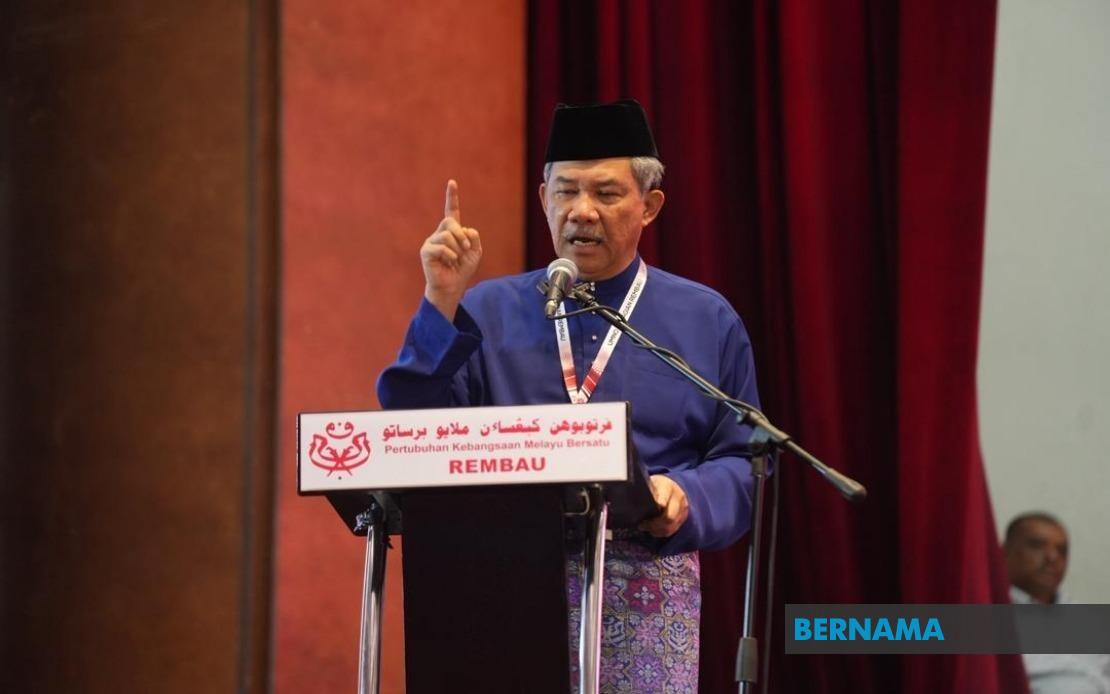
The 10 newly appointed members of the Negeri Sembilan State Executive Council (Exco) have pledged their oath of office before the Yang Dipertuan Besar of Negeri Sembilan, Tuanku Muhriz Tuanku Munawir, at Istana Besar Seri Menanti in Seremban. Barisan Nasional Deputy Chairman Datuk Seri Mohamad Hasan, who is also the Rantau State Assemblyman, has voiced confidence that these appointees possess the necessary competence to work closely with the Menteri Besar and execute their portfolio responsibilities in service of the state's constituents.
In articulating his assessment of the newly appointed officials, Mohamad emphasised the multifaceted nature of the exco role, which extends far beyond administrative routine. The position, he explained, functions as a critical conduit linking government machinery with the broader populace. This bridging function is particularly important in a state administration context, where exco members serve as intermediaries tasked with communicating complex government directives to communities whilst simultaneously channelling grassroots feedback upward through official channels.
Mohamad outlined two interconnected responsibilities that define the exco member's contribution to state governance. On one hand, these officials must ensure that policy announcements and legislative objectives emanating from the state administration are conveyed to the public in accessible, comprehensible language. Government decisions, however well-intentioned, require skilled communication to gain public understanding and acceptance. On the other, exco members bear responsibility for systematically gathering and synthesising community concerns, suggestions, and observations from their respective constituencies and functional areas.
The feedback loop mechanism that Mohamad described reflects an understanding that effective governance depends on two-way communication channels. Rather than treating policy implementation as a unidirectional process, the exco serves as a listening post, collecting data on how government initiatives affect daily life, identifying systemic bottlenecks, and capturing innovative suggestions emerging from communities. This information, once aggregated and processed, is intended to inform adjustments and improvements to state administration that ultimately enhance public welfare across different sectors and geographic areas.
To ensure competent discharge of these responsibilities, Mohamad stressed the importance of thorough orientation. Each exco member, he indicated, must receive comprehensive briefings from the civil service departments operating within their assigned portfolios. Such briefings are not mere formalities; they represent essential knowledge transfer sessions designed to familiarise appointees with existing administrative frameworks, ongoing projects, budgetary constraints, and institutional cultures specific to their departments. Without this foundational understanding, even well-intentioned officials risk making decisions divorced from operational reality.
Maintaining functional relationships between exco members and government departments emerged as another critical success factor in Mohamad's commentary. The smooth execution of state policies depends fundamentally on constructive working relationships between political appointees and career civil servants. When exco members understand departmental operations and respect the expertise of permanent secretaries and senior administrators, policy implementation becomes more coherent and efficient. Conversely, fractious relationships or institutional mistrust can create bottlenecks and undermine programme effectiveness.
For Malaysian political observers, the swearing-in of a new exco slate typically signals an administration's commitment to specific policy directions and priorities. Negeri Sembilan, as a state that has experienced significant political transitions in recent years, represents an important proving ground for Barisan Nasional's approach to state-level governance. The composition and capability of the exco will substantially influence whether the state administration can address longstanding service delivery challenges, attract investment, and improve infrastructure—concerns that resonate across Malaysia's state capitals.
The broader context for these appointments includes ongoing regional political dynamics. Mohamad's remarks also touched on the possibility of state elections in Melaka, noting that such decisions rest with the state's Chief Minister and require formal dissolution of the legislative assembly approved by the Yang Dipertua Negeri. This reference illustrates how state-level politics in Malaysia remain fluid, with timing and electoral calculus constantly influencing administrative formations and leadership transitions.
For residents of Negeri Sembilan, the effectiveness of the newly installed exco will become apparent through concrete improvements in service delivery, responsiveness to constituent complaints, and visible progress on development projects. The state has faced recurring challenges around infrastructure maintenance, education provision, and economic diversification—issues on which these exco members will be judged by the electorate. Mohamad's expression of confidence, whilst politically appropriate, ultimately commits these officials to delivering tangible results that justify public trust.
The emphasis on bridging roles and systematic feedback collection also reflects broader trends in Malaysian governance, where state governments increasingly recognise that legitimacy depends on demonstrable responsiveness to public needs. Rather than treating exco positions as sinecures or stepping stones to higher office, contemporary expectations demand that appointees invest genuine effort in understanding constituent concerns and advocating for resources and policy adjustments at the state cabinet level. This elevation of exco responsibilities reflects maturing expectations about democratic governance in Malaysia's federal structure.

