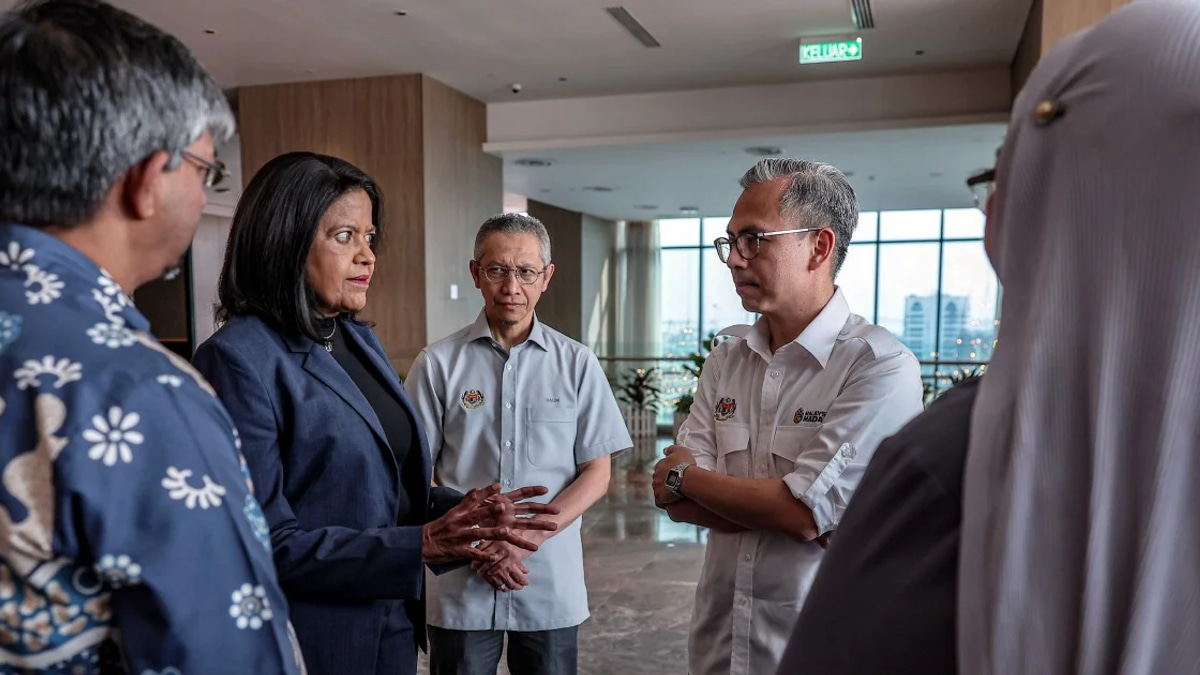
The Malaysian government has moved to bolster its digital inclusion agenda in the northern states by formally appointing chairmen to oversee the National Information Dissemination Centre (NADI) Advisory Panels in Kedah and Perlis. The initiative, unveiled in Alor Setar on June 20, represents part of a broader strategy to position NADI as a cornerstone institution for bridging the digital divide and ensuring equitable access to government services across Malaysia's diverse communities.
According to Abdullah Izhar Mohamed Yusof, Political Secretary to the Communications Minister, the panel appointments underscore the government's sustained commitment to governance reform and the rollout of NADI programmes nationwide. Alongside the Malaysian Communications and Multimedia Commission (MCMC), the ministry is working to consolidate NADI's position as more than merely a provider of internet connectivity. Instead, the centres have evolved into multi-functional community hubs designed to equip citizens with digital competencies while simultaneously serving as gateways to government information and support schemes.
The scope of NADI's operational footprint across the two northern states is substantial. Kedah hosts 81 functioning NADI centres, while Perlis operates 17 facilities. Collectively, these outlets serve as grassroots platforms delivering the NADI Smart Services Programme, an umbrella initiative addressing entrepreneurship development, continuous adult learning, personal wellness and resilience, public awareness campaigns, and the dissemination of various federally-sponsored programmes. The sheer number of centres underscores the government's determination to ensure that rural and semi-urban populations are not left behind in the digital economy.
The newly appointed panel chairmen for 15 parliamentary constituencies in Kedah and three in Perlis will function as crucial intermediaries between their local communities and NADI management structures. Their responsibilities encompass programme coordination, community feedback collection and relay, and intensified efforts to communicate government policies and initiatives in culturally and linguistically appropriate ways. This localised governance model reflects recognition that digital inclusion is not purely a technical challenge but also a social and communicative one, requiring trusted figures embedded within communities to bridge knowledge and trust gaps.
NADI's international standing has grown significantly, lending credibility to Malaysia's digital transformation ambitions. In 2023, the initiative secured recognition at the World Summit on the Information Society (WSIS) Prizes, winning in the Capacity Building category during ceremonies in Geneva. More recently, NADI was designated as the 16th Digital Transformation Centre globally by the International Telecommunication Union (ITU), a distinction that places Malaysia alongside leading nations in structured digital development. These accolades reflect not merely ceremonial value but validate the operational model and its effectiveness in translating digital infrastructure into tangible community outcomes.
The practical impact of NADI's work becomes visible through individual success stories emerging from Kedah and Perlis. Nurul Atika Razib, who operates Bahtera Emas Legacy in Kedah, exemplifies how NADI support has enabled traditional entrepreneurs to scale operations through digital channels. Her traditional health products have reached substantially wider markets via e-commerce platforms including Shopee and TikTok Shop, transforming what might have remained a localised cottage operation into a regionally competitive enterprise. Similarly, in Perlis, Hamizah Hassan of Embun Warisan Kayu has leveraged NADI's digital exposure guidance to market heritage-inspired woodcraft products beyond her immediate geographic area, preserving cultural traditions whilst generating income through modern commercial channels.
Beyond entrepreneurship, NADI's educational mandates address skill development across age groups and socioeconomic circumstances. The Tuisyen Rakyat (People's Tuition) programme provides accessible educational support for students facing affordability barriers to private tutoring, whilst AI@NADI introduces community members—particularly younger participants—to artificial intelligence concepts and applications. These programmes respond to a critical gap in Malaysia's skills landscape, where formal education systems often struggle to keep pace with rapid technological change and where regional disparities in educational quality remain pronounced.
The appointment of NADI Advisory Panel leadership carries particular significance for northern Malaysia, where economic diversification and digital readiness remain pressing policy priorities. Kedah and Perlis, traditionally reliant on agricultural and light manufacturing sectors, face pressures to develop knowledge-intensive capabilities and enable their citizens to participate in digital economy opportunities. By institutionalising community-level oversight through appointed panel chairs, the government signals commitment to sustained engagement rather than one-off interventions.
For Malaysian policymakers, the NADI model offers a template for scaling digital inclusion beyond government-to-business relationships into government-to-citizen and citizen-to-citizen frameworks. The emphasis on local panel leadership acknowledges that digital transformation succeeds not when imposed top-down but when communities understand its relevance to their aspirations and challenges. The mechanism of advisory panels allows for feedback loops that can refine NADI programming based on ground-level insights, enhancing relevance and uptake.
The Malaysia MADANI vision, to which Abdullah Izhar explicitly referenced NADI's contributions, prioritises inclusive prosperity and citizen wellbeing. Within that framework, digital empowerment becomes not a luxury or optional advancement but foundational infrastructure for equitable access to opportunity. NADI's expansion in Kedah and Perlis, coupled with international recognition and tangible community impact, positions these northern states as pilot regions for demonstrating how institutional commitment to digital inclusion translates into measurable socioeconomic outcomes. The success or challenges experienced in Kedah and Perlis may well inform how NADI scales and adapts in other regions facing similar development trajectories.