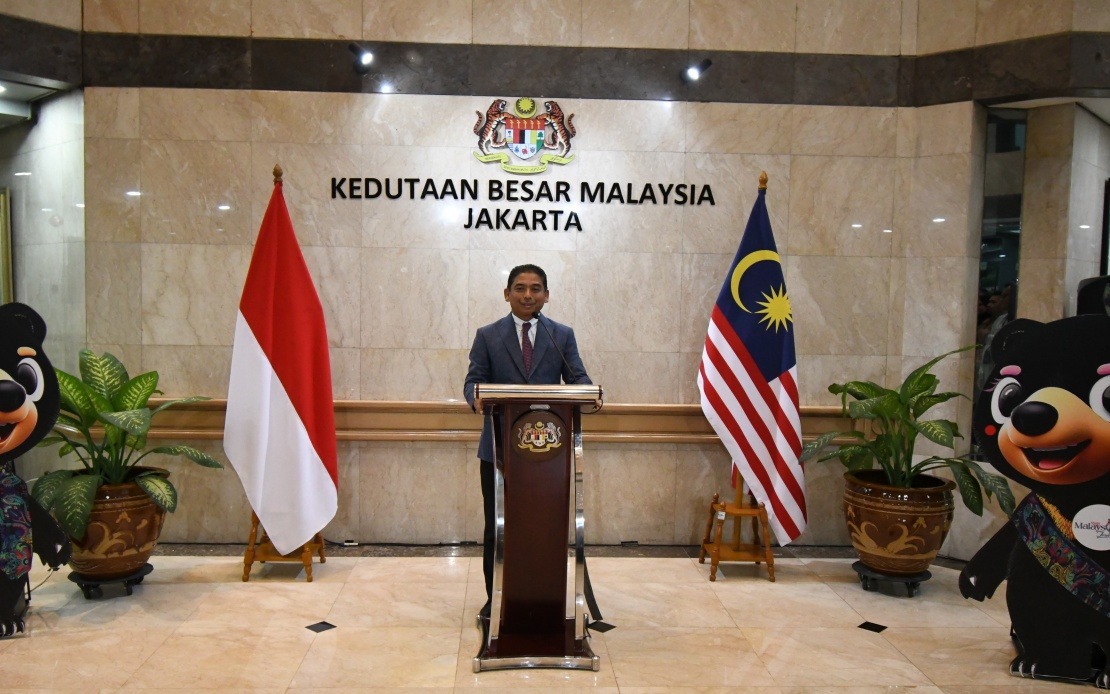
Datuk Muzafar Shah Mustafa has formally begun his assignment as Malaysia's Ambassador to Indonesia, settling into the embassy in Jakarta after completing a substantial posting in South Asia. The 29-year diplomatic veteran reported for duty on August 10, marking the start of what represents his latest chapter in a career that has taken him across multiple continents. His appointment to the Indonesian mission follows the completion of his tenure in New Delhi, where he served as High Commissioner for close to three years before departing on July 9.
The transition between posts underscores the depth of Malaysia's diplomatic engagement across its regional neighbourhood. Indonesia remains one of Malaysia's most strategically important bilateral relationships, given shared maritime borders, significant trade flows, and intricate cultural and historical ties. The appointment of an experienced career diplomat to this position reflects Kuala Lumpur's emphasis on maintaining robust diplomatic representation in Jakarta, particularly as the two nations navigate evolving regional dynamics and deepen cooperation frameworks.
Muzafar's credentials as a seasoned foreign service officer span nearly three decades of international representation. He formally joined the Foreign Ministry in 1995 and has since accumulated extensive experience across multiple continents and diverse diplomatic contexts. His career trajectory demonstrates a pattern of progressive responsibility, with assignments ranging from junior diplomatic posts to senior ambassadorial roles, positioning him well to manage the complexities of bilateral relations with Southeast Asia's largest economy.
His immediate prior assignment as High Commissioner to India provided exposure to managing relations with a major Asian power during a consequential period. The India posting, which commenced in October 2023, allowed Muzafar to engage with one of Asia's most dynamic economies and politically significant nations. Such experience managing multilayered diplomatic relationships in a major power context serves valuable preparation for navigating Indonesia's regional influence and its role within the ASEAN framework.
Before his Indian assignment, Muzafar held ambassadorial responsibility across Central America and Mexico for a five-year period ending in 2023. That posting involved representing Malaysia simultaneously in Mexico, Belize, Costa Rica, El Salvador, Guatemala and Honduras—a demanding assignment requiring coordination across multiple jurisdictions and diplomatic missions. This experience with managing non-resident portfolios and complex multi-country responsibilities demonstrates capability to handle the multifaceted demands of Indonesia, where Malaysia must balance bilateral relations alongside regional and multilateral considerations.
His career also includes representation in strategically sensitive locations. Between 2016 and 2018, Muzafar served as Ambassador to Venezuela during a particularly turbulent period in that nation's political and economic trajectory. Earlier still, from 2007 to 2011, he served as Counsellor at the Malaysian Embassy in Berlin, providing exposure to European diplomatic environments and NATO-adjacent geopolitical contexts. These varied assignments across different regional theatres have equipped him with adaptive skills necessary for navigating different political systems and diplomatic cultures.
Among his earlier postings was a tenure as Second Secretary at the Malaysian Embassy in Baghdad from 1999 to 2003, a period encompassing significant regional upheaval and transformation in Iraq. Such service in complex security environments during formative stages of his career likely imparted valuable perspective on risk management, crisis response, and diplomatic resilience—qualities potentially relevant to contemporary regional challenges across Southeast Asia.
Muzafar's appointment received formal credential endorsement from Yang di-Pertuan Agong Sultan Ibrahim at Istana Negara on July 14, following standard constitutional procedures for ambassadorial appointments. This formal investiture signified full authorization to represent Malaysian interests and engage diplomatically with the Indonesian government at the highest levels. The timing of his appointment letter and subsequent arrival in Jakarta provided minimal transition interval, suggesting urgency in establishing the new ambassadorial presence.
The envoy's personal background reflects the professional demands of diplomatic service. He is married to Datin Najwa Zainal and is father to four children, a family structure that requires significant adaptation and resilience given the frequent international relocations characteristic of foreign service careers. Such family considerations often inform decisions regarding posting length and location preferences within diplomatic service.
Muzafar's arrival in Jakarta occurs amid a period of active diplomatic engagement between Malaysia and Indonesia across multiple domains. The two nations maintain ongoing discussions regarding maritime boundaries, economic cooperation, people-to-people exchanges, and coordinated positions within ASEAN frameworks. His expertise and experience position him to advance these multifaceted relationships and address any emerging challenges requiring sustained diplomatic attention.
The continuity provided by assigning a career diplomat of Muzafar's calibre to this significant posting reinforces Malaysia's commitment to maintaining strong institutional capacity for managing its most important bilateral relationships. Indonesia's centrality to Malaysian foreign policy—both regionally and in broader Indo-Pacific contexts—necessitates ambassadorial representation of substantial seniority and experience. Muzafar's track record across diverse geographical and political contexts provides reasonable assurance of effective representation during his tenure in Jakarta.
Looking ahead, Muzafar will face the standard ambassadorial challenge of building working relationships with Indonesian counterparts while managing the substantive aspects of bilateral engagement. His three decades of diplomatic experience, combined with recent exposure to major power dynamics in India and previous Central American responsibilities, equip him with the foundational skills necessary for navigating Indonesian domestic politics, regional ASEAN dynamics, and the broader geopolitical environment shaping Southeast Asian international relations.

