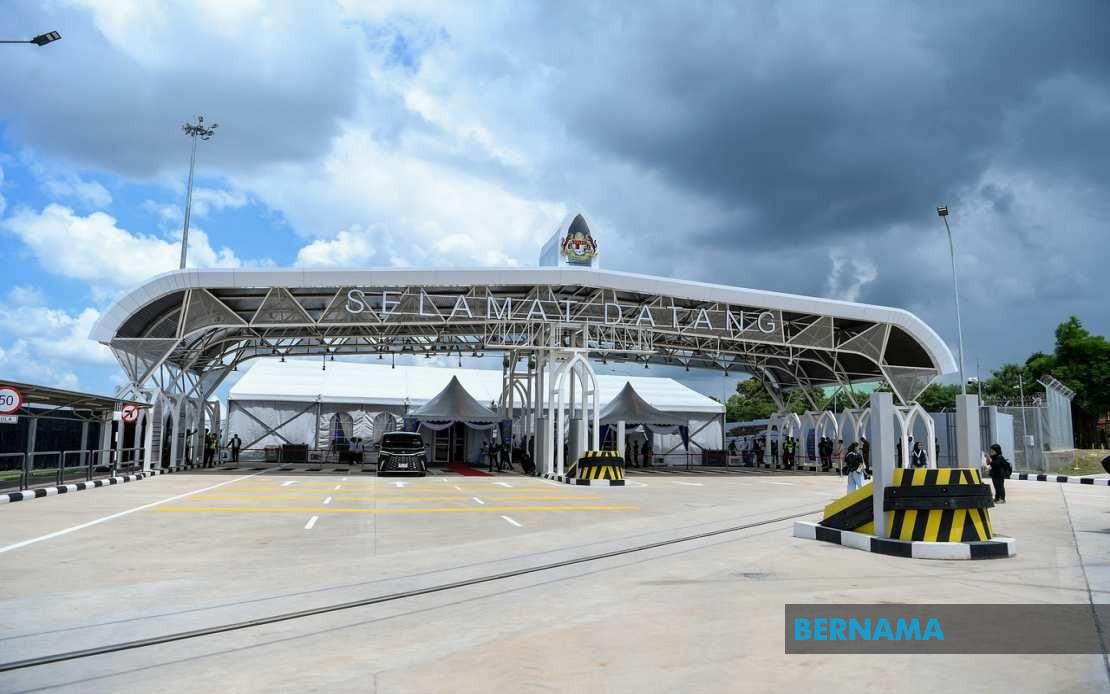
A month-long trial of the new Bukit Kayu Hitam-Sadao border passage demonstrates the tangible benefits of infrastructure modernisation in Southeast Asia's trading corridors. The 900-metre route, jointly inaugurated on July 10 by Thai Prime Minister Anutin Charnvirakul and Malaysian Prime Minister Datuk Seri Anwar Ibrahim, became operational the following day and has already transformed the efficiency of goods movement between Malaysia and Thailand—two nations whose economic interdependence makes such investments strategically significant.
The immediate adoption of the new crossing has been remarkable. According to Sadao Customs director Buntoon Oucharoen, nearly all lorries, buses and vans have shifted to the modernised facility, effectively eliminating congestion that had plagued the earlier border infrastructure. This wholesale migration reflects not merely regulatory compliance but genuine operational advantages that transport operators have recognised and capitalised upon. The consolidation of traffic flows onto a single, purpose-designed corridor has created conditions for systematic efficiency gains that benefit individual traders and the bilateral relationship alike.
Technological innovation underpins much of the route's success. The deployment of Fast Scan X-ray equipment represents a substantial leap in inspection capability, compressing container scanning from five minutes to under sixty seconds. This acceleration, while seemingly modest in temporal terms, compounds significantly across the roughly 1,000 logistics vehicles that traverse the crossing daily, yielding cumulative time savings that ripple through supply chains and inventory management decisions across both countries. Complementing this hardware upgrade, integrated computer systems now allow cargo information verification without requiring vehicles to queue, creating a seamless flow that contrasts sharply with traditional border-processing bottlenecks familiar to regional logistics professionals.
The immediate economic consequences are striking and substantial. During the initial period from July 11 to 31, Thai customs data recorded import values reaching 19 billion baht (RM2.35 billion), representing a 58 per cent increase over the corresponding month in 2024 when figures had reached 12 billion baht (RM1.48 billion). Export performance proved even more robust, with outflows climbing to more than 24 billion baht (RM2.97 billion) against the previous year's 13 billion baht (RM1.61 billion)—an 85 per cent year-on-year expansion. These figures transcend mere statistics; they indicate manufacturers, traders and logistics providers responding immediately to reduced friction in cross-border commerce, bringing forward planned transactions or expanding shipment volumes that previously seemed constrained by infrastructure limitations.
The broader context of Malaysia-Thailand trade relations amplifies the significance of this infrastructure initiative. For the first quarter of 2026, bilateral trade totalled RM31.33 billion (US$7.90 billion), representing growth from RM27.35 billion (US$6.15 billion) during the same period in 2025. As the two nations approach their 70th diplomatic anniversary next year, both governments have committed to pursuing a bilateral trade target of US$30 billion (RM122.6 billion) by 2027. The Bukit Kayu Hitam-Sadao facility represents not merely an isolated infrastructure project but a concrete manifestation of institutional commitment to deepening economic ties, removing barriers that historically inhibited fuller realisation of mutual trading potential.
Tourism flows have equally benefited from the expanded capacity. The new crossing incorporates eleven inbound and eleven outbound lanes specifically configured to accommodate passenger movements, according to Hatyai-Songkhla Hotel Association president Sittipong Sitthiphataraprabha. Weekend and public holiday periods, traditionally characterised by congestion and processing delays that discouraged cross-border leisure travel, now feature smoother transitions between the two nations. For southern Thai provinces and northern Malaysian states, this enhanced accessibility promises sustained tourism revenues and consumer spending in border communities that have historically depended on such flows.
For Malaysian stakeholders, the route's success carries particular relevance given Malaysia's strategic positioning within Southeast Asian logistics networks. As a major transit hub for intra-regional trade, Malaysia's border infrastructure directly affects competitiveness across manufacturing, agriculture, and commerce sectors. The Bukit Kayu Hitam crossing improvement signals confidence in modernising other critical checkpoints and demonstrates the returns available from coordinated infrastructure investment with neighbouring states. Northern Malaysia's manufacturing base, particularly in automotive and electronics sectors, relies substantially on Thai supplier networks and regional distribution channels; reduced border friction translates directly into cost efficiencies that enhance export competitiveness.
The technological architecture deployed at the crossing reflects contemporary best practices in border management, balancing security imperatives with facilitation objectives that characterise modern customs administration. The shift from labour-intensive manual inspections to automated scanning and digital information management reduces human factors that historically introduced variability and delay. This modernisation pattern extends beyond this single crossing; it suggests a regional trajectory toward harmonised, technology-enabled border systems that could eventually encompass additional Malaysia-Thailand checkpoints and potentially contribute to broader ASEAN customs harmonisation objectives.
Institutional coordination between Bukit Kayu Hitam Immigration, Customs, Quarantine and Security (ICQS) Complex authorities and their Sadao CIQ counterparts evidently functioned effectively during the commissioning phase and remains crucial to sustained performance. Cross-border infrastructure requires continuous calibration of procedures, protocols and staffing to accommodate fluctuating traffic volumes while maintaining security standards. The initial month's positive results depend upon maintaining this institutional cooperation and institutional commitment from both governments as the facility matures and traffic patterns stabilise.
Looking forward, the Bukit Kayu Hitam-Sadao route establishes a template for regional border modernisation that other Southeast Asian checkpoint operators may consider replicating. The quantifiable improvements in throughput, the demonstrated trade response, and the apparent ease of implementation suggest that comparable investments at other congested crossings could yield similar returns. For Malaysia specifically, this facility validates the government's commitment to regional infrastructure development as an economic development tool rather than merely a compliance requirement, positioning the nation as a progressive partner in regional integration initiatives.

