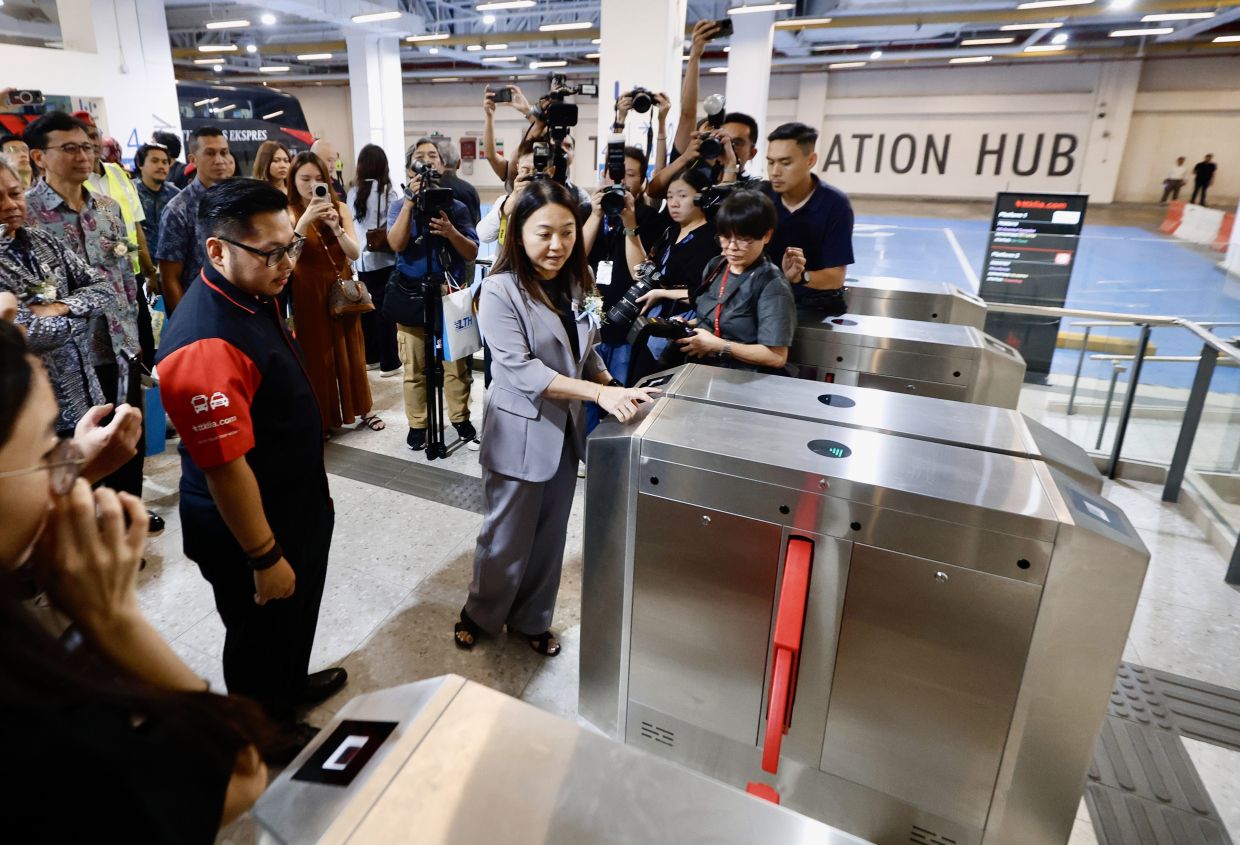
A significant new transport hub has commenced operations at LaLaport Bukit Bintang City Centre in Kuala Lumpur's central business district, consolidating services from approximately 30 bus operators under one roof. Officially launched on Thursday, July 16, by Hannah Yeoh, Minister in the Prime Minister's Department (Federal Territories), the facility represents a strategic effort to streamline urban mobility in Malaysia's capital city. The LaLaport Transportation Hub is designed to handle an initial daily capacity of about 3,000 passengers, with infrastructure capable of eventually accommodating up to 10,000 journeys—a figure that underscores planners' ambitions for substantial growth in the hub's role within the city's transport ecosystem.
The hub's operational framework demonstrates careful consideration of passenger comfort and convenience. Situated on Level LG1 of LaLaport's East Atrium, the facility features 11 dedicated bus bays servicing express and intercity routes, complemented by an air-conditioned waiting lounge—a departure from the typical exposed bus stands found throughout the city. Passengers benefit from formal ticketing counters, automated self-service booking machines, and digital information displays that provide real-time scheduling updates, reducing confusion and wait times. Licensed and regulated by the Land Public Transport Agency (Apad), the hub has been phased into operation since February, allowing operators and authorities to test systems and iron out logistical challenges before full-scale commercial launch.
The decision to locate this transport hub within a major shopping mall reflects broader urban planning trends in Southeast Asia, where mixed-use developments increasingly integrate transit facilities with retail and hospitality amenities. LaLaport Bukit Bintang City Centre's central location provides immediate connections to the adjacent Hang Tuah interchange, granting passengers seamless access to the LRT and Monorail networks via a sheltered pedestrian walkway. This integration is not merely convenient; it addresses a critical pain point for commuters navigating Kuala Lumpur's fragmented public transport network, where transfers between bus and rail often require traversing busy streets or navigating confusing pedestrian routes.
Minister Yeoh's remarks during the launch emphasised the imperative of reimagining urban mobility as Kuala Lumpur's congestion challenges intensify. According to data from Kuala Lumpur City Hall (DBKL), the city experiences approximately 1.2 million vehicles entering its boundaries each day, generating a staggering 5.5 million journeys into and out of the capital. These figures reveal the scale of transport demand pressures facing the city and underscore why initiatives consolidating bus operations and improving first-and-last-mile connectivity have become priorities for policymakers.
Beyond conventional bus services, the hub accommodates a diverse range of transport modes reflecting the evolving preferences of urban commuters. Shuttle van services operate dedicated routes to Kuala Lumpur International Airport's Terminals 1 and 2, directly addressing the needs of air travellers seeking convenient ground transport alternatives to private vehicles. Demand-responsive transport (DRT) services—which use app-based systems to match passengers with flexible routing options—represent an emerging middle ground between fixed-route buses and taxis. Additionally, the facility provides designated pick-up and drop-off zones for traditional taxis and ride-hailing platforms, acknowledging rather than resisting the prevalence of e-hailing services in the city's transport ecology.
The hub's opening occurs against a backdrop of persistent challenges in Malaysia's public transport coordination. Urban mobility has long suffered from fragmentation, with separate operators managing buses, LRT, Monorail, and MRT lines under different regulatory frameworks and business models. Passengers frequently experience frustration when transferring between modes, due to poor connections, information gaps, and the absence of integrated ticketing systems. The LaLaport hub represents a step toward addressing these coordination failures, at least within the Bukit Bintang district, by concentrating multiple operators in a single location with seamless rail connections.
The facility's capacity for growth to 10,000 daily passengers suggests confidence that Kuala Lumpur's demand for organised, integrated bus transport will expand substantially over coming years. This optimism reflects demographic trends, with Malaysia's urbanisation continuing to accelerate, and policy shifts toward reducing private vehicle dependency. However, realising this potential requires ongoing attention to service reliability, affordability, and passenger experience—dimensions that have historically constrained public transport adoption among middle-income Malaysian commuters accustomed to personal vehicle convenience.
The hub's strategic positioning in Bukit Bintang, one of Kuala Lumpur's most congested and commercially vibrant zones, demonstrates recognition that transport infrastructure should prioritise high-demand corridors. This district experiences intense pedestrian and vehicular traffic, making it an ideal location to intercept and consolidate journeys before they disperse into the broader street network. The air-conditioned waiting lounge and retail integration also acknowledge the commercial dimension of public transport infrastructure—presenting passengers with shopping and dining options while they wait transforms what might otherwise be dead time into revenue-generating activity.
From a regional perspective, Malaysia's approach to modernising bus transport through mixed-use hub development reflects practices observed in other rapidly urbanising Asian economies. Cities such as Bangkok, Jakarta, and Singapore have invested heavily in transport-oriented development, recognising that integrating public transit with commercial space enhances operational efficiency and passenger uptake. The LaLaport hub's model may serve as a template for similar projects in other Malaysian cities facing comparable congestion and modal fragmentation challenges, particularly in Selangor and Penang.
The success of the LaLaport Transportation Hub will ultimately be measured not merely by passenger throughput numbers, but by its effectiveness in redirecting traffic from private vehicles to organised mass transit. Achieving the transition from 3,000 to 10,000 daily passengers will require sustained promotion, competitive pricing relative to driving costs, and continuous refinement of service quality. Equally important will be the hub's influence on broader transport planning conversations, potentially demonstrating that consolidation, integration, and attention to passenger experience can make public transport genuinely competitive with private vehicle use in Malaysia's urban centres.

