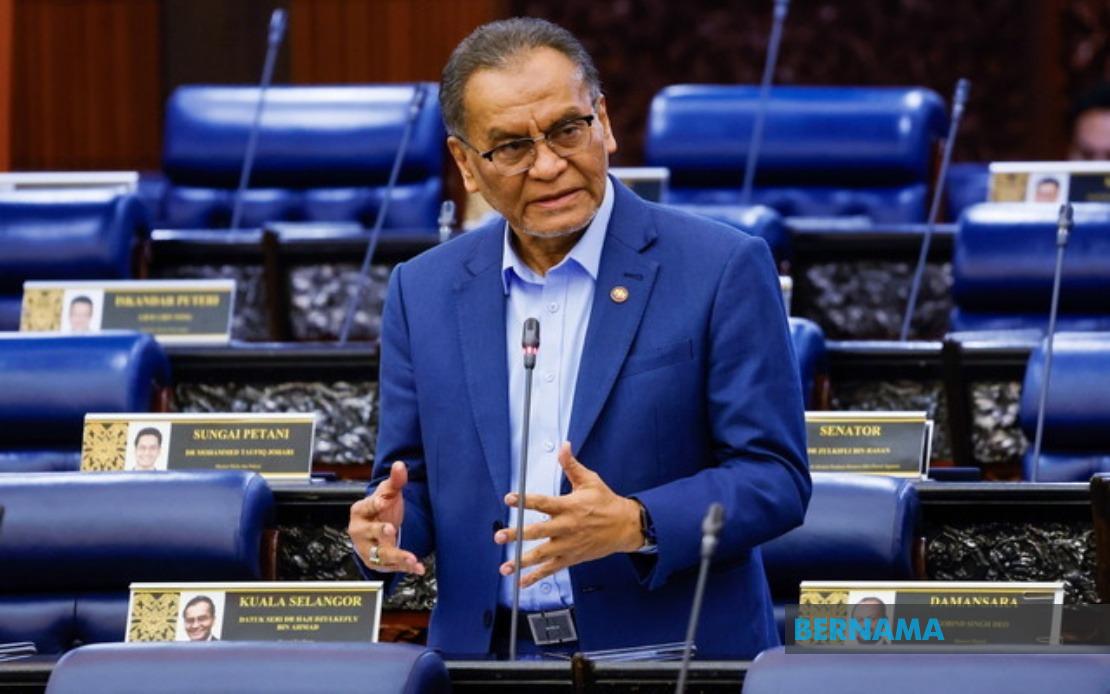
Health Minister Datuk Seri Dr Dzulkefly Ahmad has announced plans to construct a hospital in Bandar Enstek, Nilai, in Negeri Sembilan, positioning the development as a critical response to mounting pressure on existing healthcare infrastructure in the Seremban district. The initiative represents a strategic shift from an earlier proposal for a second facility at Rasah, reflecting the ministry's evolving assessment of healthcare needs across the state's expanding urban areas.
The rationale underpinning the new hospital location centres on the dramatic transformation of the northern Seremban corridor. Rapid residential and commercial development has drawn thousands of new residents to Bandar Enstek and surrounding townships, straining service capacity at Tuanku Ja'afar Hospital (HTJ), the district's primary public medical institution. By placing a new facility in this growth zone rather than in proximity to existing infrastructure, planners aim to distribute demand more evenly and reduce congestion at HTJ, which has long served as the regional anchor for public healthcare delivery.
The announcement emerged from collaborative discussions between the Health Ministry and Negeri Sembilan's state administration. On June 16, Dr Dzulkefly and Menteri Besar Datuk Seri Aminuddin Harun reviewed the previous proposal for a second Tuanku Ja'afar Hospital (HTJ2) facility at Rasah. Rather than pursuing that site, both parties reached consensus on the Bandar Enstek location as more responsive to demographic realities and development trajectories in the region. This consensus-building approach underscores the importance of state-federal coordination in major infrastructure decisions affecting healthcare access.
The state government has already identified two parcels of Federal Lands Commissioner-owned property, each comprising 50 acres, within the Bandar Enstek vicinity. The Health Ministry will conduct site inspections in the coming months to evaluate both locations and select the most advantageous position for development. Once the preferred site is determined, the ministry will lodge an application with the Department of the Director General of Lands and Mines for conversion of the land's designated use from its current classification to permit hospital construction. This administrative sequencing ensures legal compliance while allowing planners to optimise facility placement.
Following approval of the land-use conversion, preliminary work on the project will commence without delay. The initial phase encompasses land surveying and geotechnical investigations to understand soil conditions and site characteristics, alongside the preparation of conceptual designs and detailed cost projections. A Value Assessment exercise will also be undertaken, a standard mechanism for evaluating project viability and ensuring efficient resource allocation. These preparatory steps typically require several months and establish the foundation for construction commencement.
Beyond the Bandar Enstek initiative, Aminuddin has agreed to alienate 36.748 acres of Federal Reserve land within Bandar Seremban for additional healthcare facilities. This commitment creates space for an expansion block serving the existing Tuanku Ja'afar Hospital and establishes room for a Centre of Excellence (COE) dedicated to specialised medical training and research. The COE model has gained prominence in Malaysian health policy as a mechanism for elevating clinical standards, attracting specialist expertise, and positioning regional institutions as leaders in particular medical disciplines.
The hospital expansion reflects broader challenges facing Malaysia's public healthcare system, particularly in states experiencing rapid urbanisation. Negeri Sembilan's transformation from a more traditionally agricultural and mining-based economy has accelerated over the past decade, with the Selangor border area increasingly integrated into the Klang Valley's expanding metropolitan zone. This demographic shift has created a mismatch between existing health infrastructure designed for smaller populations and current demand levels. The Bandar Enstek facility directly addresses this structural imbalance by anticipating future population growth rather than responding reactively to saturation.
Dr Dzulkefly also addressed workforce challenges confronting the healthcare sector, highlighting government efforts to repatriate Malaysian medical professionals working abroad. The Returning Expert Programme (REP), administered through TalentCorp, offers targeted incentives including income tax exemptions and duty-free vehicle purchases to encourage qualified professionals to relocate home. Applications from healthcare practitioners returning from the United Kingdom, Singapore, and Australia have been particularly strong, with medical specialists and doctors representing the largest applicant cohort. These individuals bring valuable international experience and advanced training that can elevate service standards domestically.
Regarding recruitment of foreign medical personnel, Malaysia maintains established protocols permitting international doctors and nurses to practise within the country under regulation by the Malaysian Medical Council and Malaysian Nursing Board. The Health Ministry currently appoints non-citizen medical specialists in critical disciplines and underserved geographical areas where domestic supply proves insufficient. Non-citizen graduate medical officers who are permanent residents or spouses of Malaysian citizens also participate in housemanship training programmes at ministry facilities, providing pathways for skilled international practitioners to contribute while ensuring quality assurance. However, the broader recruitment of foreign nurses for public health positions remains under feasibility review in consultation with other government entities, reflecting the complexity of integrating foreign workforce policies with employment frameworks and training standards.
The Bandar Enstek hospital initiative must be understood within the context of Malaysia's ongoing healthcare infrastructure modernisation. With competing demands across multiple states and limited budgetary resources, decisions about where to invest in new facilities carry significant implications for regional equity and service accessibility. Negeri Sembilan's case exemplifies how population dynamics in economically developing areas can outpace infrastructure planning. By committing to new construction rather than simply expanding existing facilities, the Health Ministry acknowledges that geographic dispersal of services often provides superior outcomes for residents across broader catchment areas. This approach also reduces bottlenecks that compromise treatment timelines and patient experience at overburdened institutions like Tuanku Ja'afar Hospital.
For Malaysian readers, particularly those in Negeri Sembilan and the broader Klang Valley region, the announcement signals government responsiveness to healthcare access challenges accompanying rapid development. The timeline for site selection, land acquisition, and preliminary design work suggests the facility could realistically commence construction within two to three years, though full operational status typically requires four to five years from groundbreaking. Residents and policymakers will monitor progress on land-use conversion applications and the subsequent procurement and construction phases. Success in delivering this facility on schedule could validate the collaborative state-federal approach, potentially becoming a model for similar healthcare infrastructure decisions elsewhere in Malaysia facing comparable growth pressures and capacity constraints.

