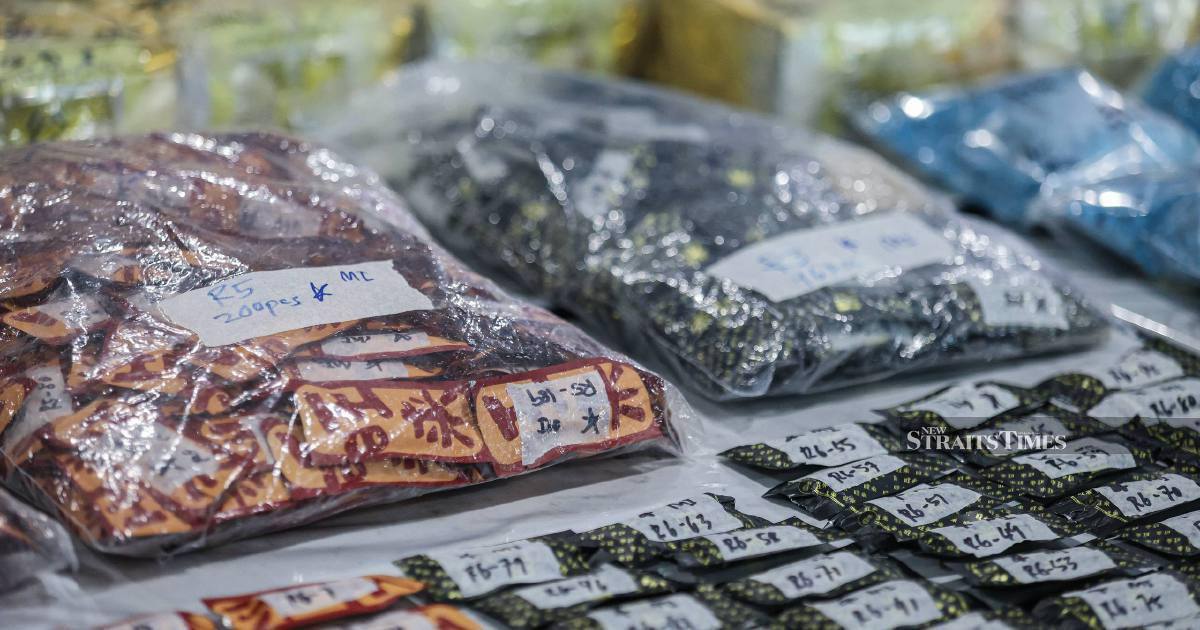
The Malaysian Maritime Enforcement Agency (MMEA) has arrested two brothers in a significant anti-narcotics operation off the Johor coast, intercepting a substantial drug shipment identified as a newly emerging substance called 'Piu Piu' valued at more than RM6.85 million. The Sunday apprehension marks another chapter in the intensifying battle against maritime drug trafficking along Malaysia's maritime borders, where enforcement agencies continue confronting sophisticated smuggling networks.
The emergence of 'Piu Piu' as a seizure item represents a troubling expansion in the drug landscape across Southeast Asia. While synthetic drugs and traditional narcotics have long dominated trafficking routes, the appearance of this substance signals that criminal networks are continuously evolving their product offerings and distribution strategies. The naming convention itself suggests marketing strategies employed by traffickers to differentiate products within underground markets, a pattern increasingly observed across the region as drug manufacturing becomes more compartmentalised and specialised.
Maritime smuggling operations targeting Malaysia reflect the country's geographical vulnerability and strategic location along major international shipping corridors. Johor Baru, situated near the Singapore Strait and positioned as a gateway between the Straits of Malacca and the South China Sea, remains a critical interception point for law enforcement. The waters off Johor have historically served as favoured transit routes for transnational criminal organisations seeking to move contraband between source countries in the Golden Triangle and Andean regions to consumer markets in East Asia and Australia.
The MMEA's capacity to conduct these operations demonstrates strengthened maritime surveillance capabilities, though the sheer volume of attempted smuggling incidents suggests that interdiction efforts represent only a fraction of actual trafficking attempts. The agency coordinates with regional partners including Indonesian maritime authorities and Singapore's enforcement agencies, creating a layered defensive approach across the Strait of Malacca. However, sophisticated smuggling networks continuously adapt their tactics, employing faster vessels, decentralised networks, and increasingly volatile routes to evade detection.
For Malaysian readers and businesses, these seizures carry important implications for port security, supply chain integrity, and broader regional stability. The presence of unfamiliar drug substances complicates public health planning and treatment protocols, requiring medical and law enforcement communities to develop rapid responses to emerging threats. The RM6.85 million valuation underscores the financial scale driving these operations—comparable to significant corporate transactions—and the substantial economic incentives motivating criminal networks to accept substantial operational risks.
The circumstances surrounding this particular operation likely involved coordinated intelligence gathering and real-time maritime surveillance. Such interventions typically result from accumulated tip-offs, financial transaction monitoring, or pattern analysis of vessel movements. The MMEA's operational success demonstrates that despite resource constraints facing maritime enforcement across Southeast Asia, targeted intelligence-driven operations can yield substantial results. However, each successful bust must be contextualised within broader trends showing overall drug availability in Malaysian markets remaining resilient despite enforcement efforts.
The detention of the two brothers initiates legal proceedings that will provide investigators with opportunities to map broader smuggling networks. Drug trafficking at this financial scale invariably involves multiple participants across sourcing, manufacturing, financing, transportation, and distribution phases. The brothers likely represented merely the maritime transportation element within a more expansive criminal enterprise. Interrogation and investigation should yield intelligence regarding source countries, financing mechanisms, intended destinations, and distribution networks within Malaysian territory or neighbouring jurisdictions.
Regional cooperation remains essential for combating maritime trafficking, yet challenges persist in harmonising legal frameworks, enforcement priorities, and intelligence sharing protocols across different national jurisdictions. The MMEA's capacity to conduct deep-sea operations requires technological investment and specialised personnel training that remains unevenly distributed across Southeast Asian nations. Wealthier neighbours like Singapore maintain sophisticated maritime enforcement capabilities, while developing economies struggle with resource limitations despite facing comparable trafficking pressures.
The substance 'Piu Piu' itself warrants attention from public health authorities and drug monitoring organisations. Understanding its composition, effects, market positioning, and user demographics becomes essential for developing appropriate policy responses. If the substance represents a novel synthetic compound, rapid analysis through laboratories and international drug monitoring networks could clarify its origins and intended market applications. The emergence of new drugs typically follows demand patterns, suggesting markets either exist or are being actively cultivated through trafficking.
Future prevention requires multifaceted strategies extending beyond maritime interdiction to encompass demand reduction, treatment accessibility, and financial investigation targeting the economic foundations enabling trafficking organisations. Port security enhancements, vessel tracking systems, and container screening technologies represent necessary but insufficient tools. The fundamental challenge remains that trafficking becomes progressively profitable precisely because enforcement succeeds in restricting supply—creating price escalation that sustains criminal motivation despite rising operational risks.
This seizure demonstrates both enforcement successes and the persistent vulnerabilities within Malaysian maritime boundaries. As regional drug markets evolve and new substances emerge, adaptation within enforcement strategies becomes increasingly critical. The broader implications extend throughout Southeast Asia, where similar trafficking patterns threaten multiple nations simultaneously, necessitating enhanced regional coordination mechanisms and resource-sharing arrangements.

