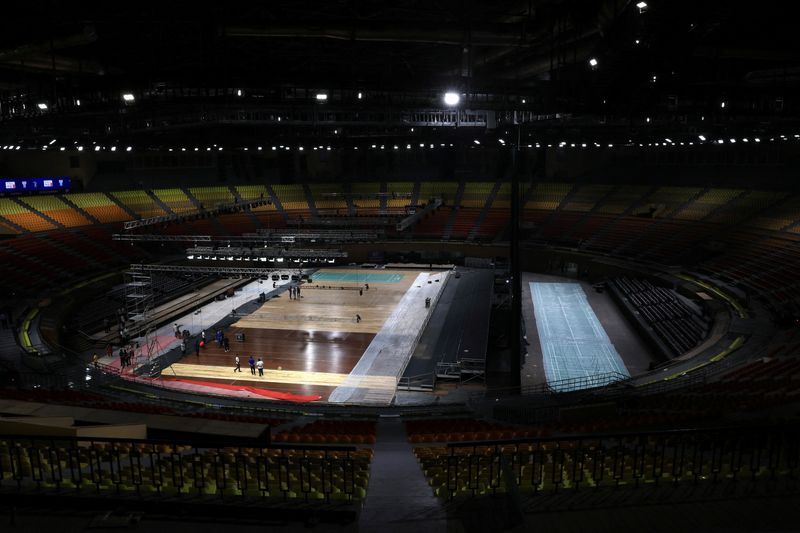
Organisers of next week's Badminton World Championships in New Delhi have assembled an unconventional workforce to ensure the event's success: a cadre of men trained to imitate the calls of langur monkeys. The unusual measure underscores the practical challenges facing major sporting venues across India's bustling capital, where wildlife regularly intrudes on human affairs. This appointment reflects broader efforts by Indian authorities to present themselves as capable custodians of world-class sporting infrastructure, a perception crucial as the nation prepares to host the 2030 Commonwealth Games and pursues a bid for the 2036 Olympics.
The deployment of these specialist mimics addresses a genuine threat posed by Delhi's substantial rhesus monkey population, which routinely invades office buildings and public spaces, often attacking residents and disrupting daily routines. Unlike the smaller rhesus variety, langurs—distinctive primates with dark facial features and larger frames—have proven remarkably effective at deterring their cousins. This natural hierarchy has long been exploited across Indian government offices, where langur handlers serve as a non-lethal solution to primate infestations. The approach gains particular importance ahead of the Badminton Association of India's highest-profile event in recent memory.
Zafar, one of the hired mimics who demonstrated his hooting proficiency to journalists during a stadium inspection on Monday, represents a third generation of his family engaged in this peculiar trade. When questioned about the methodology, Zafar explained that rhesus monkeys harbour genuine terror of langurs, rendering the mimicry strategy highly effective. His professional philosophy emphasizes harm prevention rather than animal cruelty—the objective remains simple: deterrence rather than confrontation. This distinction matters significantly in India, where attitudes toward animal welfare increasingly influence public perception of major institutions and their management practices.
The Badminton Association of India's decision to engage such specialists stems directly from an embarrassing incident during February's Indian Open tournament at the same venue. A rhesus monkey was spotted freely roaming through the spectator gallery, undermining the professionalism expected at an international sporting occasion. The breach prompted BAI officials to commit substantial resources toward preventing recurrence, signalling their determination to prevent animal-related disruptions from marring the championship.
Yet monkey management represents only part of the organisational challenge. Delhi's substantial pigeon population has emerged as an equally vexing problem, with these birds creating hygiene hazards and physical interference during matches. During the Indian Open, officials were forced to halt play twice after pigeons defecated on the court surface, prompting complaints from competitors about unsanitary conditions. Such incidents risk damaging India's reputation as a serious sporting destination, particularly among international federations evaluating the nation's suitability for future mega-events.
Addressing this secondary threat, stadium authorities have applied non-toxic gel—a substance routinely employed on Indian railway infrastructure—across the venue's roof and ducting systems. This preventative measure aims to render roosting surfaces uninhabitable for pigeons without causing harm to the animals. The specificity of these measures demonstrates the technical sophistication organising committees must now employ when preparing world-class sporting venues in densely populated urban environments where human and animal spaces inevitably overlap.
Sanjay Mishra, the Badminton Association of India's secretary general, has publicly declared that organisers have systematically addressed every concern raised during the Indian Open. He referenced substantial facility improvements undertaken by India's sports ministry, emphasizing that the Badminton World Federation has expressed complete satisfaction with all arrangements. Such assurances carry weight beyond the immediate championship, as they contribute to India's broader narrative about developing world-class sporting infrastructure capable of hosting global audiences.
The convergence of these practical measures—monkey mimicry, pigeon gel treatments, enhanced facility management—reflects a fundamental reality of modern sporting event organisation in India: infrastructure quality encompasses not merely playing surfaces and seating capacity, but comprehensive management of every variable affecting athlete experience and international perception. The stakes are considerably higher than badminton's reputation, as India's 2030 Commonwealth Games hosting obligations and 2036 Olympic bid both depend upon demonstrating capacity for flawless event delivery.
For Malaysian and Southeast Asian observers, these preparations offer instructive lessons about hosting large international sporting events in tropical and subtropical regions where urban wildlife management remains perpetually challenging. The willingness to embrace unconventional but effective solutions—such as hiring specialist animal mimics—suggests pragmatism rather than desperation. It demonstrates that organising committees need not choose between animal welfare and operational excellence; creative approaches can accommodate both objectives simultaneously while protecting reputation.
The Badminton World Championships beginning next week will serve as a test of these integrated strategies, with international participants and federation officials scrutinizing every operational detail. Success would vindicate India's investment in these preparations and strengthen its candidacy for future major events. More broadly, the tournament represents a moment when the practical realities of managing urban sporting venues in rapidly developing nations come sharply into focus for global audiences, simultaneously revealing both the complexity of such undertakings and the innovative capacity of organising authorities to overcome them.

