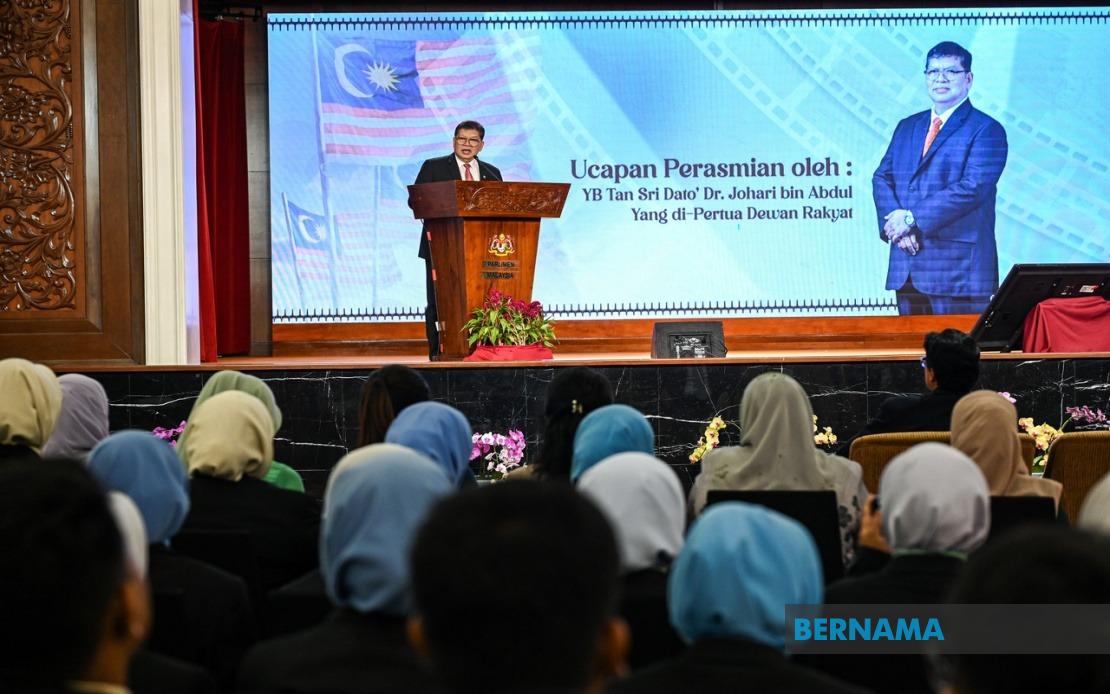
Parliament has unveiled a new short film aimed at cultivating leadership qualities and patriotic sentiment among Malaysia's younger generation. Titled 'Arkitek Bangsa', the production was formally presented at a special screening held at the Parliament Building, signalling the legislative chamber's commitment to youth engagement and nation-building through multimedia storytelling.
The initiative reflects a deliberate strategy by Parliament to reach young Malaysians through contemporary mediums and narratives that resonate with their experiences and aspirations. Rather than relying solely on traditional civics education or institutional engagement, the film represents an attempt to make leadership and national pride feel personally relevant and achievable for a demographic often characterised as disconnected from formal politics. The video's messaging centres on the idea that every young person possesses the potential to become a nation-builder, provided they receive adequate mentorship, exposure, and structured guidance.
According to parliamentary officials, the fundamental premise underlying the project is that leadership is not an innate quality reserved for a select few, but rather a skill that can be systematically developed through consistent training and environmental reinforcement. This philosophy directly challenges passive citizenship, instead advocating that young Malaysians embrace active roles in shaping their nation's future. The framing deliberately positions youth not as future stakeholders, but as present-day architects capable of making meaningful contributions now.
The film's launch occurs within a broader ecosystem of parliamentary initiatives designed to strengthen young Malaysians' understanding of democratic institutions and their role within the constitutional framework. Parliament's School Programme has already facilitated visits by 1,057 schools to Parliament, exposing tens of thousands of students directly to the legislative process and the mechanics of democratic governance. These experiential learning opportunities complement classroom-based civics education and provide tangible contexts for abstract constitutional concepts.
Parliament has further expanded its youth engagement infrastructure through several complementary programmes. The body's involvement in the National Service Training Programme through a dedicated select committee represents another avenue for instilling discipline, collective purpose, and national consciousness among conscripted youth. More significantly, the Youth Parliament initiative is undergoing substantial restructuring, with membership expanding from 100 to 222 participants and the introduction of a proportional representation electoral system designed to ensure more inclusive representation of Malaysia's demographic diversity.
The proportional representation shift carries particular importance for Malaysia's multicultural context. By moving away from a first-past-the-post system that might concentrate youth leadership positions among numerically dominant groups, the reformed system potentially creates space for voices and perspectives from smaller communities. This structural adjustment signals that Parliament recognises diversity not merely as demographic reality, but as a strategic asset in youth leadership development.
Officials have emphasised that the 'Arkitek Bangsa' film should be actively circulated among government agencies and ministries engaged in nation-building activities. This top-down distribution strategy aims to maximise the film's reach across multiple institutional contexts and governmental touchpoints where young Malaysians might encounter it. By integrating the production into existing government programmes rather than limiting it to parliamentary channels, authorities seek to create multiple reinforcing messages about leadership and national identity across the bureaucratic apparatus.
The film's thematic emphasis on understanding national history and appreciating previous generations' sacrifices reflects deliberate efforts to foster intergenerational respect and historical consciousness. Officials argue that contemporary youth frequently lack exposure to the foundational narratives that shaped Malaysia's independence, constitutional settlement, and nation-building achievements. By connecting current leadership aspirations to historical context, the production attempts to deepen young people's appreciation for the institutional inheritance they have received and their consequent responsibilities toward preserving and improving it.
The metaphor employed by parliamentary officials—that constructing a building requires extensive time investment while destruction occurs instantaneously—carries political weight in Malaysia's context. It implicitly references concerns about democratic backsliding, institutional erosion, and social fragmentation, suggesting that complacency or disengagement among youth could jeopardise hard-won national achievements. This framing attempts to activate a sense of custodial responsibility: young Malaysians are positioned not merely as passive beneficiaries of national institutions, but as active guardians responsible for their preservation and strengthening.
For Malaysia's broader development trajectory, this emphasis on youth leadership cultivation reflects strategic national interests in human capital development and social cohesion. As the nation navigates economic diversification, technological advancement, and evolving geopolitical challenges, the quality and orientation of emerging leaders becomes increasingly consequential. Initiatives like 'Arkitek Bangsa' represent investments in ensuring that Malaysia's next generation of decision-makers possess not only technical competence, but also strong commitments to democratic values, national unity, and inclusive governance.
The film production itself received support from the National Film Development Corporation Malaysia, indicating institutional backing across both parliamentary and cultural sectors. This interagency collaboration demonstrates recognition that nation-building narratives require professional storytelling expertise to achieve emotional resonance and sustained audience engagement. The involvement of specialised film authorities suggests confidence that contemporary Malaysian cinema can authentically convey messages of patriotism and collective purpose without devolving into heavy-handed propaganda.
Moving forward, the success of this initiative will depend partly on the film's actual reception among target audiences and its integration into substantive youth development programmes. Whether young Malaysians exposed to 'Arkitek Bangsa' subsequently demonstrate increased political engagement, stronger civic commitment, or enhanced leadership aspirations remains an open question requiring systematic evaluation. Nevertheless, the initiative reflects Parliament's recognition that shaping Malaysia's future requires proactive cultivation of leadership consciousness among contemporary youth through multiple complementary institutional and cultural channels.

