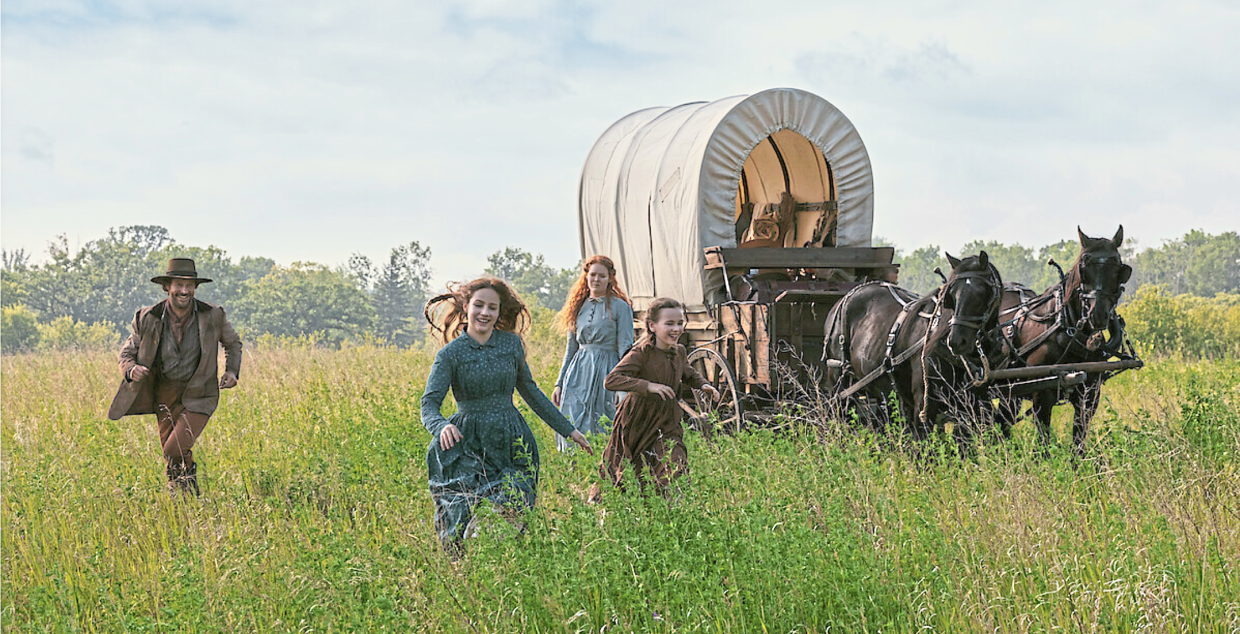
Netflix is preparing to bring Laura Ingels Wilder's beloved 1935 novel to contemporary audiences through a forthcoming 2026 adaptation, marking a significant moment for the enduring frontier saga that has captivated readers and viewers across multiple generations. The streaming giant's reimagining will feature Australian actor Luke Bracey in the central paternal role of Charles Ingalls, the father figure whose resourcefulness and determination anchor the family's journey through the American West.
Bracey's involvement in the project reflects a deliberate casting choice to bring international talent to this quintessentially American narrative. The actor has emphasized that the timeless appeal of the Ingalls family story—rooted in themes of resilience, familial bonds, and perseverance through adversity—remains fundamentally relevant to modern audiences despite the nearly two-century gap between the novel's setting and contemporary times. Bracey articulated this perspective by noting that such enduring popularity across decades cannot be dismissed as coincidental, suggesting instead that the emotional core of the narrative speaks to universal human experiences that transcend historical periods.
The expanded cast surrounding Bracey includes Alice Halsey portraying the eponymous Laura Ingalls, whose childhood memoirs inspired Wilder's original literary work. Crosby Fitzgerald takes on the role of Caroline, Laura's mother, while Skywalker Hughes has been cast as Mary, Laura's elder sister. This ensemble arrangement positions the narrative firmly within the family unit, echoing the original novel's emphasis on domestic relationships and the bonds that sustain individuals through frontier hardships.
Netflix's adaptation distinguishes itself from previous iterations by deliberately incorporating complex historical narratives often absent from earlier treatments. The production explicitly engages with settler-colonial perspectives and Indigenous narratives, acknowledging the complicated historical reality of westward expansion in the United States. This conscious approach signals the streaming platform's commitment to presenting a more nuanced and historically contextual version of the frontier mythology that has long dominated American cultural consciousness.
The trajectory of Little House on the Prairie through popular culture provides crucial context for understanding the significance of this Netflix venture. The 1970s television adaptation that aired on NBC from its debut through 1983 became a cultural phenomenon in its own right, establishing the property's enduring appeal across different media formats. That adaptation reached audiences across America during a period of significant social change, demonstrating the story's capacity to resonate beyond its historical setting and connect with contemporary viewers navigating their own experiences of family and community.
Alice Halsey's reflections during production offer insight into how the contemporary creative team approaches the gendered inequalities inherent to the historical period. She candidly acknowledged that girls in the nineteenth-century American frontier faced substantially fewer educational opportunities and social privileges than their male counterparts. Halsey drew personal connections between Laura's constrained circumstances and modern possibilities, contemplating how the limited scope of female agency in that era would have fundamentally restricted her own life trajectory had she lived during that time. This metacritical awareness demonstrates how contemporary actors and creators bring historical consciousness to their interpretation of period narratives.
The creative direction falls under showrunner and creator Rebecca Sonnenshine, whose vision shapes how the material will be adapted for the streaming audience. Sonnenshine's involvement suggests a deliberate intent to craft television that respects the source material while translating it for contemporary sensibilities and production capabilities. The decision to greenlight a second season before the first season's premiere indicates substantial confidence in the project's commercial and critical potential—a significant vote of confidence from Netflix's development and acquisition teams.
Skywalker Hughes expressed enthusiasm about the collaborative experience of bringing the Ingalls family to life, referencing the meaningful memories created during the production process and the opportunity to continue building on those foundations. Such reflections from cast members underscore the notion that successful period dramas depend not merely on historical accuracy or production design excellence, but also on the interpersonal dynamics among performers who must convincingly portray family relationships under intense production circumstances.
For Malaysian and Southeast Asian audiences, this adaptation arrives at a moment when global streaming platforms increasingly serve as cultural connectors, distributing American stories to international viewers and simultaneously featuring performers from diverse backgrounds in previously Anglophone-centric narratives. Bracey's casting represents this broader trend of transnational talent participating in foundational American cultural properties. The emphasis on Indigenous narratives and settler-colonial critique also reflects evolving standards in storytelling around colonialism and indigenous rights—themes particularly resonant in a Southeast Asian context where colonial histories remain culturally significant and ongoing discussions about historical accountability continue to develop.
The timing of this Netflix venture also coincides with renewed cultural interest in frontier mythology and pioneer narratives, even as contemporary creators challenge traditional triumphalist presentations of westward expansion. This reboot can be understood as part of a broader recalibration of how American foundational narratives are told in the streaming era, acknowledging historical complexities while maintaining the emotional authenticity that originally made Wilder's work compelling. The success of this adaptation may influence how other classic American literature gets translated to screen in coming years, particularly regarding how historical inequality and indigenous perspectives are integrated into mainstream entertainment properties.
As the 2026 premiere approaches, Netflix's Little House on the Prairie represents a carefully calibrated attempt to honor beloved source material while acknowledging the historical realities underlying the frontier narrative. Whether this balance succeeds will likely become apparent upon release, but the production already signals an intent to move beyond simple nostalgia and toward a more textured engagement with American history and family dynamics.

