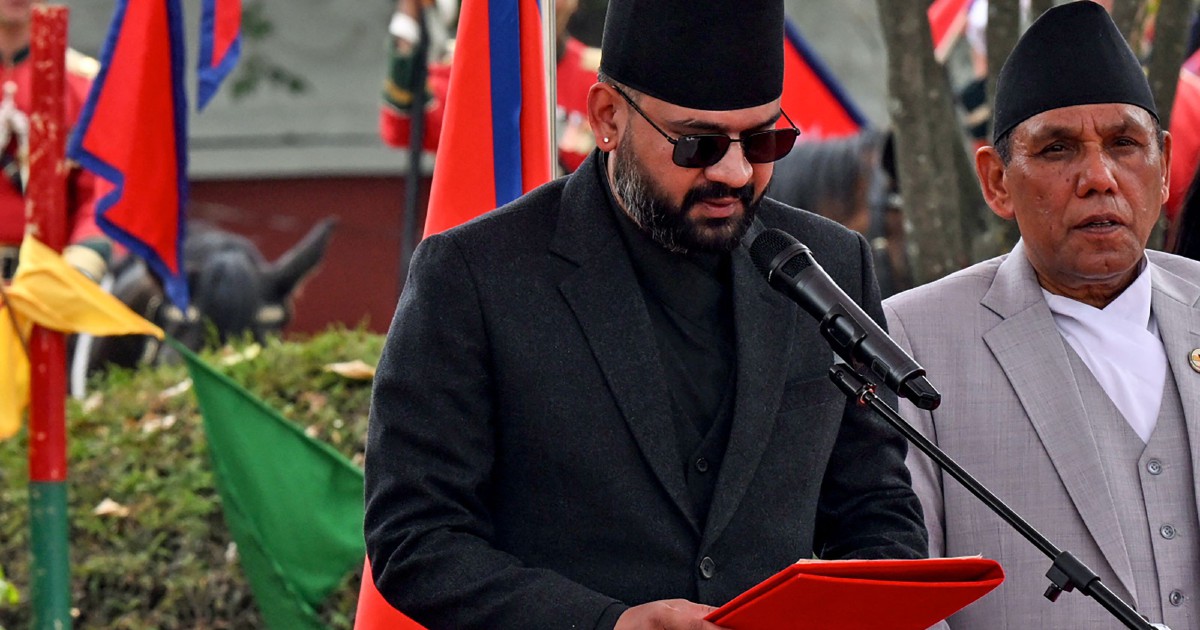
Nepal's Prime Minister Balendra Shah has secured official permission to wear his characteristic dark sunglasses inside parliament, a decision that resolves a recent protocol dispute within the legislature. An unnamed official confirmed on Tuesday that the exemption stems from documented medical requirements, clarifying a matter that had drawn scrutiny after the parliament speaker previously cautioned against the practice.
The issue highlights the sometimes tension-laden relationship between parliamentary convention and individual medical necessity in South Asian legislatures. While dress codes and decorum standards form part of institutional tradition in most parliamentary democracies, including those in the region, such rules must accommodate legitimate health considerations. Nepal's decision to permit the exemption sets a pragmatic precedent, acknowledging that constitutional office should not force individuals to compromise their wellbeing.
Parliament speakers across South Asia typically enforce dress and conduct standards as a mechanism for maintaining institutional dignity and ensuring legislative proceedings unfold with appropriate solemnity. These conventions have deep historical roots, often inherited from Westminster parliamentary traditions and adapted over decades to reflect local contexts. In Nepal's case, the initial guidance against sunglasses reflected orthodox interpretations of parliamentary etiquette, where officials are generally expected to present themselves in formal attire without items that might obscure facial features or appear casual during serious national business.
However, the distinction between maintaining standards and accommodating medical need has grown increasingly important in modern parliamentary practice. Eye conditions ranging from photosensitivity to post-operative care can require individuals to shield their eyes from indoor lighting. Medical evidence supporting such requirements typically takes precedence over aesthetic or traditional concerns. Nepal's recognition of this principle demonstrates an evolving understanding of institutional flexibility in addressing members' health requirements without compromising the dignity of democratic processes.
The episode reflects broader conversations across Southeast and South Asia about balancing institutional formality with inclusive governance practices. As legislative bodies worldwide have become more attentive to accessibility standards, many parliaments have introduced accommodations for members with various disabilities or medical conditions. These adjustments often involve reinterpreting long-standing rules rather than abandoning them entirely, allowing institutions to preserve their character while serving diverse membership needs. Nepal's sunglasses decision follows this thoughtful approach.
For Malaysian observers, the situation offers perspective on how neighbouring democracies navigate similar challenges. Both nations maintain parliamentary traditions emphasizing formal conduct and traditional dress codes, yet both increasingly recognize that rigid adherence to century-old protocols can sometimes conflict with contemporary understandings of wellbeing and accessibility. Malaysia's own parliamentary procedures similarly specify decorum expectations, suggesting that similar medical exemption requests could plausibly arise in the future and warrant equivalent consideration.
The resolution of this matter also signals something important about institutional responsiveness within Nepali governance. Rather than rigidly defending an initial position, parliament officials engaged with the evidence and adjusted their stance accordingly. This flexibility, grounded in medical reasoning rather than arbitrary exception-making, strengthens rather than weakens institutional credibility. It demonstrates that rules exist to serve democratic purposes, not merely to enforce uniform appearance or conformity.
Balendra Shah's case underscores how modern governance increasingly requires institutions to distinguish between essential procedural safeguards and merely cosmetic traditions. Parliament's legitimacy ultimately derives from its substantive work—legislative deliberation, representation, and constitutional oversight—rather than from sartorial uniformity or appearance-based conventions. When minor accommodations allow officials to perform their duties more comfortably and effectively, permitting them aligns with sound institutional practice.
The medical exemption also avoids potential legal complications that might have arisen had authorities insisted on rigidly enforcing an absolute prohibition. Parliamentary rules and constitutional norms in many democracies, including Nepal, increasingly recognise rights-based protections for individuals with legitimate health requirements. Denying such accommodations can expose institutions to legal challenge or accusations of discriminatory enforcement. By proactively granting the exemption, Nepal's parliament has avoided such entanglements while demonstrating institutional good faith.
Looking forward, the precedent may prompt parliamentary administrations across South Asia to clarify policies around medical accommodations more systematically. Rather than treating each request as an unprecedented exception, legislatures might develop transparent frameworks specifying what medical justifications warrant exemptions from dress codes or conduct rules. Such clarity would serve future members facing similar circumstances and would reduce uncertainty about institutional flexibility. Nepal's experience suggests that thoughtful documentation and official acknowledgement of medical needs represents an evolution toward more mature parliamentary governance.
The sunglasses episode ultimately reveals how even seemingly minor details of parliamentary procedure can intersect with contemporary values around health, accessibility, and institutional inclusivity. As Nepal continues strengthening its democratic institutions following recent constitutional reforms, demonstrating such practical flexibility on human issues may build broader public confidence in parliament's responsiveness to constituent concerns. For a young democracy still consolidating institutional norms, balancing tradition with contemporary understandings of individual dignity sends important signals about the parliament's character and mission.

