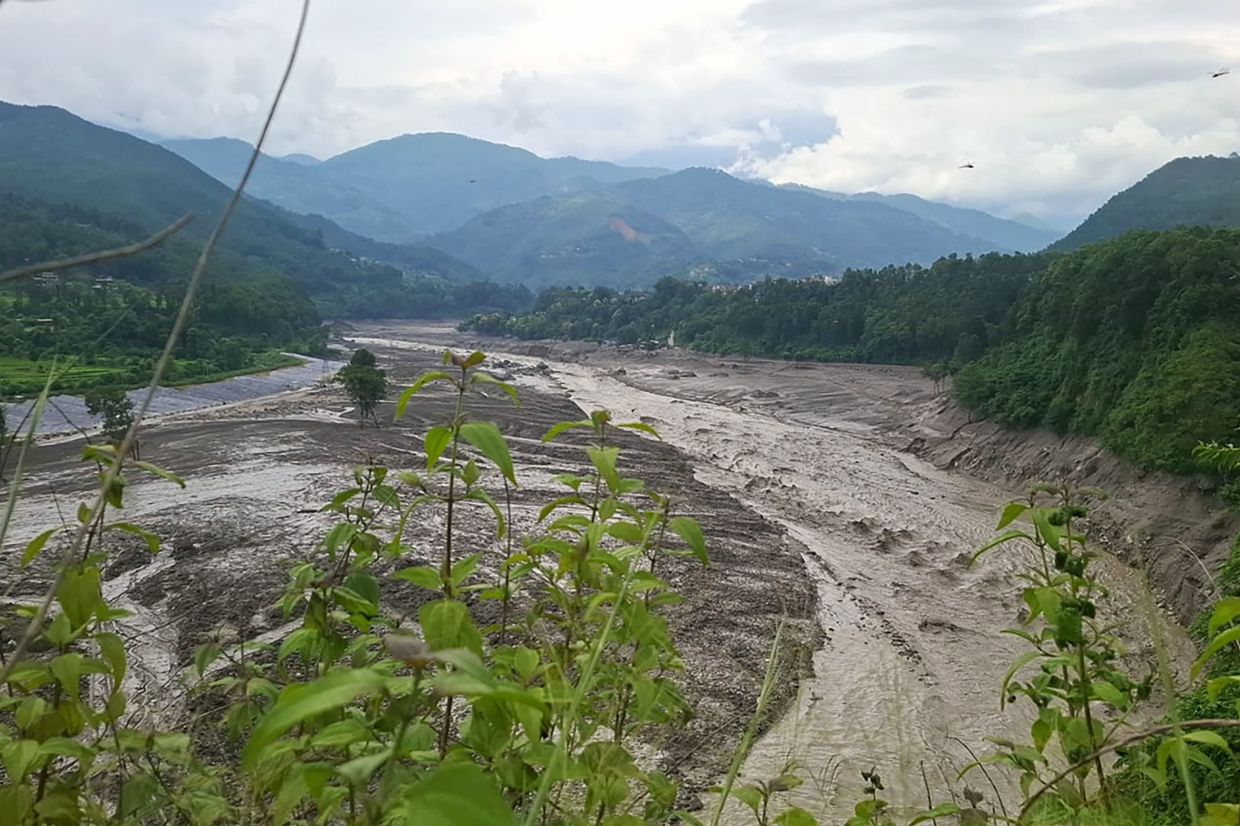
A massive flash flood unleashed by a glacial avalanche tore through Nepal on Wednesday morning, leaving at least 22 dead and triggering one of the region's most serious rescue operations in recent years. The surge of water, mud and rock cascaded down the Bhotekoshi River around 9am local time, submerging entire villages, sweeping away vehicles and burying buildings under tonnes of debris across multiple districts. Officials have confirmed that hundreds of people remain unaccounted for, with search and rescue teams mobilising across the affected zones in what is shaping into a significant humanitarian crisis.
Among those missing are 384 tourists from across the world who were travelling through Nepal at the time of the disaster. The scale of international involvement in the tragedy underscores how the region's mountain tourism attracts visitors year-round, often placing them in proximity to increasingly unstable natural features. India has seen 291 of its nationals reported missing, alongside visitors from the United States, the United Kingdom and other countries. For Malaysia, the incident carries particular resonance: the Foreign Ministry confirmed that its embassy in Kathmandu has received reports from travel agencies regarding 11 Malaysians believed to have been in the Rasuwa district when the floods struck. This represents a direct impact on Malaysian travellers undertaking leisure and pilgrimage journeys through the Himalayan region.
The epicentre of devastation centred on Nuwakot district and surrounding areas, where the force of the floodwaters proved overwhelming. Multi-storey structures were demolished and buried under vast accumulations of mud, while roads connecting villages were obliterated and critical infrastructure including hydropower installations suffered severe damage. The Bhotekoshi River, joined by its tributary the Lhende Khola, emerged as the primary conduit for destruction, prompting authorities to issue urgent warnings to residents across several districts to avoid the banks of the Bhotekoshi, Trishuli and Narayani rivers. These waterways remain potentially dangerous as secondary flooding and ground instability persist in the aftermath.
Nepal's government has initiated a major international appeal for assistance in managing the crisis. Sasmit Pokharel, a spokesperson for the Nepali government, confirmed that requests for rescue support have been directed to both India and China, reflecting the tri-national dimensions of Himalayan disaster response. Indian Prime Minister Narendra Modi engaged directly with his Nepali counterpart, Prime Minister Balendra Shah, offering comprehensive humanitarian assistance and pledging close coordination between the two nations' relief teams. Meanwhile, Chinese authorities have launched extensive search and rescue operations in the Tibetan border region of Gyirong, with President Xi Jinping ordering intensified efforts to locate missing persons and evacuate at-risk populations on the Chinese side of the frontier.
Investigations by climate scientists at the Kathmandu-based International Centre for Integrated Mountain Development point to a glacier-triggered avalanche as the primary cause of Wednesday's catastrophe. Researchers determined that an ice and rock avalanche cascading from a glacier on the Nepal side of the Himalaya temporarily dammed the Lhende Khola River, creating an impounded mass of water that subsequently burst through with devastating force. This mechanism of sudden release represents an increasingly documented hazard in warming mountain environments, where the stability of glacial systems becomes compromised. Saswata Sanyal, a disaster risk reduction specialist at the research group, emphasised that the same tributary experienced severe flooding only fourteen months earlier, illustrating a pattern of accelerating instability in what should be relatively stable hydrological systems.
The recurrence of catastrophic floods in the same geographic zone within such a short timeframe raises alarming questions about the underlying drivers of these events. The Himalayan region is warming faster than virtually any other part of the globe outside the polar zones, a phenomenon directly attributable to human-caused climate change and reinforced by complex feedback mechanisms involving ice-albedo effects and aerosol deposition. Research findings released earlier this year from the Hindu Kush Himalaya region documented that glacial ice loss has accelerated dramatically, with retreat rates doubling since 2000. This trajectory means that water stored in frozen form for millennia is now mobilising as liquid runoff, fundamentally altering the hydrological character of major river systems that sustain hundreds of millions of people across South and Southeast Asia.
The implications of these changes extend far beyond individual disaster events and carry profound consequences for regional stability and development. Countries throughout South Asia and Southeast Asia depend on Himalayan water resources for irrigation, hydropower generation and domestic consumption. As glaciers diminish and hydrological patterns become increasingly erratic, societies face dual pressures: immediate hazards from catastrophic floods and landslides, coupled with longer-term water scarcity challenges as dry-season flows decline. The disaster in Nepal serves as a visceral reminder that climate change is not an abstract future threat but a present reality reshaping the physical landscape and endangering lives across the region.
South Korean workers engaged in hydropower construction projects have also been reported among the missing, reflecting how infrastructure development initiatives themselves sometimes place personnel in vulnerable locations within this unstable environment. The irony is pronounced: efforts to build renewable energy capacity in the mountains are themselves subject to the very climate-related hazards that renewable energy is intended to address. This tension highlights the complex adaptation challenges facing the region as nations attempt to balance development imperatives with escalating environmental risks. Disaster risk reduction specialists, including those at international research institutions, increasingly emphasise that early warning systems and evacuation protocols represent the most practical near-term defence against these mounting threats.
The tourism dimension adds another layer of vulnerability to this crisis. Mount Kailash, a sacred pilgrimage destination for Hindus, Buddhists and other spiritual traditions, attracts thousands of visitors annually through routes that traverse precisely the zones most affected by glacial hazards. The missing tourists were largely pilgrims from India and the Indian diaspora heading toward this revered site when the floods struck. This convergence of spiritual devotion, international tourism and environmental hazard has created a situation where distant populations are drawn into zones of risk that are themselves amplifying due to global climate processes. Managing this tension will require coordinated planning between Nepal, China and India, alongside investment in monitoring and warning systems.
Looking forward, the disaster underscores urgent needs across multiple domains. Search and rescue operations must be sustained until missing persons are accounted for, requiring sustained international coordination and resource commitment. Simultaneously, the broader pattern of accelerating glacial destabilisation demands accelerated investment in climate adaptation infrastructure, early warning technologies and risk reduction planning across the Himalayan region. For Malaysia and other nations with citizens regularly traversing this region for tourism, business or other purposes, the incident serves as a sobering reminder of the mounting environmental hazards reshaping Asia's most vulnerable mountain zones and the necessity for enhanced pre-travel risk communication and emergency response protocols.

