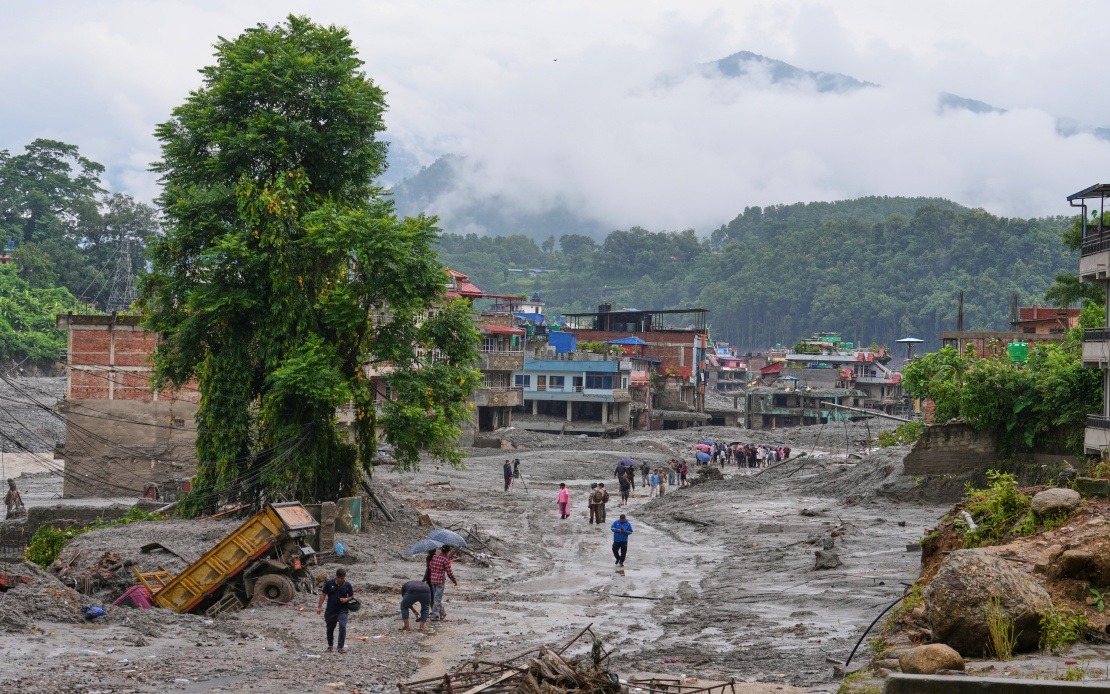
Catastrophic mudslides have claimed at least 675 lives across Nepal, with search and rescue operations intensifying as authorities grapple with the scale of the disaster. The National Disaster Risk Reduction and Management Authority released the latest casualty figures on Saturday evening, revealing a mounting humanitarian crisis in districts neighbouring Kathmandu Valley that shows no signs of abating.
The death toll reflects the ferocity of the geological event that swept through Rasuwa, Nuwakot and Dhading districts, three rural regions that have borne the brunt of the catastrophe. As recovery teams work against deteriorating weather conditions typical of Nepal's monsoon season, the confirmed deceased represent only a portion of the total impact, with nearly 2,500 individuals still unaccounted for as darkness falls and rescue operations become increasingly hampered by terrain and accessibility challenges.
Tourist movements through affected areas have compounded the crisis significantly. According to Nepal's Department of Tourism, administered under the Culture, Tourism and Civil Aviation Ministry, approximately 753 travellers have lost communication with the outside world, among them 589 foreign nationals. This unusually high proportion of international visitors caught in the disaster reflects Nepal's critical dependence on tourism revenue and the accessibility of trekking routes that traverse the mountainous regions now devastated by mudslides.
The foreign tourist contingent stranded in the affected areas presents both a search challenge for Nepali authorities and an international dimension to the crisis that will likely generate diplomatic attention from source countries. Many of these visitors were likely engaged in trekking expeditions that pass through Rasuwa and surrounding areas, routes that rank among Nepal's most popular tourist destinations. The communication blackout suggests infrastructure damage far more extensive than initial reports may have indicated.
Kathmandu District Administration has moved swiftly to mobilise domestic support, issuing an urgent appeal on Saturday calling upon civil society organisations, private enterprises, educational institutions and individual citizens to contribute relief materials for affected communities. This grassroots approach reflects the reality that official government resources, often stretched thin in Nepal's mountainous regions, may prove insufficient without substantial voluntary contributions from the capital's organised sectors.
The mudslide disaster arrives during Nepal's monsoon season, when heavy precipitation destabilises slopes across the country's Himalayan terrain. Such geological events have claimed thousands of lives in recent years throughout South Asia, highlighting the region's inherent vulnerability to climate-related natural disasters. For Malaysian observers, the catastrophe underscores how developing economies in geologically active mountainous zones face recurring humanitarian emergencies that stretch institutional capacities.
The timing of the disaster coincides with Nepal's peak tourism season, when international visitors arrive in large numbers to experience mountain trekking and cultural tourism. The entrapment of hundreds of foreign nationals in remote areas complicates rescue operations and diverts resources from local communities, many of whom lack reliable communication infrastructure or access roads. Remote villages in Rasuwa district particularly suffer from limited connectivity that hampers both disaster response coordination and accurate casualty reporting.
Rescue coordination across three affected districts represents a significant logistical challenge in terrain where roads are frequently impassable during monsoons and helicopter access remains weather-dependent. The Nepal Army and local security forces have been deployed alongside civilian rescue organisations, yet the numbers of missing persons suggest that recovery operations may take weeks rather than days. International humanitarian organisations have likely been approached for assistance, though cross-border aid delivery to Nepal typically involves bureaucratic delays.
For regional context, this disaster carries implications for Southeast Asia's own mountainous economies dependent on tourism and vulnerable to similar geological hazards. Thailand, Laos, and parts of Myanmar and Indonesia face comparable risks during monsoon seasons, prompting consideration of whether disaster preparedness frameworks across the region adequately address mudslide threats. Nepal's experience provides a cautionary case study about the consequences when tourism infrastructure develops in geologically unstable areas without corresponding investment in early warning systems or evacuation protocols.
The scale of missing persons—nearly four times the confirmed death toll—suggests that final casualty figures may rise substantially as recovery operations continue. Many bodies may remain buried beneath accumulated debris or swept downstream in flash-flood conditions that typically accompany mudslides. The Nepali government faces not only an immediate humanitarian emergency but also the complex tasks of identifying deceased individuals, locating survivors in inaccessible terrain, and managing the international dimensions of a disaster involving hundreds of foreign nationals.

