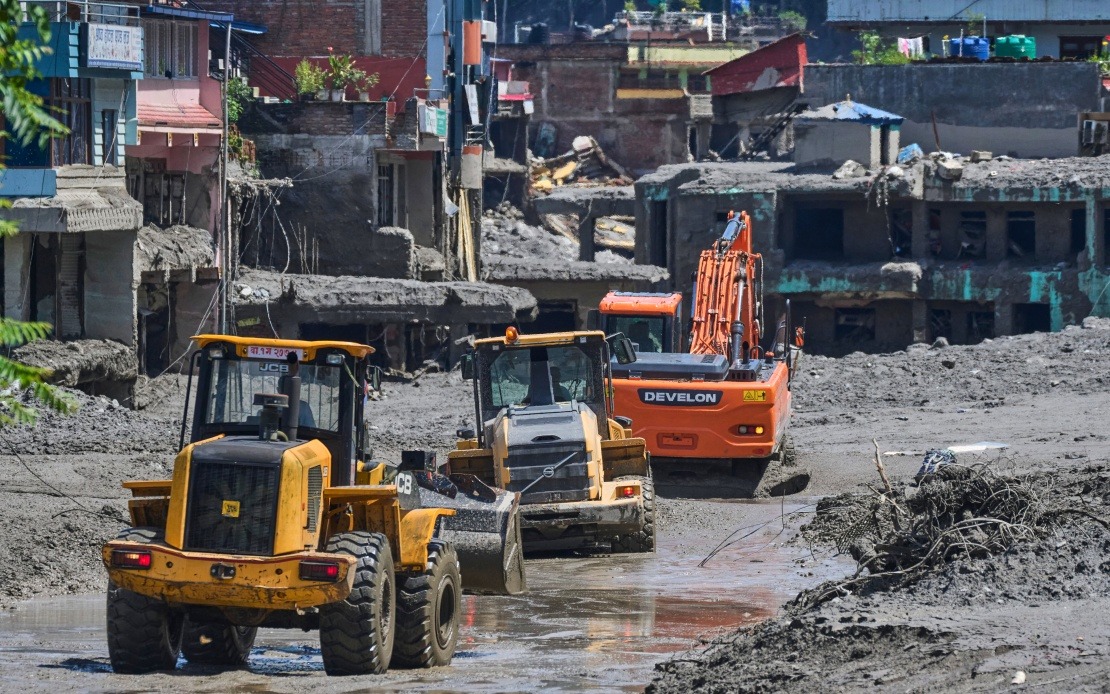
The Nepalese government is mobilising all available resources to coordinate search, rescue, and emergency response operations in the aftermath of catastrophic flooding triggered by the Bhote Koshi River on Wednesday, the Embassy of Nepal in Kuala Lumpur announced on Thursday. The disaster has inflicted substantial casualties and widespread destruction across multiple districts in Nepal, prompting authorities to escalate relief efforts and appeal for international assistance to support affected communities through both immediate response and long-term recovery phases.
The flooding has struck hardest in four districts—Rasuwa, Nuwakot, Dhading, and Gorkha—where infrastructure has been severely compromised and numerous lives lost. The Bhote Koshi River, which forms part of Nepal's border region and is critical to local communities, exceeded safe levels, sweeping away homes, roads, and essential facilities. Preliminary assessments indicate that the scale of destruction extends beyond initially reported figures, with rescue teams still working to reach isolated areas and retrieve those missing in the immediate aftermath.
Response coordination remains centred at the highest levels of Nepal's government structure. The Office of the Prime Minister and Council of Ministers has assumed direct oversight of relief operations, with security agencies and local authorities collaborating to locate survivors and provide emergency medical assistance. Teams are systematically working through affected zones to document casualties, salvage possessions where possible, and establish temporary shelters for displaced populations. The complexity of the terrain in affected districts, combined with damaged access routes, presents significant logistical challenges to rescue personnel attempting to reach remote communities.
Recognising that immediate relief will require sustained financial resources, Nepal's leadership has launched a public appeal for contributions from individuals, corporations, non-governmental organisations, and private donors. The Prime Minister's office has specifically designated two relief funds as the official channels for consolidating assistance, streamlining coordination of resources for distribution to affected populations. This centralised approach aims to eliminate duplication of efforts and ensure equitable allocation of support across the hardest-hit communities, particularly those in remote areas where alternative infrastructure has been compromised.
The Embassy of Nepal in Kuala Lumpur has extended the appeal to the Malaysian-based Nepali diaspora and their networks, emphasising that financial contributions from overseas communities can significantly amplify relief capacity. The embassy has identified specific banking channels through which diaspora members can channel support, reflecting the growing importance of remittances and overseas donations in disaster response mechanisms for South Asian nations. This connection between diaspora and homeland relief efforts demonstrates how globally distributed populations can provide tangible assistance during national crises.
Two major Nepalese financial institutions have been designated as collection points for relief contributions. The Rastriya Banijya Bank maintains two dedicated accounts (1130100003762001 and 1130100000006006) under the Prime Minister's Disaster Relief Fund and Relief Fund respectively, while Nepal Bank Limited operates parallel accounts (00211600510039000003 and 00200100510039000001) for the same purpose. Both institutions have provided QR codes to simplify digital transfers, accommodating the preferences of younger donors and those utilising mobile payment platforms, a significant shift in how natural disaster relief is mobilised in contemporary Nepal.
The disaster underscores Nepal's vulnerability to hydrological hazards, given its position within the Himalayan watershed system where monsoon rains and glacial melt can trigger rapid river swelling. The Bhote Koshi River, despite its relatively modest size compared to Nepal's major river systems, has proven capable of generating destructive flash floods that overwhelm local communities. Climate patterns across South Asia suggest that such extreme weather events may increase in frequency or intensity, positioning Nepal alongside other regional nations facing heightened climate-related risks that transcend conventional disaster planning frameworks.
For Malaysian readers with professional or familial connections to Nepal, the relief effort represents an opportunity to engage with grassroots development and humanitarian initiatives. Malaysia's substantial expatriate communities have increasingly participated in cross-border philanthropy, and numerous Malaysian-based NGOs and community organisations have experience facilitating donations to South Asian disaster zones. The transparent banking mechanisms established by Nepal's government reduce friction for international donors seeking to contribute meaningfully without concerns about fund misallocation.
The broader regional context reveals how environmental and infrastructure vulnerabilities intersect in the Himalayan foothills. Nepal shares disaster-response challenges with other mountainous Southeast Asian nations, including Myanmar, Laos, and Thailand, where flooding represents a recurring risk factor in development planning. The methods adopted by Nepal's government—centralised coordination, diaspora mobilisation, and transparent fund management—provide instructive models for regional governments evaluating their own disaster response protocols and international fundraising strategies.
As rescue operations continue and casualty figures stabilise, attention will gradually shift toward infrastructure reconstruction and community rehabilitation. The financial contributions mobilised through international appeals will ultimately determine the pace at which normalcy returns to affected districts. For Nepal's diaspora worldwide, including those settled in Malaysia, this moment represents both a humanitarian obligation and an opportunity to strengthen connections to their communities of origin through concrete, measurable assistance during a period of acute need.

