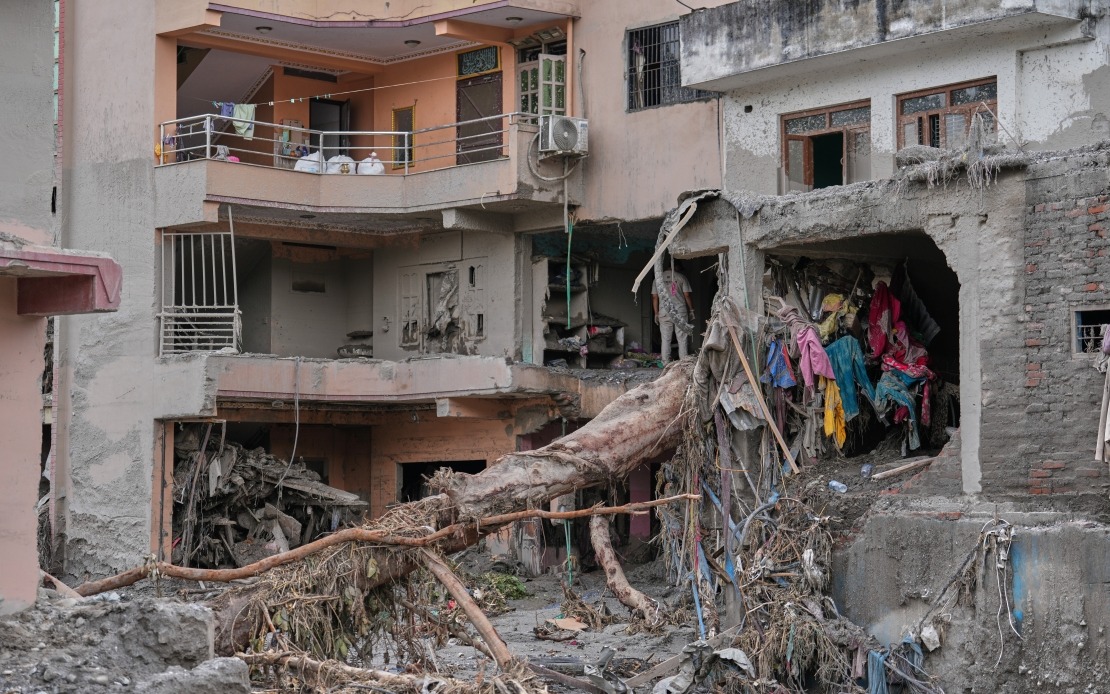
Nepal's government has committed to a carefully managed approach in handling the massive human toll from catastrophic flooding that struck the Himalayan nation on August 26, pledging to extract and preserve genetic material and other identifying information before laying deceased individuals to rest. Prime Minister Balendra Shah's announcement, made through social media on Saturday evening, represents an effort to balance the urgent need for proper burial practices with the imperative to support grieving families seeking to locate missing loved ones. The protocol underscores the scale of the tragedy and the administrative challenges confronting Nepali authorities in the aftermath of a natural disaster of unprecedented proportions in recent memory.
The Bhotekoshi River's catastrophic overflow has emerged as one of the deadliest natural disasters to strike Nepal in years, with recovery teams working across multiple districts to locate and retrieve bodies scattered across a vast geographical area. By the time of the Prime Minister's statement, authorities had recovered 675 bodies from different locations spanning eight districts: Rasuwa, Dhading, Nuwakot, Chitwan, Tanahun, Gorkha, Nawalparasi East and Nawalparasi West. The geographical spread of casualties reflects the river's destructive path through densely populated areas, devastating communities that had little warning before the waters rose. Infrastructure along the river corridor has suffered extensive damage, with roads, bridges, and water systems compromised or destroyed, further complicating rescue and recovery operations.
The decision to implement systematic DNA preservation procedures reveals the sophistication required in contemporary disaster management. In cases where flooding has rendered facial features or other conventional identifying marks unrecognisable, genetic profiling offers grieving families a definitive pathway to confirming the identity of their deceased relatives. This approach also facilitates eventual reunification of remains with families who may live in distant regions or overseas, acknowledging the reality that Nepal's population includes significant numbers of migrant workers whose deaths abroad or at home often occur far from family members. The preservation of such evidence creates a permanent record that can be cross-referenced against DNA samples voluntarily provided by relatives making inquiries.
The Nepali government's announcement carries implicit recognition that the recovery phase will extend far beyond the initial emergency response. Many families may not complete their search immediately, and some may only begin making inquiries days or weeks after the disaster when information networks become operational again. By establishing secure protocols now, authorities aim to ensure that bodies held in temporary storage facilities can be definitively matched to individuals even as months pass. This represents a departure from traditional practices in some regions where rapid burial has been customary, reflecting modern forensic capabilities and the imperatives of a disaster of this magnitude.
For Malaysian observers and policymakers, Nepal's systematic response offers instructive lessons in disaster preparedness and human remains management. Southeast Asia faces similar flood risks during monsoon seasons, and several nations in the region have experienced comparable tragedies in recent years. Thailand's 2011 floods, Myanmar's cyclones, and Philippine typhoons have all produced situations requiring authorities to manage large numbers of unidentified deceased individuals. Nepal's approach—combining urgent action with methodical evidence preservation—provides a framework that other regional governments might adapt to their own contexts and capabilities.
The scale of displacement and loss across the affected districts will likely generate secondary humanitarian challenges that extend beyond immediate recovery operations. Communities in Rasuwa and Nuwakot, which experienced particularly severe impact, face not only the grief of mass casualties but also the prospect of infrastructure reconstruction that could take years. Agricultural land has been destroyed, livestock swept away, and homes rendered uninhabitable. The families of migrant workers who comprised a significant portion of the victims may face immediate economic hardship, as remittances that many Nepali households depend upon will cease. International assistance, coordinated through regional bodies and bilateral channels, will prove essential.
The Prime Minister's statement also implicitly acknowledges the practical limitations facing Nepal's medical and forensic infrastructure. While the country's larger hospitals can perform basic DNA analysis, the volume of samples generated by a disaster claiming hundreds of lives would overwhelm domestic laboratory capacity. International cooperation, potentially through INTERPOL's disaster victim identification networks or bilateral arrangements with countries possessing advanced forensic capabilities, may become necessary. This dependency on external expertise underscores how catastrophic natural disasters expose vulnerabilities in developing nations' institutional preparedness.
The timing of this announcement—less than four days after the initial disaster—suggests that Nepali authorities recognised the urgency of establishing these protocols before decomposition and environmental factors further compromised the possibility of reliable identification. Bodies recovered from floodwaters face accelerated deterioration compared to those discovered in other circumstances, making the window for effective DNA extraction narrower than in typical situations. The government's decision to act rapidly and communicate the protocol publicly also serves a reassurance function, signalling to families that systematic efforts are underway to preserve the possibility of identification rather than allowing mass graves or anonymous burials.
Beyond the immediate human tragedy, the disaster has implications for Nepal's already strained relationship with climate change impacts. The Bhotekoshi River basin has experienced intensifying precipitation events in recent years, consistent with broader patterns of increasing extreme weather across the Hindu Kush Himalayan region. Scientists have warned that glacial melt combined with more intense monsoons create conditions for catastrophic flooding that previously struck perhaps once per century but now occur with troubling frequency. This reality means that Nepal and its neighbours must treat disaster preparedness and response not as occasional contingencies but as permanent features of governance and public health planning.
The recovery process unfolding across the eight affected districts will test institutional capacity at every level, from village authorities to national government agencies. The DNA preservation protocol represents one component of a much larger effort involving search and rescue, temporary shelter provision, psychological support, and eventual reconstruction. International media coverage of the disaster has begun to fade, but for the affected communities the work of recovery and remembrance will persist for years. Nepal's commitment to identifying the deceased reflects both humanitarian values and practical recognition that leaving families without closure perpetuates suffering long after the initial emergency has passed.

