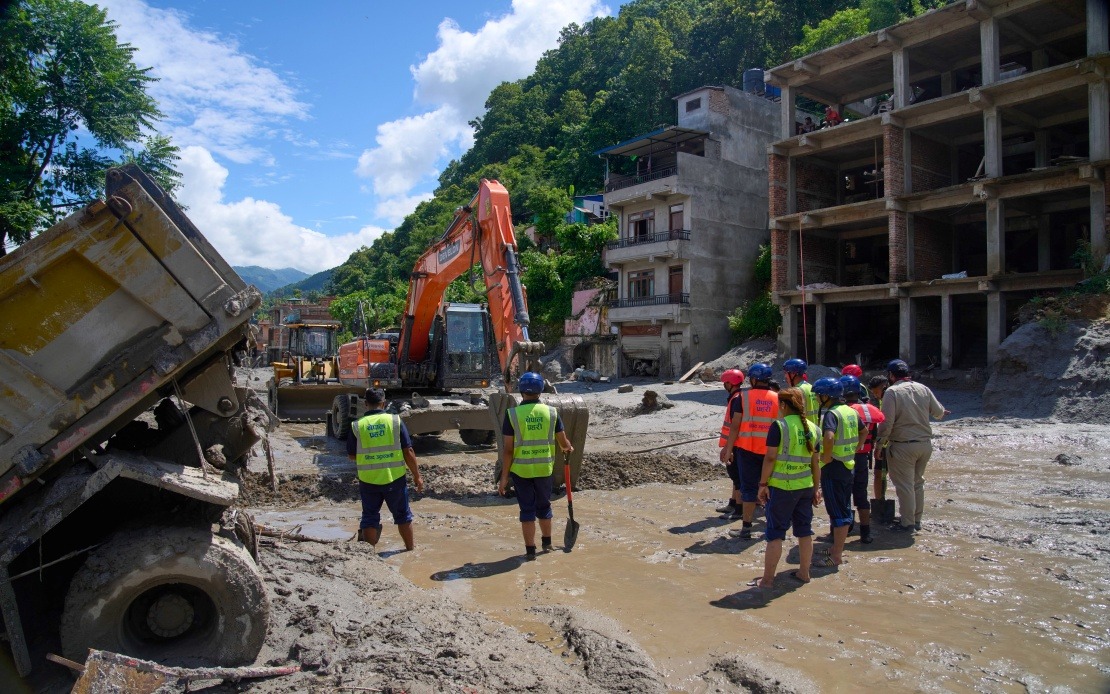
Nepal has mobilised an Emergency Response Team through its Foreign Ministry to manage the complex coordination efforts following catastrophic flooding in Rasuwa district that has left hundreds of people unaccounted for. The specialist unit will operate as the central hub for verifying reports about missing foreign nationals, liaising with search and rescue teams, and providing support to those affected by the disaster that struck the region on Wednesday morning.
The scope of the ERT's responsibilities extends beyond simple information gathering. The team must synthesise reports from multiple sources, validate claims of missing persons against confirmed deaths and rescued individuals, and maintain clear communication channels with the families and governments of those still missing. This multi-layered approach reflects the complexity of managing a disaster that has affected citizens from numerous countries, with initial assessments indicating a substantial portion of the missing are foreign tourists and nationals from neighbouring states.
For Malaysian readers, the establishment of this formal coordination mechanism carries particular relevance. Malaysia's Foreign Minister Datuk Seri Mohamad Hasan has acknowledged that the precise number of Malaysian citizens caught in the disaster remains unconfirmed, pending verification from Nepali authorities. This uncertainty underscores why Nepal's decision to create a dedicated response team matters: without systematic coordination, tracking nationals across borders during major disasters becomes nearly impossible, leaving families and governments operating in information vacuum.
The death toll continues to mount as recovery operations proceed. Authorities documented 359 confirmed deaths by Thursday evening, with that figure likely to rise as rescue workers access more remote areas of Rasuwa district. Rescue personnel have managed to pull at least 31 survivors from the flood waters, but this number pales against the magnitude of the crisis. The vast majority of those unaccounted for are believed to be Indian and Nepali nationals, though the presence of significant numbers of foreign tourists in the region means citizens from across South, Southeast, and East Asia may be among the missing.
The ERT has established multiple communication channels specifically designed to receive reports about missing persons and affected foreigners. Individuals with information can contact the response team via two dedicated phone numbers—+977-9744441227 and +977-9744441228—which also accept WhatsApp messages, or submit details through the email address [email protected]. This multi-channel approach acknowledges that family members and witnesses may be scattered geographically, with some potentially trying to coordinate from outside Nepal during a period of widespread telecommunications disruption.
The floods represent a humanitarian crisis of significant scale that inevitably complicates diplomatic relations across the region. When citizens of one country are affected by disasters in another, the mechanics of response become deeply intertwined with consular operations, embassy protocols, and information sharing agreements between governments. Nepal's decision to establish a formal coordinating body signals recognition that ad hoc responses would prove inadequate to manage the scale and complexity of missing persons claims.
For Southeast Asian nations like Malaysia, this disaster illustrates the vulnerability of citizens engaged in cross-border travel, whether as tourists, business professionals, or migrants. The Bhotekoshi River region of Rasuwa is a destination for adventure tourism, mountaineering expeditions, and trekking. During monsoon season particularly, rivers in the Himalayan foothills can transform with terrifying speed from manageable waterways into raging torrents that sweep away everything in their path. Weather patterns in recent years suggest such extreme events are becoming more frequent, creating an emerging risk profile for the region.
The consular dimension of this crisis extends beyond simple casualty reporting. Malaysian embassy officials in Kathmandu will need to work through Nepal's Foreign Ministry to access information verified by the ERT, coordinate with search teams, arrange repatriation of remains if necessary, and provide support to any Malaysian survivors requiring medical treatment or temporary accommodation. These functions require the precise information flow that a centralized emergency response team can facilitate.
Nepal's geographical and economic relationship with India means that most of the missing are likely to be Indian nationals, creating bilateral coordination challenges. The Indian government will be pursuing its own channels to verify information and assist affected citizens, potentially duplicating some of the ERT's work but also potentially creating inconsistencies in reported figures. The establishment of Nepal's formal response structure should help minimize such discrepancies.
The broader Southeast Asian region shares common characteristics with Nepal: mountainous terrain, seasonal weather extremes, significant tourism sectors, and diaspora populations scattered across borders. This disaster offers an instructive case study in crisis coordination. Malaysian authorities observing this situation may draw lessons about how their own emergency response frameworks perform during regional crises and whether existing protocols for supporting nationals abroad can operate effectively when disasters occur at a scale that overwhelms normal administrative capacity.
As search operations continue and the full human toll becomes clearer, the value of Nepal's Emergency Response Team will become increasingly apparent. Families of missing persons need reliable, centralised access to information rather than scattered, unverified reports. Governments need credible data to inform their own response efforts. And rescue workers benefit from coordinated information systems that prevent duplication and identify gaps in coverage. The ERT represents an essential institutional response to a humanitarian catastrophe.

