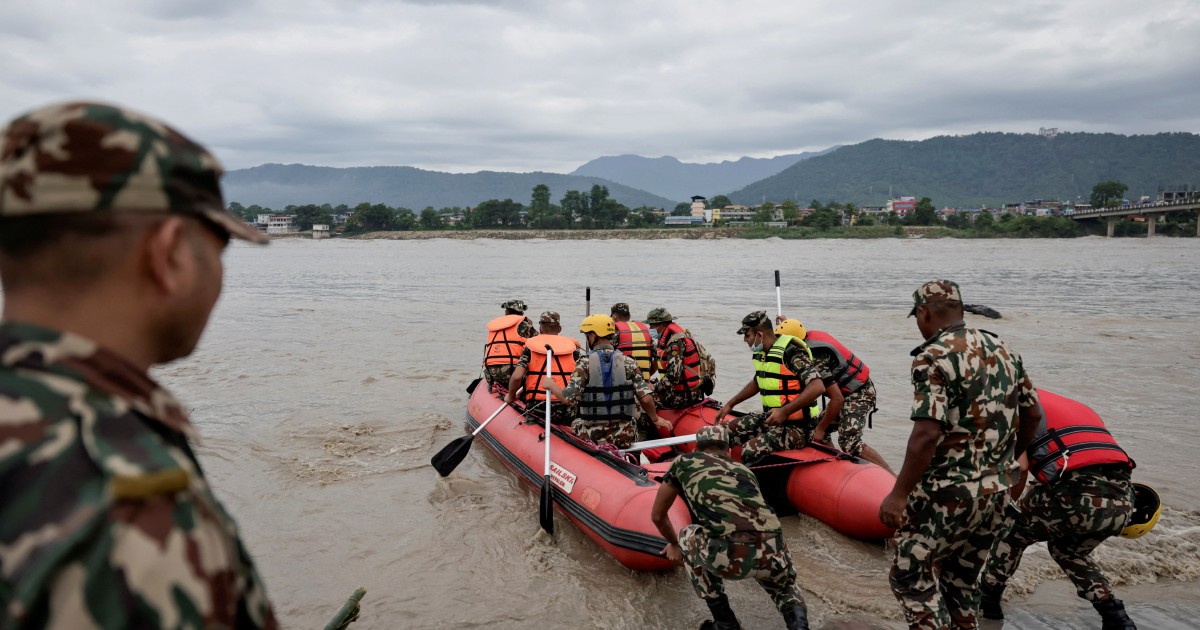
Nepal is confronting what its prime minister has characterised as an extraordinary calamity following widespread flooding that has claimed hundreds of lives and displaced significant portions of the population. Prime Minister Balendra Shah's characterisation of the disaster as "unimaginable and heartbreaking" underscores the scale of the emergency confronting the Himalayan nation, which lacks the infrastructure and resources to mount comprehensive disaster response operations across its mountainous terrain.
Authorities in Kathmandu have acknowledged difficulty in establishing a complete picture of the disaster's impact, suggesting that the actual toll may exceed current estimates. The disparity between confirmed and suspected casualties reflects the challenges faced by emergency services in accessing remote settlements scattered across Nepal's valleys and hillsides, where flooding damage has severed communication and transportation links. In regions dependent on seasonal weather patterns and lacking modern early-warning systems, rapid-onset flooding presents particular dangers that established agencies struggle to mitigate.
The missing persons figure highlights a critical gap in disaster response capabilities. When communications infrastructure collapses across affected districts, distinguishing between those in displaced camps, sheltering with relatives, or deceased becomes nearly impossible during the initial phase of emergency operations. This administrative challenge compounds the human tragedy, leaving families without answers and complicating the allocation of relief resources. The uncertainty also strains international coordination efforts, as global relief organisations require accurate situation assessments to deploy appropriate assistance.
Nepal's vulnerability to such catastrophic events stems from multiple intersecting factors. The country occupies a tectonically and meteorologically volatile region where monsoon precipitation collides with steep topography, creating conditions for devastating landslides and flash flooding. Additionally, rapid urbanisation has encroached into flood-prone areas around Kathmandu, where inadequate drainage infrastructure and informal settlement patterns expose growing populations to heightened risk. Climate variability in recent years has made once-predictable seasonal patterns increasingly unreliable and occasionally severe.
The country's economy, heavily dependent on tourism and foreign remittances, faces immediate disruption from the disaster. Transport corridors linking Nepal to India and Tibet may sustain damage that takes weeks to repair, disrupting both internal commerce and international trade routes. For the hundreds of thousands of Nepalese working abroad—particularly in Gulf states and India—communication difficulties prevent confirmation of whether family members in affected areas have survived, creating compounding psychological strain alongside economic uncertainty.
Regional implications extend beyond Nepal's borders. The disaster underscores the vulnerability of the broader Himalayan region to climate-related hazards, raising questions about preparedness across India, Bhutan, and Bangladesh. Cross-border river systems linking these nations mean that flooding originating in Nepal's watersheds threatens populations downstream, necessitating improved regional coordination for early-warning dissemination and humanitarian response. The disaster may catalyse discussions within the South Asian Association for Regional Cooperation regarding infrastructure investment in disaster mitigation.
Government capacity constraints present immediate operational obstacles. Nepal's civil service, though professional, operates with limited funding and technical capacity for operations of this magnitude. Helicopter availability for search and rescue missions remains restricted, forcing rescue teams to trek for days to reach isolated communities. Medical facilities in affected districts lack supplies for mass casualty management, and many destroyed clinics and hospitals eliminate treatment options where they are most desperately needed. International assistance, including medical teams and logistical support, becomes essential to prevent secondary mortality from injury complications and waterborne disease.
The psychological toll on survivors extends beyond physical displacement. Communities where multiple family members perish simultaneously face collective trauma that no immediate aid programme can address. Children separated from parents during flooding, survivors extracted from mud and debris, and individuals who lost homes and livelihoods within hours all require long-term psychological support that Nepal's mental health infrastructure cannot provide at current capacity. Suicide rates historically spike in post-disaster communities, particularly when recovery timelines extend over years rather than months.
Reconstruction will present formidable challenges lasting well beyond the emergency phase. Communities must be relocated away from flood-prone areas, requiring land acquisition and legal frameworks often mired in tenure disputes. Rebuilding destroyed homes, schools, hospitals, and agricultural land requires capital that Nepal's government budget cannot sustain without international donor support. Historical patterns suggest that recovery emphasises physical reconstruction while mental health, psychological trauma, and livelihood restoration receive inadequate attention, leaving communities economically and psychologically vulnerable to future disasters.
The disaster underscores climate adaptation imperatives for developing nations. Nepal contributes minimally to global greenhouse gas emissions yet bears disproportionate consequences from climate variability. International climate finance mechanisms, despite their aspirations, have delivered insufficient resources to fund the adaptation infrastructure Nepal requires. The floods demonstrate that incremental approaches to disaster risk reduction prove inadequate when facing extreme weather events, necessitating paradigm shifts in how wealthy nations support vulnerable populations in climate-affected regions.

