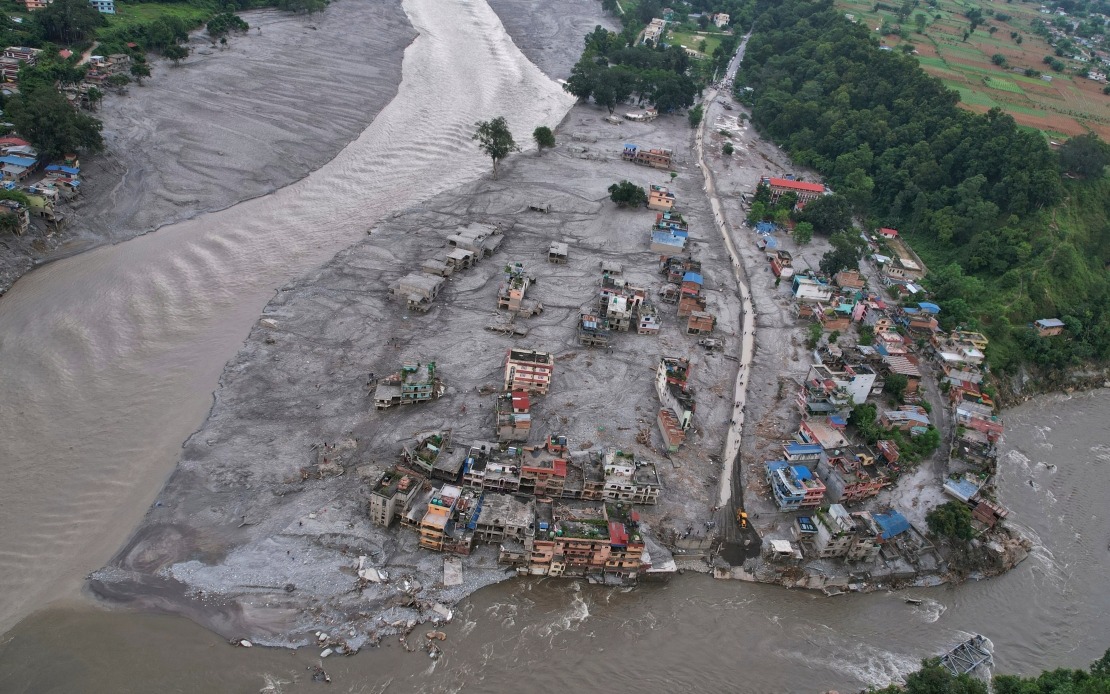
Nepal is taking a measured approach to international rescue offers in the aftermath of catastrophic flooding that struck its central and northern regions, signalling it will carefully evaluate whether to accept additional search and rescue teams before making commitments. The Himalayan nation has already accepted assistance from Australia, China, India and South Korea following Wednesday's deluge in Rasuwa district, triggered by the breach of the Bhote Koshi and Trishuli rivers, but remains cautious about inviting more foreign personnel into its disaster zone.
The Malaysian Embassy's charge d'affaires in Kathmandu, Mohd Firdaus Azman, confirmed to Bernama on Saturday that Nepalese authorities are conducting a comprehensive assessment of conditions before deciding whether to welcome additional rescue missions from other nations. This deliberate stance reflects both the complexity of coordinating multiple international teams in challenging terrain and the need to precisely match rescue capacity with identified gaps in Nepal's response. Malaysia has already joined the queue of sympathetic nations offering help, with Prime Minister Datuk Seri Anwar Ibrahim indicating that Kuala Lumpur is working to coordinate humanitarian aid and stands ready to deploy the Malaysian Special Search and Rescue Team (SMART) if called upon.
The four nations currently assisting Nepal have a strategic advantage rooted in their prior connections to the country. Each has nationals employed at hydropower facilities that were devastated by the flooding, creating both an urgency to participate and existing relationships with Nepalese authorities that facilitate rapid cooperation. This operational reality underscores why Nepal's assessment process is crucial—deploying rescue teams is most effective when responders can immediately integrate with local coordinators who understand the terrain, language, and existing rescue infrastructure.
The scale of the disaster amplifies the complexity of managing international aid. More than 900 workers remain unaccounted for across 11 hydropower projects in Nepal, many trapped in underground tunnels and powerhouses as floodwaters inundated these facilities. The infrastructure damage has created an unprecedented rescue challenge, with submerged caverns and compromised structural integrity posing acute risks to both trapped workers and rescue personnel. This technical difficulty explains why Nepal cannot simply accept every offer of assistance—each additional team must have specific skills and equipment that address identified gaps rather than duplicate existing efforts.
The human toll continues to mount as recovery efforts unfold. At least 633 people across Nepal and China have been confirmed dead, yet nearly 3,000 individuals remain unaccounted for as of Saturday, including hundreds of foreign nationals whose governments are pressing for rapid action. The Malaysian Foreign Ministry reported that 55 Malaysians in Nepal and 36 Malaysians in China were uncontactable as of 8pm on Saturday, placing Malaysia among affected nations with significant personnel stakes in the recovery outcome.
For Malaysia specifically, the situation highlights both regional solidarity obligations and practical constraints. As a key economic partner and neighbour in South Asia, Malaysia has demonstrated willingness to mobilise resources, with Anwar Ibrahim's remarks indicating active coordination efforts at the diplomatic level. However, Nepal's judicious approach means Malaysian assistance—whether through SMART deployment or material aid—will proceed only as Nepal requests it, reflecting established protocols for international humanitarian intervention that respect the affected nation's sovereignty and operational judgment.
The four countries already engaged in rescue operations likely provide Nepal with valuable intelligence about what additional resources would be most beneficial. As teams from Australia, China, India and South Korea deploy across the affected zones, they gather real-time data about remaining gaps in rescue capacity, accessibility challenges, and coordination needs. This information flow informs Nepal's decision-making about whether to invite additional partners, ensuring that any new deployments genuinely strengthen the overall response rather than creating administrative burdens or redundancy.
Southeast Asian nations have particular interest in Nepal's disaster management, given the region's own vulnerability to similar catastrophic flooding. Malaysia's engagement with Nepal's recovery process offers opportunities to study emergency response coordination, international cooperation protocols, and the mobilisation of specialised rescue capabilities in mountainous terrain. These lessons carry direct relevance for Malaysia's own disaster preparedness strategies and the region's collective approach to managing cross-border humanitarian crises.
The situation also reflects broader patterns in international disaster response. Countries with affected nationals often serve as the first responders because they possess both motivation and existing relationships with local authorities. Yet the principle of Nepal's measured assessment—evaluating capacity before accepting aid—represents best practice in disaster management, preventing the chaos that can result from uncoordinated foreign intervention. Malaysia's willingness to coordinate aid delivery rather than unilaterally dispatch teams demonstrates understanding of this principle and positions Kuala Lumpur favourably for collaboration with Nepal as recovery efforts progress.

