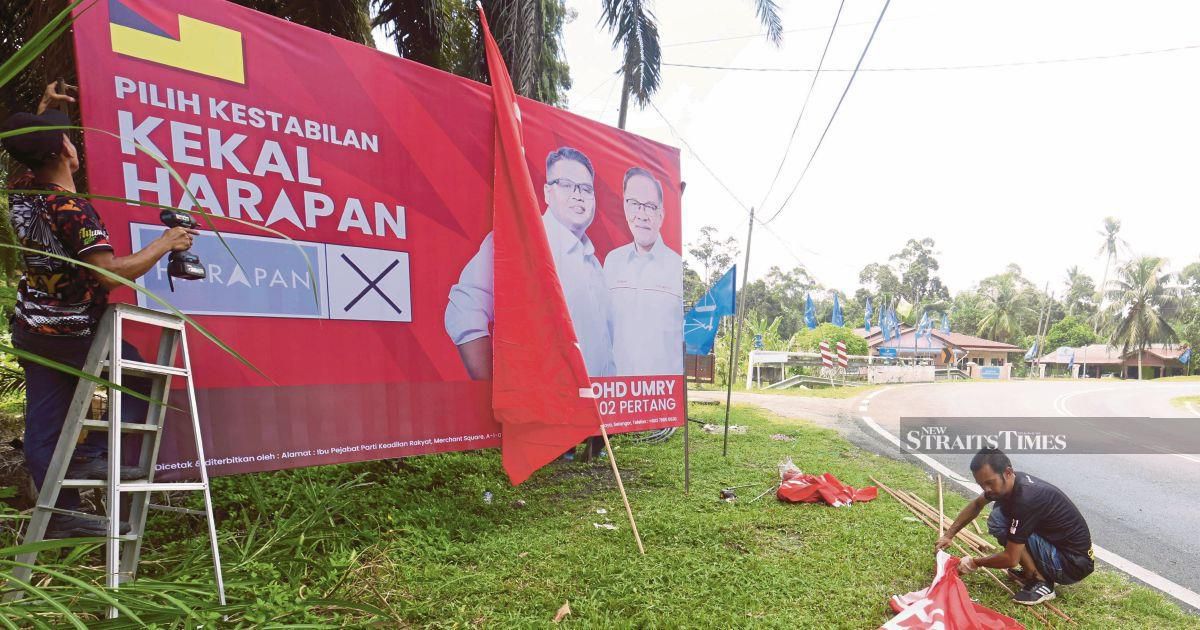
The Negri Sembilan state election has crystallised into a critical juncture for Bersatu, the party now facing uncomfortable questions about its relevance in Malaysian politics as established coalitions recalculate their positions. With 103 candidates contesting the 36 available seats in the state legislature, the contest represents far more than a routine regional poll—it signals broader shifts within the nation's political architecture that will reverberate well beyond the state's borders.
Bersatu's predicament underscores the ongoing realignment taking place across Malaysian politics following the 2023 general election. Once positioned as a swing kingmaker between Barisan Nasional and Pakatan Harapan, the party has struggled to maintain its leverage. The Negri Sembilan race now forces the reckoning: can Bersatu sustain itself as an independent political force, or must it find shelter within a larger coalition? The answers emerging from voters in this state will likely shape the party's strategic calculations for years to come.
The configuration of this election reflects the complex dance between Barisan Nasional and Perikatan Nasional, two opposing blocs that have nonetheless found themselves in unpredictable positions across different political contests. Barisan Nasional, despite controlling the federal government through Prime Minister Anwar Ibrahim's administration, continues to feel pressure in state-level contests where regional dynamics often trump national incumbency. Perikatan Nasional, meanwhile, has consolidated control in several states and views additional electoral wins as validation of its governance model. How these two camps allocate their energies in Negri Sembilan will reveal much about their true intentions toward cooperation beyond the current temporary arrangements.
For Bersatu, the dilemma cuts to the core of its political identity. The party emerged from a faction within Umno but has never successfully established itself as more than a mid-sized regional player. Its early hopes of becoming a transformative force in Malaysian politics faded once the broader electorate signalled preference for established alternatives. Negri Sembilan therefore becomes a testing ground: does the party contest aggressively as an independent force, risking decisive rejection, or does it effectively align with one of the major coalitions, essentially acknowledging its subordinate status?
The decision carries profound implications for how Malaysia's multiparty system evolves. If Bersatu opts for independence and performs poorly, it may accelerate a trend toward consolidation where only the largest coalitions remain viable at state level. Conversely, if the party negotiates favorable positioning within either Barisan Nasional or Perikatan Nasional, it validates the model of smaller parties finding niche roles within larger structures. Either outcome will influence how emerging political movements calculate their strategies when navigating Malaysian electoral politics.
Negri Sembilan's particular characteristics add additional complexity to the contest. The state has historically been a Barisan Nasional stronghold, though recent years have seen the coalition's dominance erode in some constituencies. The presence of 103 candidates across 36 seats suggests significant multi-cornered contests in several areas, which typically favor the better-organised and better-financed political machinery. Both Barisan Nasional and Perikatan Nasional possess such advantages, whereas Bersatu's financial resources and organisational capacity remain comparatively limited.
The broader Southeast Asian context amplifies the significance of this election. Malaysia's political volatility has become a subject of regional attention, with neighbouring countries and international observers monitoring how the world's oldest continuous Westminster-style democracy manages its internal transitions. A Negri Sembilan result that clarifies Malaysia's coalition landscape would provide useful signals about the country's medium-term political stability. Conversely, a muddled or fragmented outcome might further unsettle investor confidence and regional assessments of Malaysian governance prospects.
For ordinary Negri Sembilan voters, the election offers an opportunity to hold elected representatives accountable on bread-and-butter issues—economic opportunities, infrastructure development, education quality, and healthcare services—that transcend factional disputes. However, the intensity of elite-level political manoeuvring risks overshadowing these local concerns. The challenge facing all major political players will be demonstrating that their participation in this election serves constituents' interests rather than merely advancing internal party positioning.
The campaign period ahead will reveal whether Barisan Nasional and Perikatan Nasional have genuinely discussed or negotiated any behind-the-scenes cooperation arrangements. If candidates and messages remain consistently aligned with such understandings, observers can infer meaningful negotiations have occurred. If the campaign unfolds with the usual bitter recriminations and mutual attacks, it suggests the two coalitions remain fundamentally antagonistic despite occasional cooperative posturing at national level.
Bersatu's performance in Negri Sembilan will ultimately serve as a referendum on whether it has earned the right to continued political relevance in Malaysia. Should the party secure substantial representation despite competing against two better-resourced coalitions, it validates a thesis that its particular political appeal and organisational strengths remain valuable. Conversely, a poor showing would suggest the party has exhausted whatever limited utility it once possessed as an alternative political force.
The 103 candidates and 36 contested seats therefore encapsulate larger questions about Malaysia's political future. The election transcends regional significance and becomes a barometer of whether the country's political system is consolidating into predictable alignments or fragmenting further into competing power centres. How voters respond will inform strategic calculations throughout Malaysian politics.

